What are the basic anatomical concepts covered in the study of human anatomy?
Basic anatomical concepts include body position, anatomical planes, and body axes used to describe locations and movements.
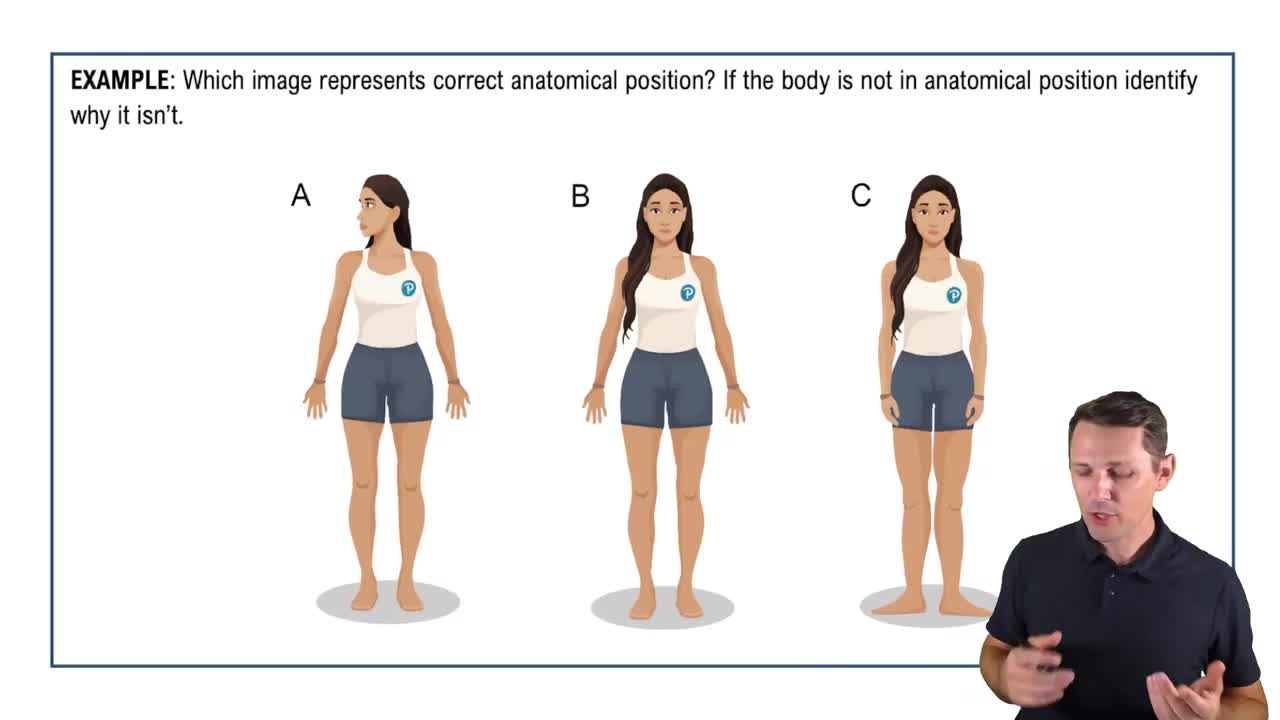
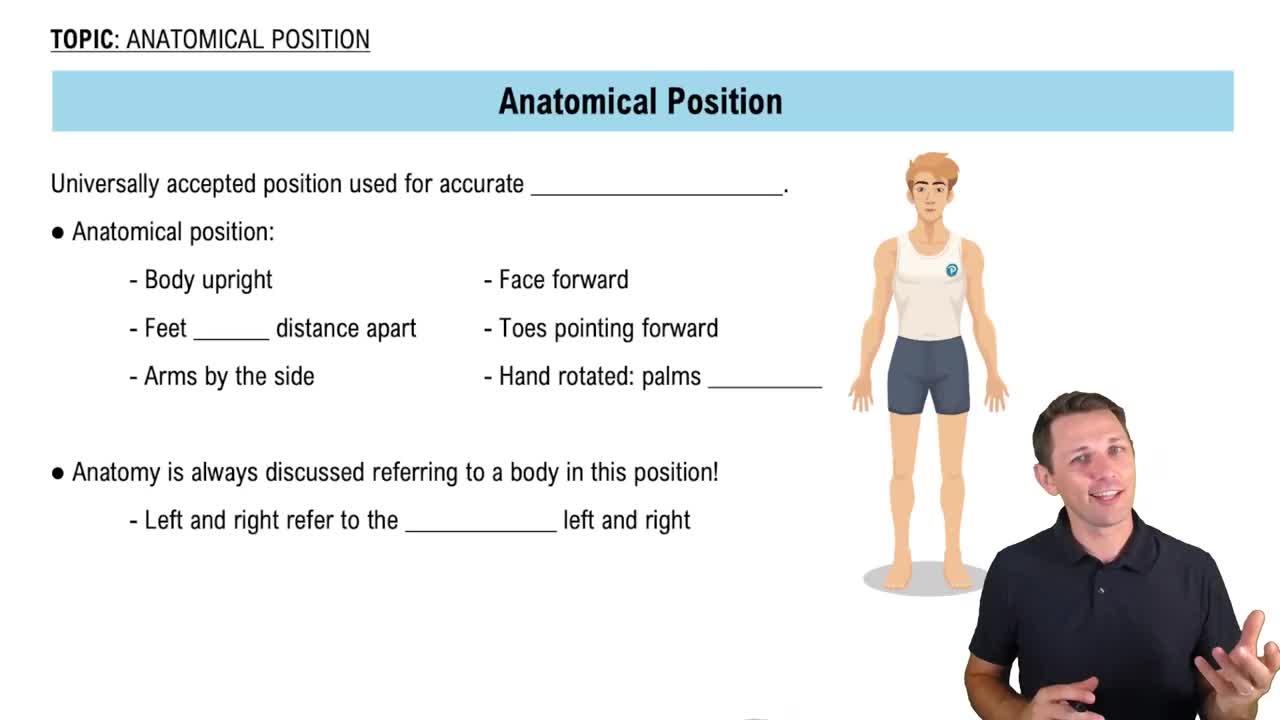
What is the anatomical position?
The anatomical position is the standard reference posture with the body standing upright, facing forward, arms at the sides, and palms facing forward.
Name the main anatomical planes used to describe the human body.
The main anatomical planes are the sagittal plane, frontal (coronal) plane, and transverse (horizontal) plane.
What are the primary body axes in anatomy?
The primary body axes are the longitudinal (vertical), transverse (horizontal), and anteroposterior (front to back) axes.
What is the focus of descriptive anatomical study?
Descriptive anatomy studies the structure and organization of organs and systems in the human body.
Which body systems are included in the anatomical study mentioned?
The systems studied include skeletal, muscular, nervous, respiratory, digestive, cardiovascular, urinary, endocrine, integumentary, and reproductive systems.
What does the skeletal system consist of?
The skeletal system consists of bones, cartilage, ligaments, and joints that provide structure and support.
What is the primary function of the muscular system?
The muscular system enables movement through muscle contraction and maintains posture.
What role does the nervous system play in the body?
The nervous system controls and coordinates body activities by transmitting signals between different body parts.
What is the main function of the respiratory system?
The respiratory system facilitates gas exchange, supplying oxygen to the blood and removing carbon dioxide.
What organs are part of the digestive system?
The digestive system includes the mouth, esophagus, stomach, intestines, liver, pancreas, and other organs involved in digestion and absorption.
What is the cardiovascular system responsible for?
The cardiovascular system circulates blood, delivering oxygen and nutrients to tissues and removing waste products.
What does the urinary system do?
The urinary system removes waste products from the blood and regulates fluid and electrolyte balance.
What is the function of the endocrine system?
The endocrine system produces hormones that regulate metabolism, growth, reproduction, and other functions.
What is the integumentary system composed of?
The integumentary system includes the skin, hair, nails, and glands that protect the body and regulate temperature.
What distinguishes the female reproductive system?
The female reproductive system includes organs such as ovaries, fallopian tubes, uterus, and vagina, responsible for reproduction and childbirth.
What are the main components of the male reproductive system?
The male reproductive system includes testes, vas deferens, prostate, and penis, responsible for producing and delivering sperm.
 뒤로
 02:40