Skip to main content
Anatomy & Physiology
나의 코스
배우기
시험 준비
AI 튜터
학습 가이드
교과서적 해결책
플래시카드
탐험해 보세요
앱을 사용해 보세요
나의 코스
배우기
시험 준비
AI 튜터
학습 가이드
교과서적 해결책
플래시카드
탐험해 보세요
앱을 사용해 보세요
뒤로
Anatomy & Physiology: Basic Concepts and Body Systems
카드를 뒤집기 위해 탭할 수 있습니다.
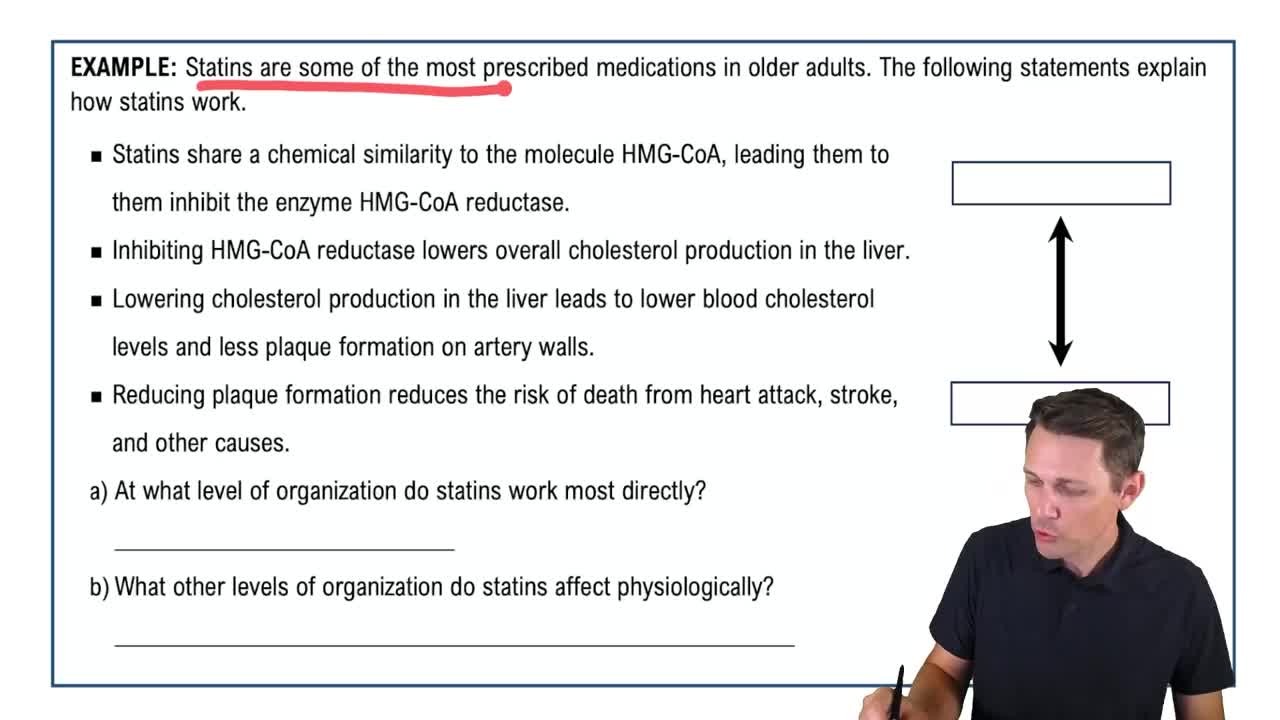
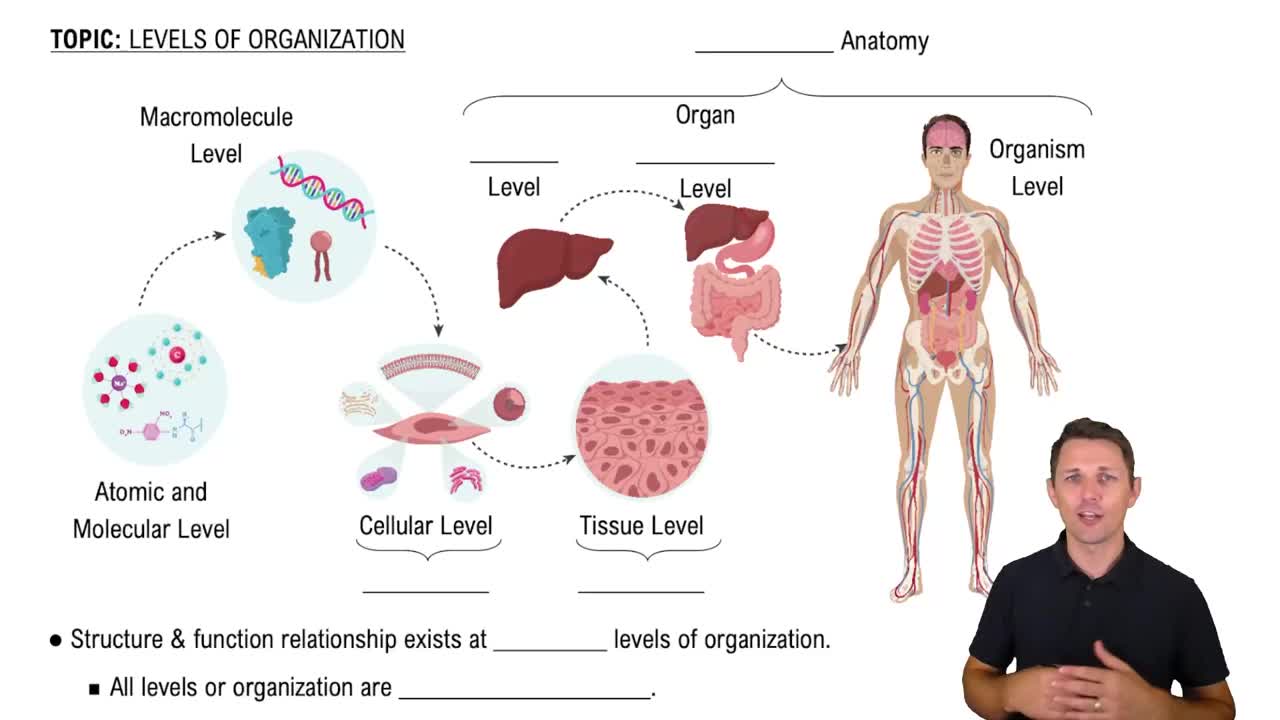
What are the levels of structural organization in the human body?
카드를 뒤집기 위해 탭할 수 있습니다.
👆
What are the levels of structural organization in the human body?
Atoms
,
molecules
,
cells
,
tissues
,
organs
,
organ systems
, and
organismal level
.
진행 상황 추적
컨트롤 버튼이 '내비게이션' 모드로 변경되었습니다.
1/23
추천 영상
VideoThumbView.guidedCourse
05:04
The Levels of Organization
49276
views
1463
rank
5
comments
VideoThumbView.guidedCourse
02:22
Levels of Organization Example 1
27739
views
594
rank
2
comments
이 집합의 용어 (23)
하이드의 정의
What are the levels of structural organization in the human body?
Atoms
,
molecules
,
cells
,
tissues
,
organs
,
organ systems
, and
organismal level
.
What is the primary function of the integumentary system?
Protects deeper tissues from injury, synthesizes vitamin D, and contains sensory receptors and sweat and oil glands.
What does the skeletal system do?
Protects and supports body organs, provides a framework for muscles to cause movement, and forms blood cells within bones.
What is the role of the muscular system?
Allows manipulation of the environment, locomotion, and facial expression; maintains posture and produces heat.
What is the function of the nervous system?
Fast-acting control system that responds to internal and external changes by activating muscles and glands.
What do glands in the endocrine system secrete?
Hormones that regulate processes such as growth, reproduction, and nutrient use by body cells.
What is the main function of the cardiovascular system?
Blood vessels transport blood, which carries oxygen, nutrients, hormones, carbon dioxide, wastes, etc.; the heart pumps blood.
What does the lymphatic system do?
Picks up fluid leaked from blood vessels, disposes of debris in the lymphatic stream, and houses white blood cells involved in immunity.
What is the primary function of the respiratory system?
Keeps blood constantly supplied with oxygen and removes carbon dioxide; gas exchange occurs through the walls of the air sacs of the lungs.
What is the role of the digestive system?
Breaks food down into absorbable nutrients that enter the blood for distribution to body cells; indigestible foodstuffs are eliminated as feces.
What does the urinary system do?
Eliminates nitrogen-containing wastes from the body; regulates water, electrolyte, and acid-base balance of the blood.
What is the overall function of the male reproductive system?
Production of offspring; testes produce sperm and male sex hormone; ducts and glands aid in delivery of viable sperm.
What is the overall function of the female reproductive system?
Production of offspring; ovaries produce eggs and female sex hormones; mammary glands produce milk to nourish the newborn.
Define the anatomical term 'medial'.
Toward or at the midline of the body; on the inner side of.
Define the anatomical term 'lateral'.
Away from the midline of the body; on the outer side of.
What is the difference between proximal and distal?
Proximal
is close to the origin of the body part or point of attachment;
distal
is farther from the origin or point of attachment.
What are the three main body planes?
Median (midsagittal)
,
frontal (coronal)
, and
transverse
planes.
What cavities are included in the dorsal body cavity?
Cranial cavity and spinal cavity.
What cavities are included in the ventral body cavity?
Thoracic cavity, abdominal cavity, and pelvic cavity.
What are the four quadrants of the abdomen?
Right upper quadrant (RUQ), left upper quadrant (LUQ), right lower quadrant (RLQ), and left lower quadrant (LLQ).
What is homeostasis?
The maintenance of a stable internal environment despite external changes.
What are the five components of a homeostatic control system?
Receptor
,
input
,
control center
,
output
, and
effector
.
How does negative feedback maintain homeostasis?
The response of the effector reduces or shuts off the original stimulus to return the variable to its normal range.
 뒤로뒤로
 05:04