뒤로

Anatomy & Physiology: Basic Concepts and Homeostasis

1 학생이 이 점이 도움이 되었다고 느꼈습니다
컨트롤 버튼이 '내비게이션' 모드로 변경되었습니다.
1/21
  • What is the function of the plasma membrane in body cells?

    The plasma membrane is a selectively permeable boundary that separates intracellular fluid from extracellular fluid, allowing needed substances in and restricting harmful ones.
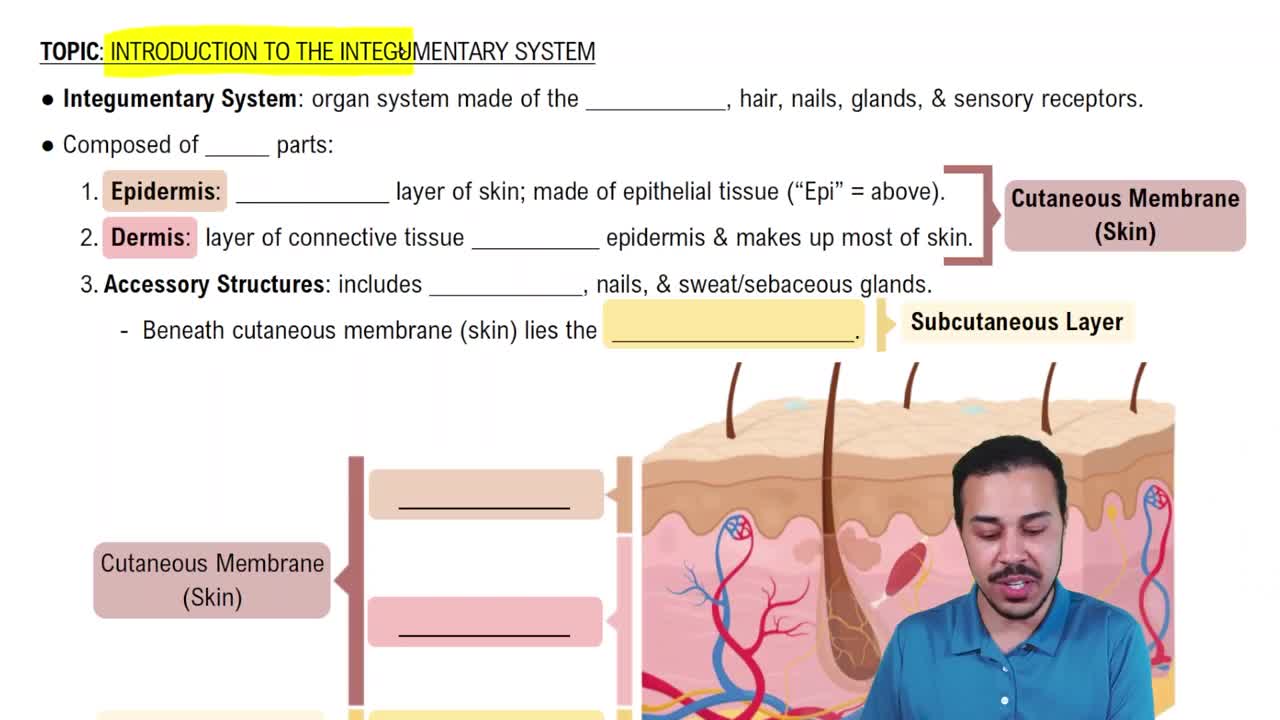
  • What role does the integumentary system play in maintaining boundaries?

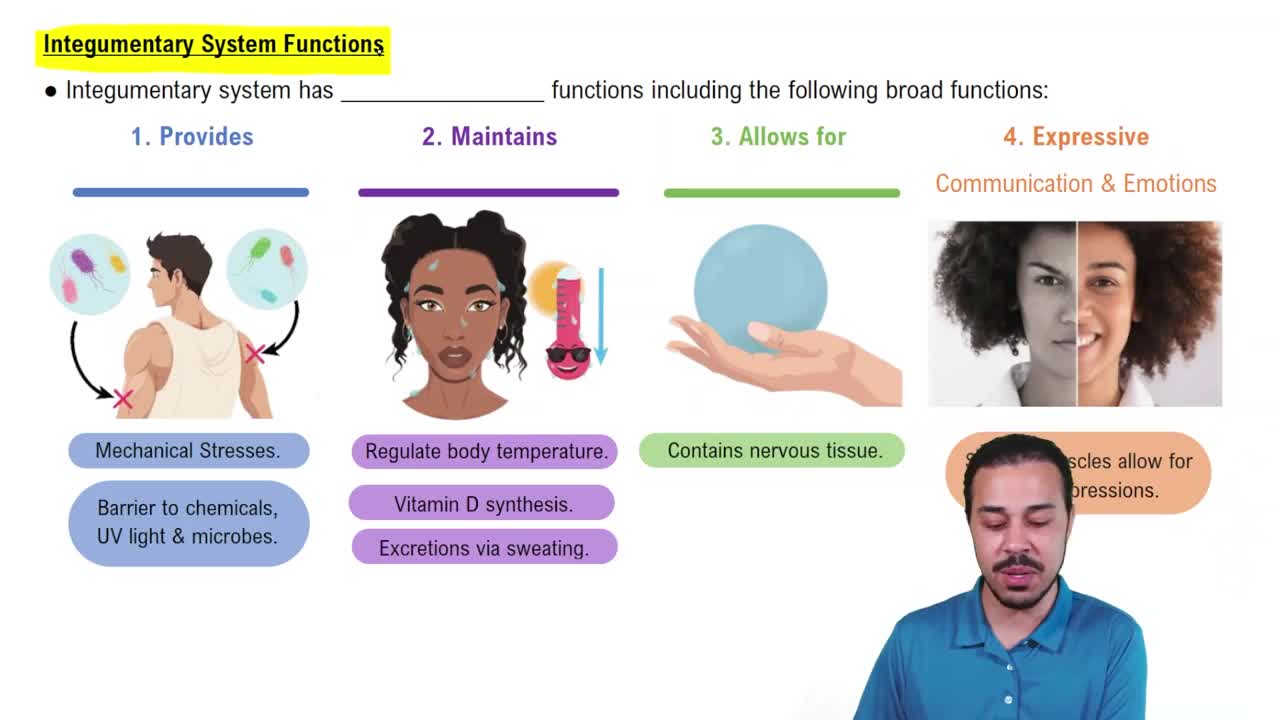
    The integumentary system (skin) encloses the body, protecting internal organs from drying out, infection, heat, sunlight, and chemicals.
  • How does the muscular system contribute to movement?

    The muscular system promotes movement by contracting muscles to propel the body and manipulate the environment.
  • What is contractility at the cellular level?

    Contractility is the muscle cell's ability to move by shortening.
  • Define responsiveness in the context of physiology.

    Responsiveness, or excitability, is the ability to sense environmental changes (stimuli) and respond, such as reflex withdrawal from pain.
  • Which body system is most involved with responsiveness and why?

    The nervous system, because nerve cells are highly excitable and communicate rapidly via electrical impulses.
  • What is digestion in human physiology?

    Digestion is the breakdown of ingested food into simple molecules that can be absorbed into the blood.
  • What processes are included in metabolism?

    Metabolism includes catabolism (breaking down substances), anabolism (building complex substances), and cellular respiration to produce ATP.
  • Which systems support metabolism by providing nutrients and oxygen?

    The digestive and respiratory systems provide nutrients and oxygen, while the cardiovascular system distributes them.
  • What is excretion and which systems participate in it?

    Excretion is the removal of wastes from the body; the digestive, urinary, and respiratory systems participate.
  • How does reproduction occur at the cellular level?

    Cellular reproduction involves one cell dividing to produce two identical daughter cells for growth or repair.
  • What is the primary function of the reproductive system at the organismal level?

    To produce offspring by uniting sperm and egg, regulated by endocrine hormones.
  • What is growth in anatomy and physiology?

    Growth is an increase in size of a body part or organism, usually by increasing cell number or size. (Constructive activities must happen faster than deconstructive ones)

  • List the five survival needs essential for human life.

    Nutrients, oxygen, water, normal body temperature, and appropriate atmospheric pressure.
  • Why is oxygen essential for human cells?

    Oxygen is required for oxidative chemical reactions that release energy from food; cells survive only minutes without it.
  • What percentage of the human body weight is water, and why is it important?

    Water accounts for 50–60% of body weight and provides the environment for chemical reactions and body secretions.
  • How does normal body temperature affect chemical reactions?

    Chemical reactions proceed at life-sustaining rates near 37°C; too low or too high temperatures slow or stop reactions, causing harm.
  • What is the role of atmospheric pressure in human physiology?

    Atmospheric pressure enables breathing and gas exchange in the lungs; low pressure at high altitudes can impair metabolism.
  • Define homeostasis.

    Homeostasis is the body's dynamic state of equilibrium maintaining stable internal conditions despite external changes.
  • What is the law of mass balance in physiology?

    It states that the amount of a substance taken in must equal the amount lost to keep its total body amount constant.
  • How do organ systems contribute to maintaining homeostasis?

    Organ systems regulate nutrient levels, blood pressure, waste removal, and temperature to keep internal conditions stable.