 뒤로
Anatomy & Physiology: Basic Concepts and Tissue Types
 02:40

이 집합의 용어 (31)
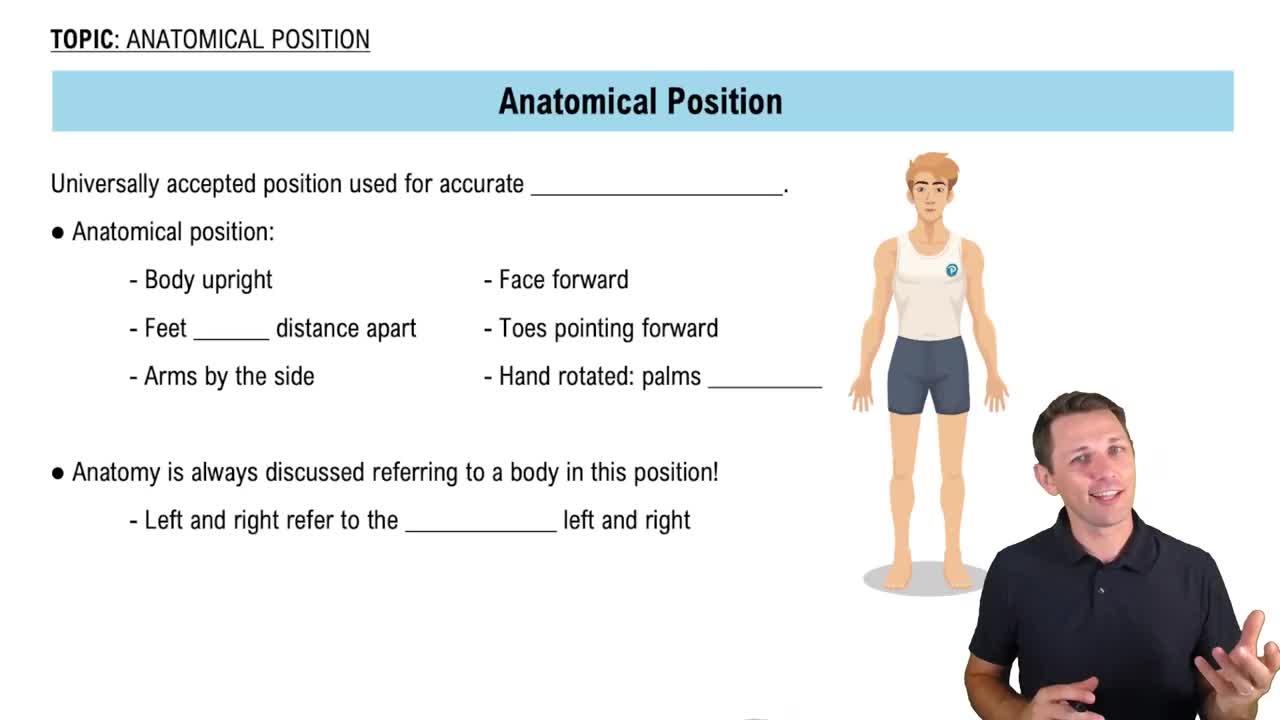
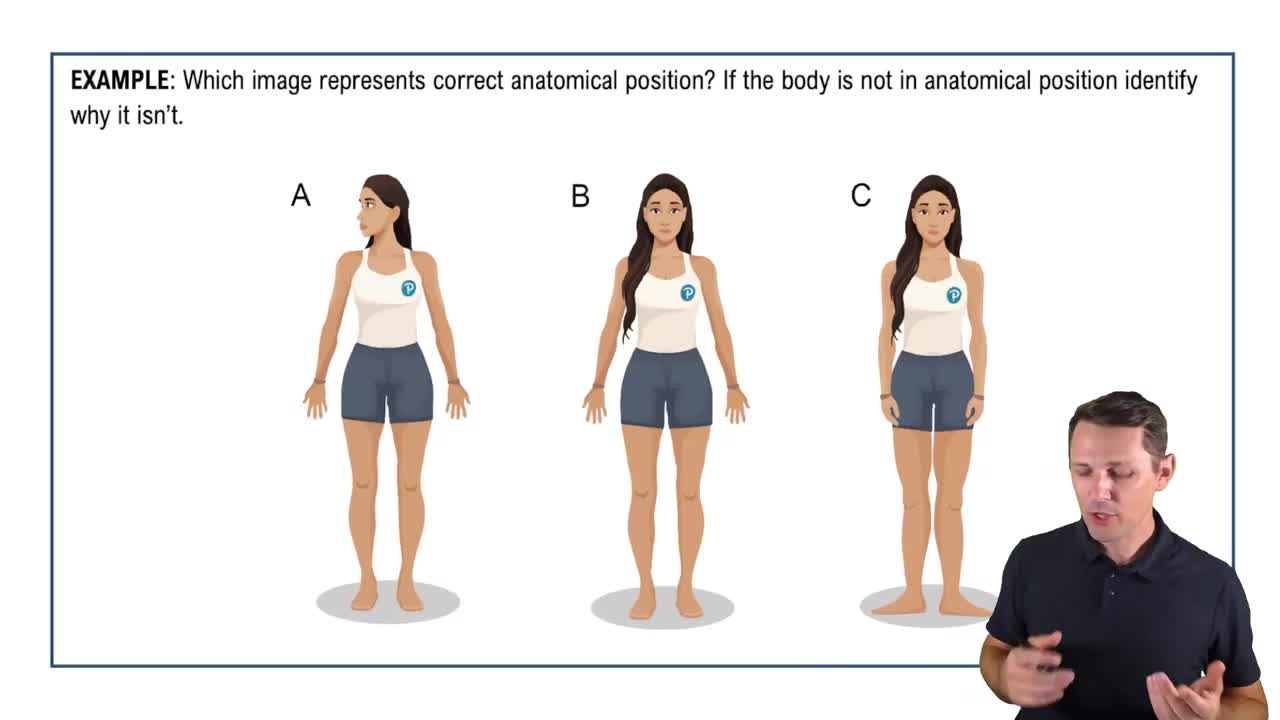
The standard body position used as a reference: standing upright, feet together, arms at sides, palms facing forward, and head facing forward.
Examples include superior/inferior, anterior/posterior, medial/lateral, and proximal/distal.
The three main planes are sagittal (divides left and right), frontal (coronal) (divides front and back), and transverse (divides top and bottom).
Major cavities include the dorsal cavity (cranial and vertebral) and the ventral cavity (thoracic and abdominopelvic).
Consists of two layers: the parietal layer lining the cavity wall and the visceral layer covering the organ, with serous fluid between.
Examples: pleura in thoracic cavity, pericardium around the heart, and peritoneum in the abdominopelvic cavity.
Four quadrants: right upper, left upper, right lower, and left lower, used to locate organs.
A group of similar cells that perform a common function.
Epithelial, connective, muscle, and nervous tissues.
Cellularity, polarity, attachment to basement membrane, avascularity, and regeneration.
Shapes: squamous, cuboidal, columnar. Layers: simple (one layer), stratified (multiple layers).
Function: diffusion and filtration. Location: alveoli of lungs and lining blood vessels.
Function: secretion and absorption. Location: kidney tubules and glands.
Function: absorption and secretion. Location: lining of the digestive tract.
Nonkeratinized protects moist surfaces; keratinized protects dry surfaces like skin.
Function: secretion and movement of mucus. Location: respiratory tract lining.
Tight junctions, desmosomes, and gap junctions.
Cells, extracellular protein fibers, and ground substance.
Function: cushions organs. Location: beneath epithelial tissues.
Function: stores energy and insulates. Location: under skin and around organs.
Function: resists tension in one direction. Location: tendons and ligaments.
Function: supports and cushions joints. Location: nose, trachea, and ends of long bones.
Function: supports and protects body. Location: skeleton.
Function: transports nutrients and gases. Location: within blood vessels.
Skeletal (voluntary, striated), cardiac (involuntary, striated), and smooth (involuntary, non-striated).
Function: voluntary movement. Location: attached to bones.
Function: pumps blood. Location: heart wall.
Function: moves substances through organs. Location: walls of hollow organs.
A nerve cell that transmits electrical signals.
Cell body, dendrites, and axon.
Function: transmits electrical impulses. Location: brain, spinal cord, and nerves.