 뒤로
Anatomy & Physiology: Bone Structure and Growth
 3:56

이 집합의 용어 (28)
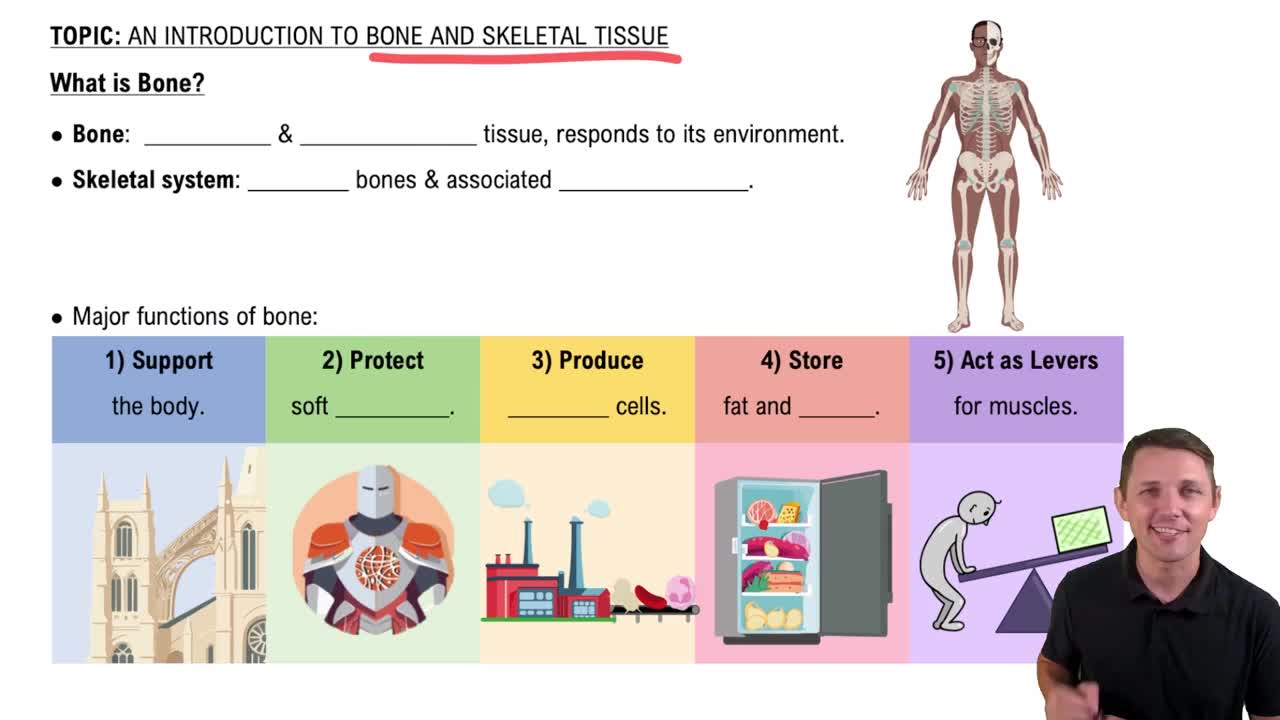
Support, protection, movement, mineral storage, blood cell production, and energy storage.
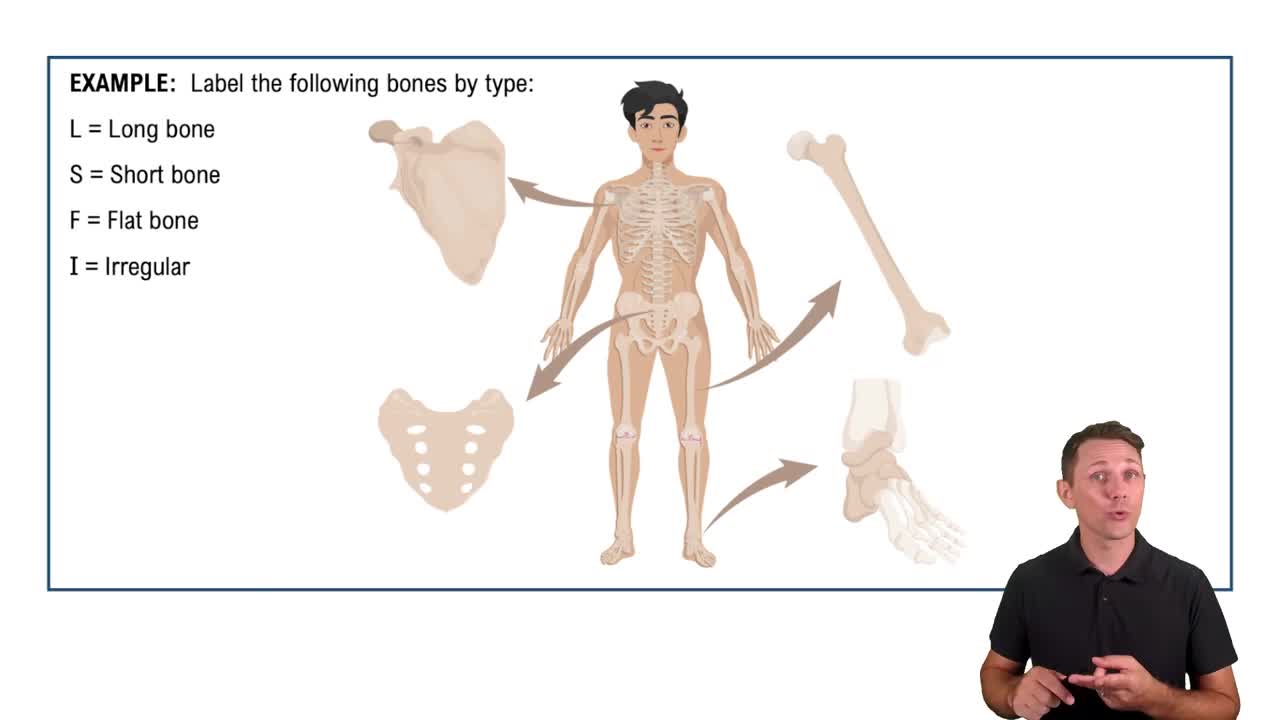
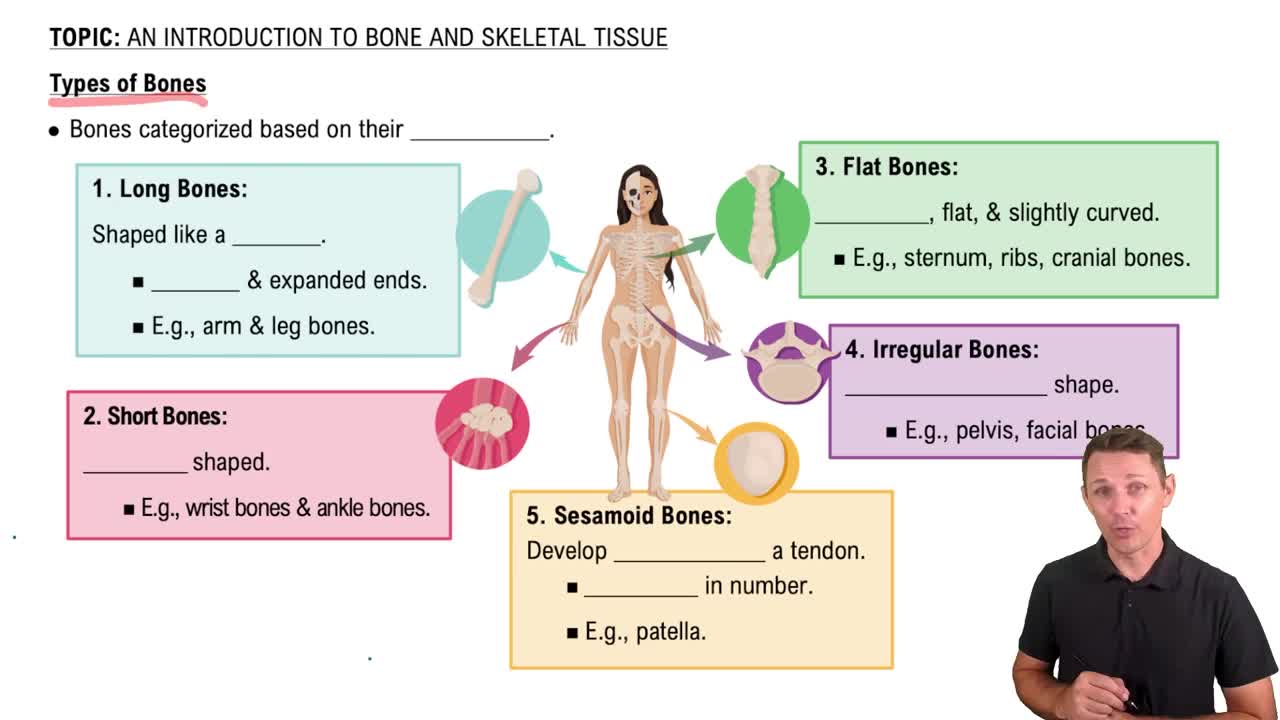
Long, short, flat, irregular, and sesamoid bones based on shape and structure.
Consists of a diaphysis (shaft), epiphyses (ends), metaphysis, medullary cavity, and periosteum.
Cube-shaped, mostly spongy bone with a thin outer layer of compact bone.
Thin, flattened, and usually curved with two parallel layers of compact bone enclosing spongy bone.
Complex shapes with thin layers of compact bone surrounding spongy bone.
Small, round bones embedded in tendons, e.g., the patella.
Red marrow produces blood cells; yellow marrow stores fat.
Primarily hydroxyapatite crystals made of calcium phosphate providing hardness.
Mostly collagen fibers providing tensile strength and flexibility.
Bone-forming cells that secrete matrix and initiate calcification.
Mature bone cells that maintain bone matrix and communicate mechanical stress.
Bone-resorbing cells that break down bone matrix during remodeling.
Organized into osteons with central canals, concentric lamellae, lacunae, and canaliculi.
Central canal, concentric lamellae, osteocytes in lacunae, and canaliculi connecting cells.
Consists of trabeculae with osteocytes in lacunae and spaces filled with marrow.
Primary bone is immature, woven bone; secondary bone is mature, lamellar bone.
Bone forms directly from mesenchymal tissue without a cartilage model.
Bone develops by replacing hyaline cartilage with bone tissue.
Growth occurs at the epiphyseal plate by cartilage proliferation and ossification.
Longitudinal increases length; appositional increases diameter/thickness.
Growth hormone, thyroid hormone, sex hormones (estrogen and testosterone).
Osteoclasts break down bone; osteoblasts build new bone matrix.
Physical stress, hormones, and diet (calcium and vitamin D).
Inhibits osteoclast activity, lowering blood calcium levels.
Stimulates osteoclasts to increase blood calcium levels.
Enhances calcium absorption in the intestines to support bone mineralization.
Hematoma formation, fibrocartilaginous callus, bony callus, and bone remodeling.