뒤로

Anatomy & Physiology: Bones and Bone Structure

컨트롤 버튼이 '내비게이션' 모드로 변경되었습니다.
1/25
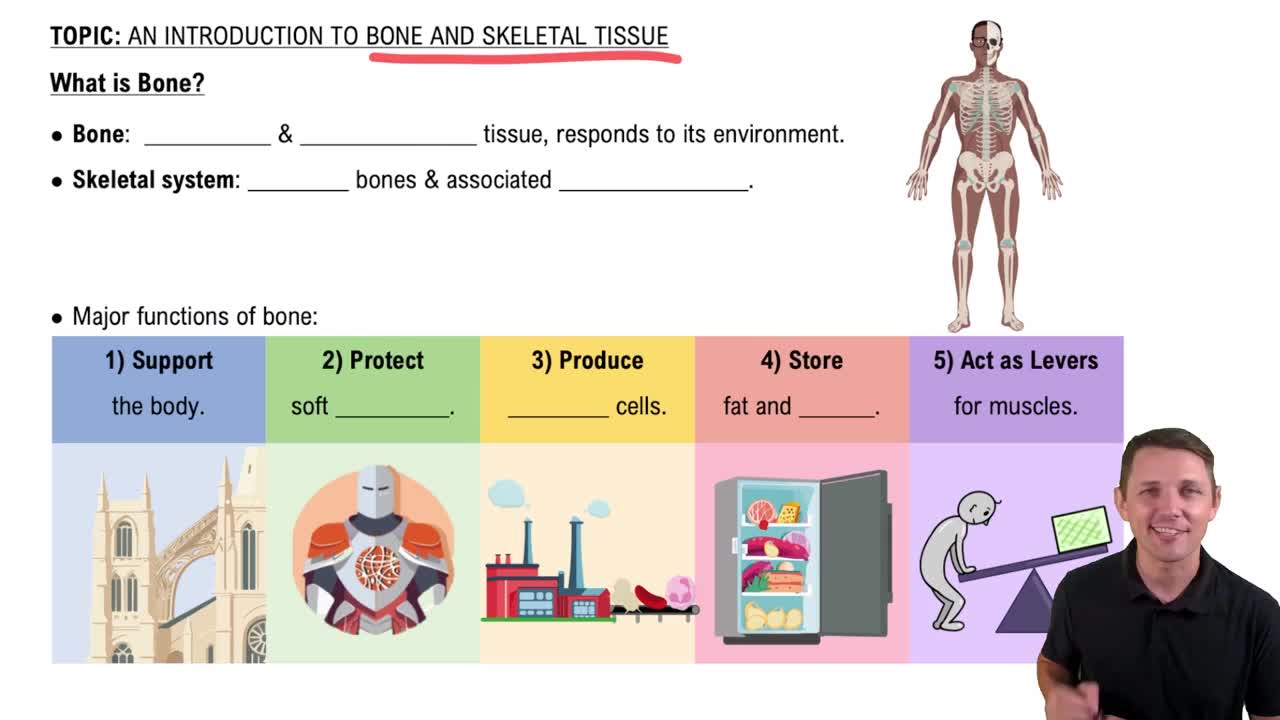
  • Functions of the skeletal system

    • Support: Structural framework for body and soft tissues.
    • Protection: Shields organs like brain and heart.
    • Leverage: Bones act as levers for movement.
    • Storage: Minerals (calcium, phosphorus) and lipids.
    • Blood cell production: Hematopoiesis in red bone marrow.
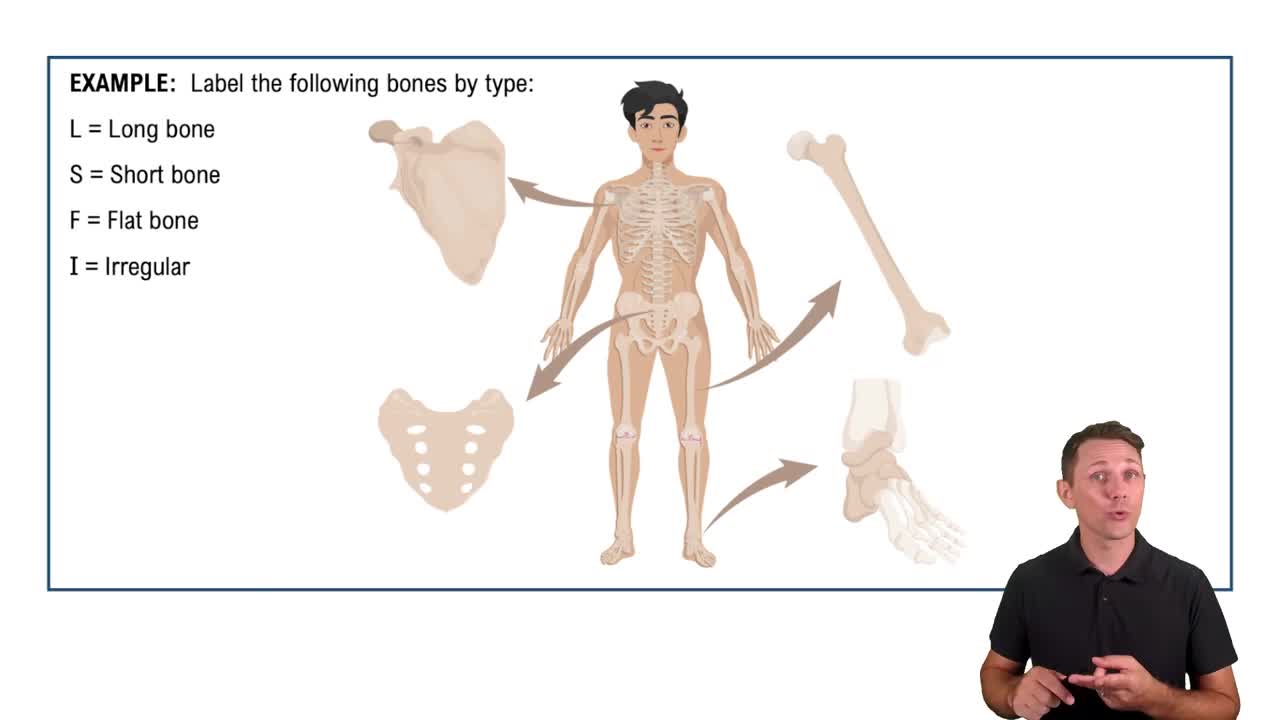
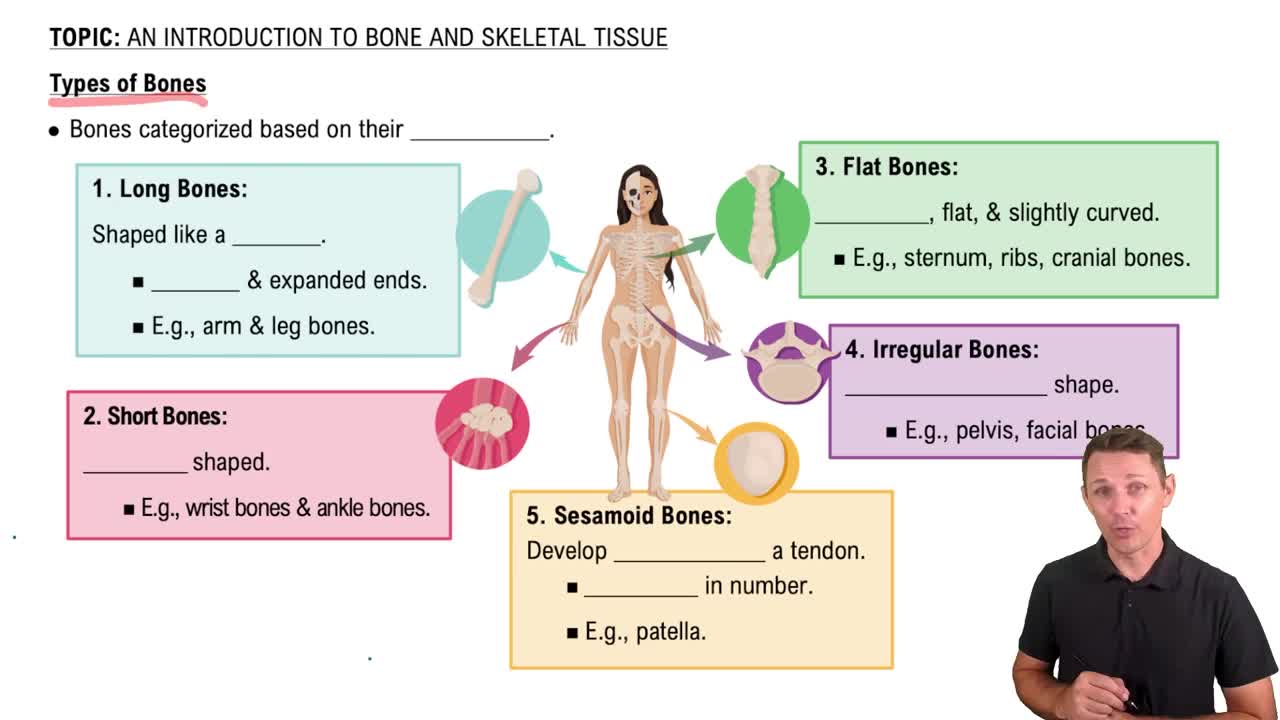
  • Classification of bones by shape

    • Long bones: Long and slender (e.g., femur).
    • Short bones: Boxy (e.g., carpals).
    • Flat bones: Thin, parallel surfaces (e.g., skull).
    • Irregular bones: Complex shapes (e.g., vertebrae).
    • Sesamoid bones: Develop in tendons (e.g., patella).
    • Sutural bones: Small bones between skull bones.
  • Long bone structure components

    • Diaphysis: Shaft with compact bone surrounding marrow cavity.
    • Epiphysis: Ends with mostly spongy bone.
    • Metaphysis: Region between diaphysis and epiphysis.
  • Bone matrix composition

    • Calcium phosphate: About two-thirds of bone mass; forms hydroxyapatite crystals.
    • Collagen fibers: About one-third; provide tensile strength.
    • Other salts: Calcium carbonate, magnesium ions.
  • Osteogenic cells

    Stem cells in periosteum and endosteum that divide to produce osteoblasts; important for fracture repair.
  • Osteoblasts

    Immature bone cells that produce new bone matrix (osteoid) during osteogenesis; become osteocytes when surrounded by matrix.
  • Osteocytes

    Mature bone cells in lacunae; maintain bone matrix and repair damaged bone; communicate via canaliculi.
  • Osteoclasts

    Large multinucleate cells derived from monocytes; resorb bone matrix; important for remodeling and calcium homeostasis.
  • Compact bone structure

    • Osteon: Functional unit with concentric lamellae around central canal.
    • Perforating canals: Carry blood vessels perpendicular to bone surface.
    • Lamellae: Layers of bone matrix (concentric, interstitial, circumferential).
  • Spongy bone features

    • Trabeculae: Network of struts and plates without osteons.
    • Red bone marrow: Fills spaces; site of blood cell formation.
    • Yellow bone marrow: Stores fat.
  • Periosteum

    Outer membrane covering bone except at joints; has fibrous outer layer and cellular inner layer; involved in growth, repair, and provides routes for vessels and nerves.
  • Endosteum

    Incomplete cellular layer lining medullary cavity and trabeculae; contains osteoblasts, osteogenic cells, and osteoclasts; active in growth and remodeling.
  • Endochondral ossification

    Bone formation replacing hyaline cartilage; involves primary and secondary ossification centers; responsible for lengthwise bone growth.
  • Intramembranous ossification

    Bone formation within dermis producing dermal bones like mandible and clavicles; involves direct differentiation of mesenchymal cells into osteoblasts.
  • Blood supply to bones

    • Nutrient artery and vein: Enter diaphysis through nutrient foramina.
    • Metaphyseal vessels: Supply epiphyseal cartilage.
    • Periosteal vessels: Supply superficial osteons and secondary centers.
  • Bone remodeling

    Continuous process balancing osteoblast and osteoclast activity to maintain bone strength and mineral homeostasis.
  • Effects of exercise on bone

    Weight-bearing exercise stimulates osteoblasts, increasing bone density; inactivity leads to rapid bone loss.
  • Essential minerals for bone health

    Calcium and phosphorus are essential; magnesium, fluoride, iron, and manganese needed in smaller amounts.
  • Vitamins important for bone health

    • Calcitriol (Vitamin D): Enhances calcium and phosphate absorption.
    • Vitamin C: Required for collagen synthesis and osteoblast differentiation.
    • Vitamin A: Stimulates osteoblast activity.
    • Vitamins K and B: Needed for bone protein synthesis.
  • Hormones regulating bone growth

    • Growth hormone and thyroxine: Stimulate bone growth.
    • Sex hormones (estrogen, testosterone): Stimulate osteoblasts and maintain bone mass.
    • Parathyroid hormone and calcitonin: Regulate calcium ion homeostasis.
  • Parathyroid hormone (PTH) effects

    Increases blood calcium by stimulating osteoclasts, increasing intestinal absorption via calcitriol, and reducing kidney excretion.
  • Calcitonin effects

    Decreases blood calcium by inhibiting osteoclasts, increasing kidney excretion, and reducing intestinal absorption.
  • Types of bone fractures

    • Open (compound): Bone breaks through skin.
    • Closed (simple): Bone does not break skin.
    • Other types: transverse, displaced, compression, spiral, epiphyseal, comminuted, greenstick, Colles, Pott’s.
  • Steps in fracture repair

    1. Fracture hematoma formation: blood clot forms, bone cells die.
    2. Callus formation: internal and external calluses stabilize break.
    3. Spongy bone formation: osteoblasts replace cartilage.
    4. Compact bone formation: remodeled into compact bone, may be stronger.
  • Effects of aging on the skeletal system

    Bone mass and strength decrease; osteopenia begins around 30–40 years; osteoporosis accelerates after menopause; decreased sex hormones increase bone loss.