Skip to main content
Anatomy & Physiology
나의 코스
배우기
시험 준비
AI 튜터
학습 가이드
교과서적 해결책
플래시카드
탐험해 보세요
앱을 사용해 보세요
나의 코스
배우기
시험 준비
AI 튜터
학습 가이드
교과서적 해결책
플래시카드
탐험해 보세요
앱을 사용해 보세요
뒤로
Anatomy & Physiology: Bones and Features
카드를 뒤집기 위해 탭할 수 있습니다.
Number of cranial bones and examples
카드를 뒤집기 위해 탭할 수 있습니다.
👆
Number of cranial bones and examples
There are 8 cranial bones including the frontal, parietal, temporal, occipital, sphenoid, and ethmoid bones.
진행 상황 추적
컨트롤 버튼이 '내비게이션' 모드로 변경되었습니다.
1/30
추천 영상
VideoThumbView.guidedCourse
04:19
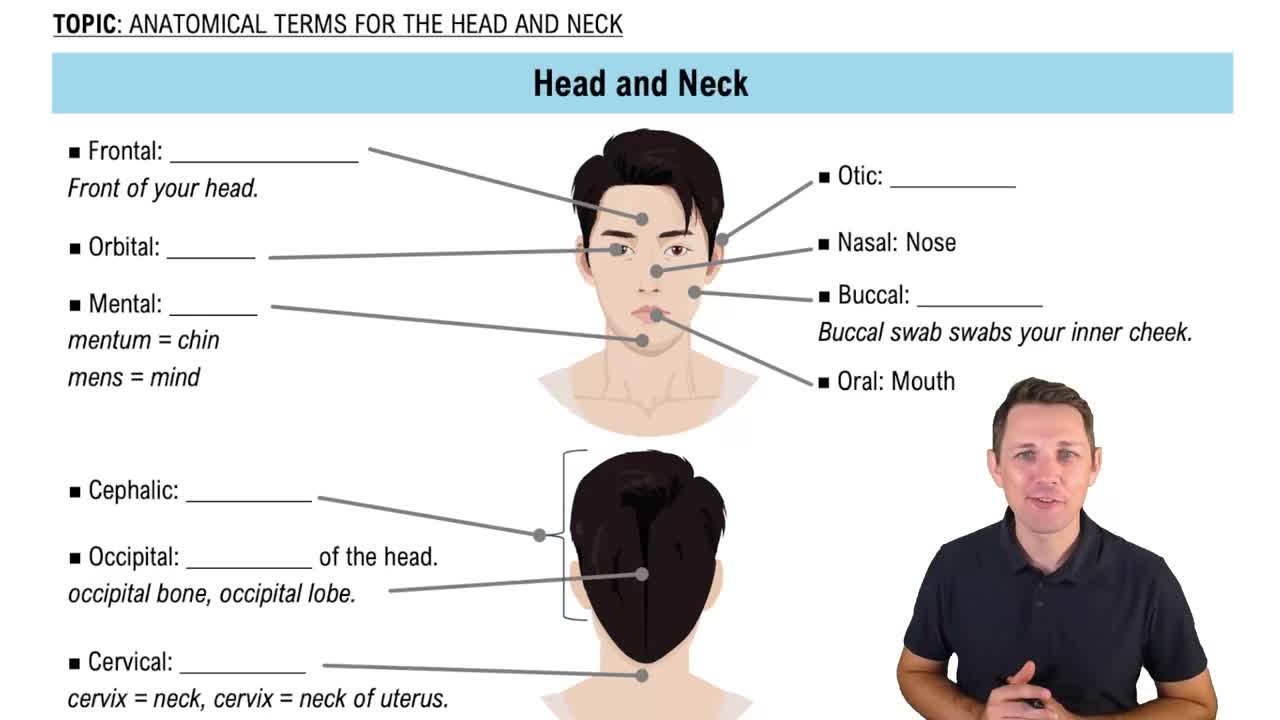
The Head and Neck
13541
views
318
rank
3
comments
VideoThumbView.guidedCourse
01:18
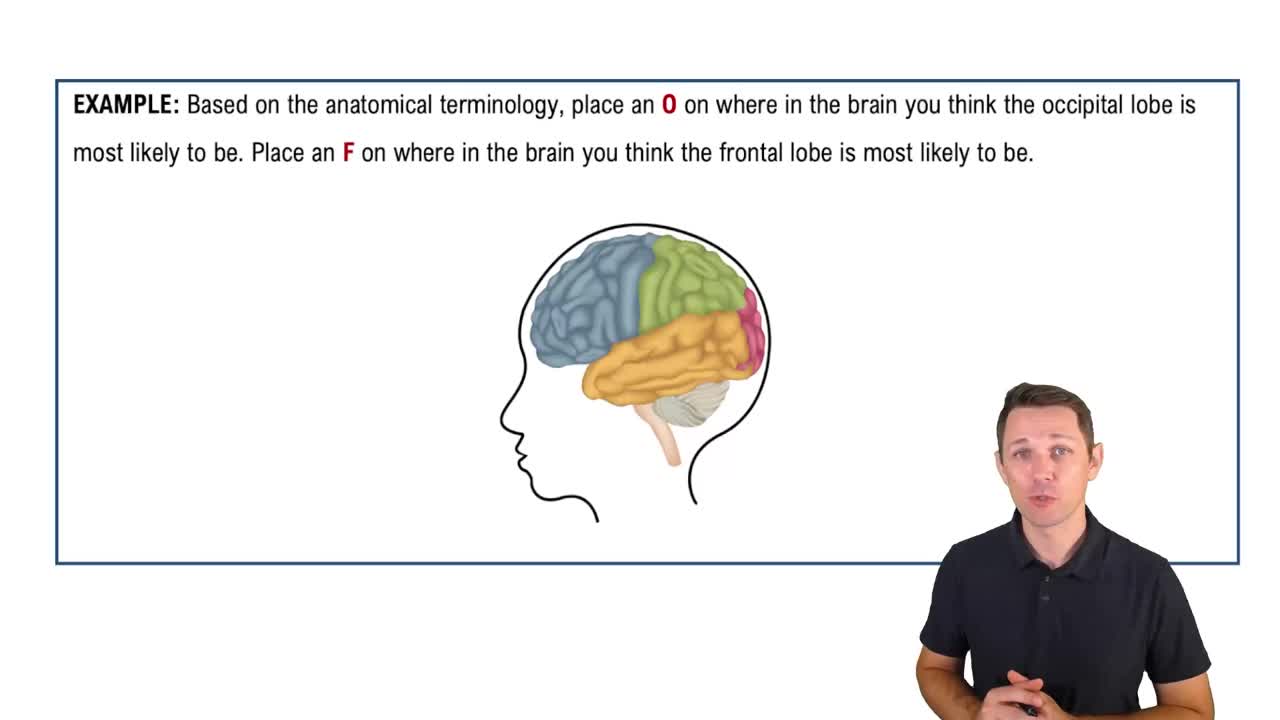
Anatomical Terms for the Head and Neck Example 1
9024
views
158
rank
이 집합의 용어 (30)
하이드의 정의
Number of cranial bones and examples
There are 8 cranial bones including the frontal, parietal, temporal, occipital, sphenoid, and ethmoid bones.
Key features of the temporal bone
Includes the
zygomatic process
,
mandibular fossa
,
mastoid process
, and
external acoustic meatus
.
Function of the foramen magnum
A large opening in the occipital bone allowing passage of the spinal cord.
Sella turcica location and significance
A saddle-shaped depression in the sphenoid bone that houses the pituitary gland.
Three important features of the ethmoid bone
Crista galli
,
cribriform plate
, and
perpendicular plate
.
Number of facial bones and examples
There are 14 facial bones including nasal, lacrimal, inferior nasal conchae, vomer, maxilla, palatine, mandible, zygomatic, and hyoid bones.
Alveolar process location
The ridge on the maxilla and mandible that contains the tooth sockets.
Key processes of the mandible
Mandibular condyle
,
coronoid process
, and
mental foramina
.
Components of the sternum
Manubrium, body, and xiphoid process.
Types of ribs and their classification
Vertebrosternal ribs (1-7), vertebrocostal ribs (8-10), and vertebral ribs (11-12).
Five main parts of a vertebra
Body, vertebral foramen, spinous process, transverse process, and vertebral arch.
Number of cervical, thoracic, and lumbar vertebrae
Cervical (7), thoracic (12), lumbar (5).
Four major sutures of the skull
Coronal, sagittal, lambdoid, and squamous sutures.
Four fontanels of the infant skull
Frontal, posterior, sphenoidal, and mastoid fontanels.
Bones of the pectoral girdle
Clavicle and scapula.
Key features of the scapula
Spine, acromion, coracoid process, glenoid cavity, supraspinous fossa, infraspinous fossa, and subscapular fossa.
Important landmarks on the humerus
Head, greater tubercle, intertubercular groove, deltoid tuberosity, capitulum, trochlea, medial epicondyle, and olecranon fossa.
Distinguishing features of the ulna
Olecranon process, trochlear (semilunar) notch, radial notch, and styloid process.
Number of carpal, metacarpal, and phalangeal bones in the hand
Carpal bones (16 total), metacarpals (10 total), and phalanges (28 total).
Three bones forming the os coxae
Ilium, ischium, and pubis.
Two prominent features formed at the junction of os coxae bones
Acetabulum (hip socket) and obturator foramen.
Key features of the ilium
Iliac crest, anterior superior iliac spine, and greater sciatic notch.
Important features of the ischium
Ischial tuberosity.
Features of the pubis
Pubic symphysis.
Main bones of the lower extremity
Femur, patella, tibia, fibula, tarsal bones, metatarsals, and phalanges.
Key landmarks on the femur
Head, fovea capitis, neck, greater trochanter, linea aspera, medial condyle, and lateral condyle.
Important features of the tibia
Medial condyle, lateral condyle, tibial tuberosity, anterior crest, and medial malleolus.
Distinguishing features of the fibula
Head and lateral malleolus.
Number of tarsal, metatarsal, and phalangeal bones in the foot
Tarsal bones (14 total), metatarsals (10 total), and phalanges (28 total).
Two important tarsal bones
Calcaneus (heel bone) and talus (ankle bone).
 뒤로뒤로
 04:19