 뒤로
Anatomy & Physiology: Bones and Skeletal Tissues
 3:56

이 집합의 용어 (28)
Axial skeleton (skull, vertebral column, rib cage) and Appendicular skeleton (bones of limbs and girdles attaching limbs to axial skeleton).
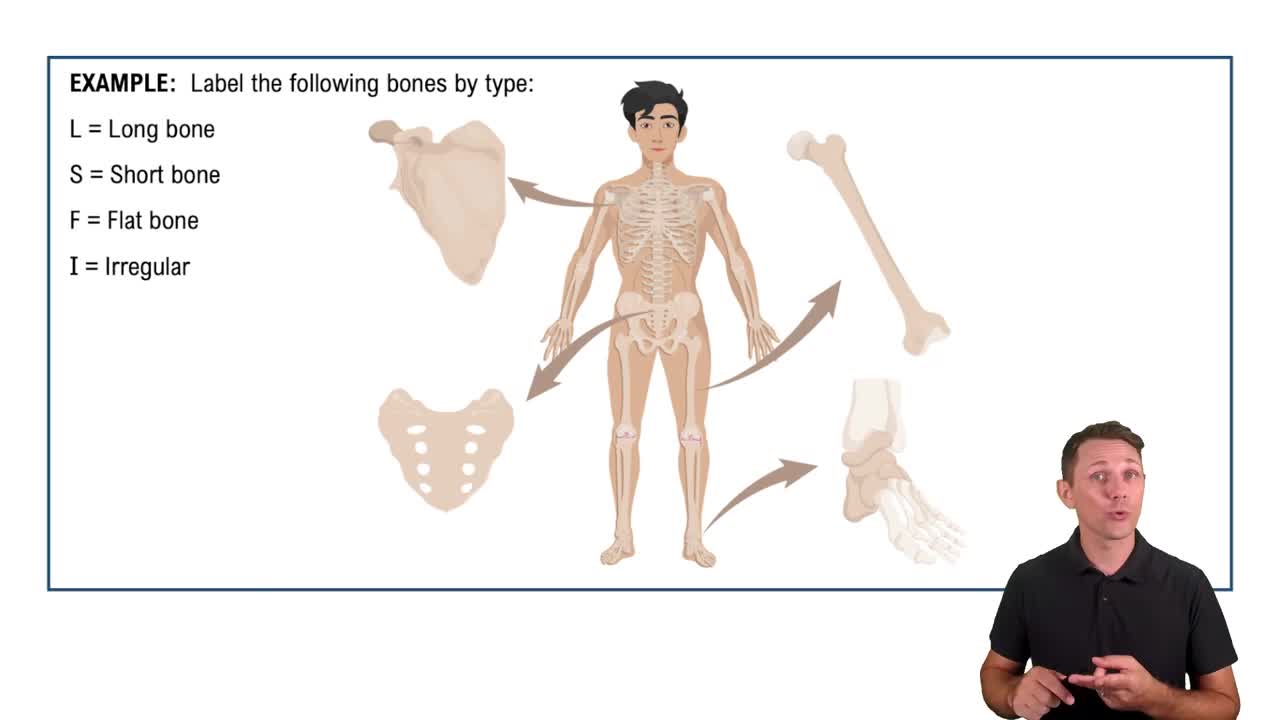
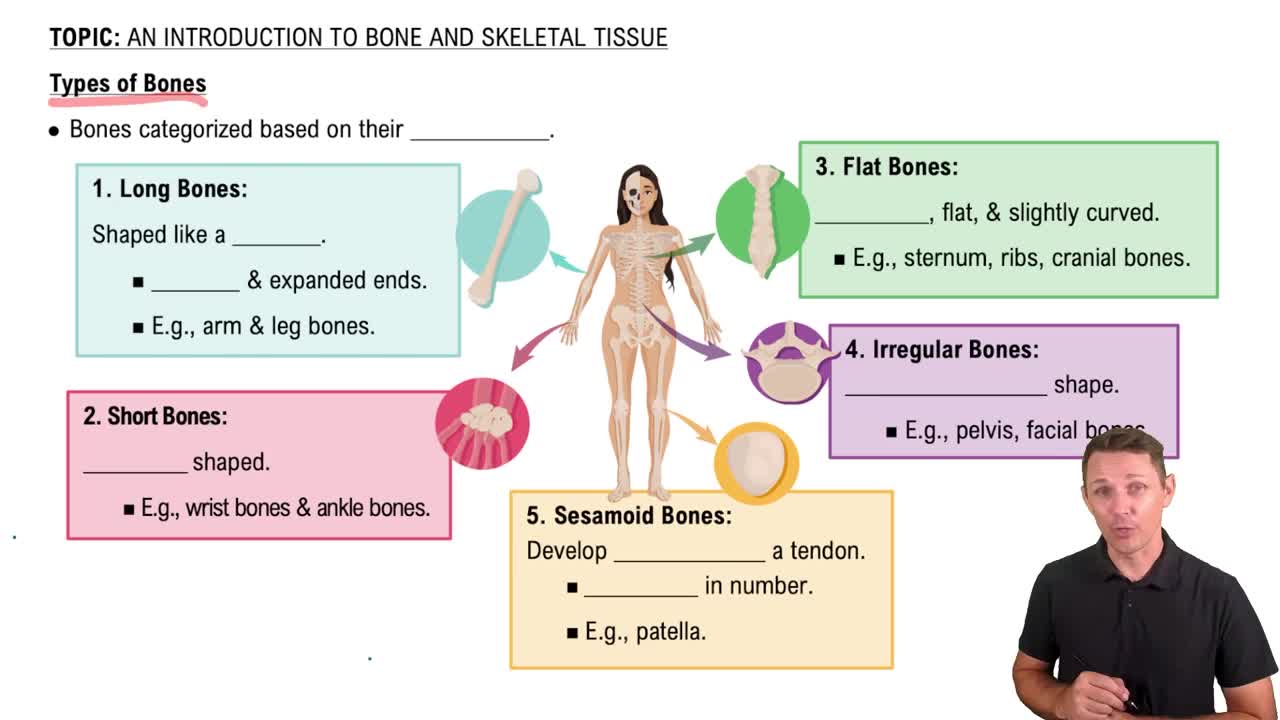
1. Long bones (longer than wide)
2. Short bones (cube-shaped, e.g., wrist)
3. Flat bones (thin, flat, slightly curved)
4. Irregular bones (complicated shapes, e.g., vertebrae)
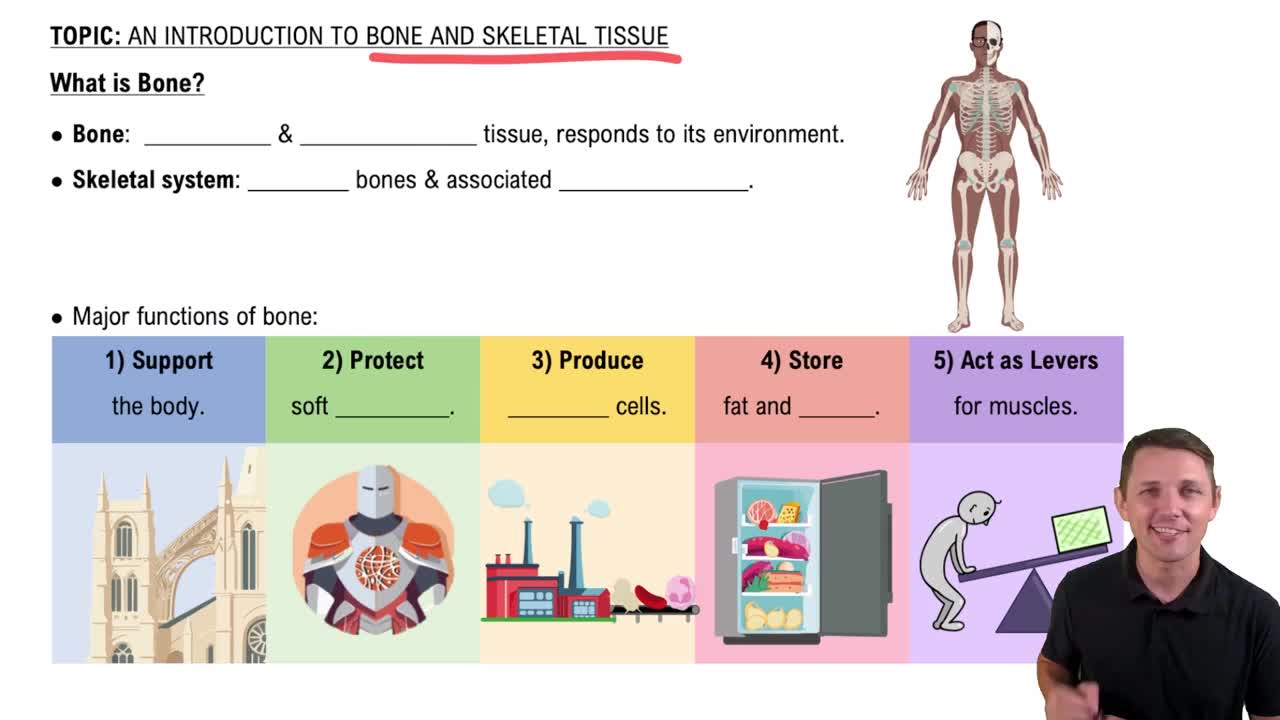
Support, Protection, Movement, Mineral and growth factor storage, Blood cell formation, Triglyceride storage, Hormone production.
Compact bone: dense outer layer; Spongy bone: honeycomb of trabeculae filled with marrow.
Has a shaft (diaphysis) of compact bone with medullary cavity, ends (epiphyses) with compact and spongy bone, articular cartilage, and epiphyseal line.
Periosteum: outer double-layered membrane with osteogenic cells; Endosteum: delicate membrane lining internal bone surfaces with osteogenic cells.
In trabecular cavities of spongy bone and diploë of flat bones; site of hematopoiesis (blood cell formation).
Osteogenic cells, Osteoblasts, Osteocytes, Bone-lining cells, Osteoclasts.
Mitotically active stem cells that differentiate into osteoblasts or bone-lining cells.
Bone-forming cells that secrete unmineralized bone matrix called osteoid.
Mature bone cells that maintain bone matrix and act as stress sensors.
Flat cells on bone surfaces that help maintain the matrix; called periosteal or endosteal cells depending on location.
Large multinucleate cells that resorb bone by secreting enzymes and acids.
Structural unit of compact bone; consists of concentric lamellae around a central canal containing blood vessels and nerves.
Hairlike canals connecting lacunae and central canal, allowing nutrient and waste exchange between osteocytes.
Interstitial lamellae fill gaps between osteons; circumferential lamellae encircle the diaphysis to resist twisting.
Trabeculae arranged along lines of stress with irregular lamellae and osteocytes interconnected by canaliculi.
Organic: cells and osteoid (collagen and ground substance).
Inorganic: hydroxyapatites (calcium phosphate crystals) providing hardness.
Process of bone tissue formation: Endochondral ossification replaces hyaline cartilage; Intramembranous ossification develops from fibrous membranes.
Bone collar forms, cartilage calcifies, periosteal bud invades, diaphysis elongates, secondary ossification in epiphyses, epiphyses ossify.
Length by interstitial growth at epiphyseal plate; width by appositional growth with osteoblasts adding matrix externally and osteoclasts resorbing internally.
Growth hormone, thyroid hormone, testosterone, and estrogens regulate growth and epiphyseal plate closure.
Continuous process of bone deposit by osteoblasts and resorption by osteoclasts to maintain bone strength and mineral homeostasis.
PTH stimulates osteoclasts to resorb bone, releasing calcium into blood when levels are low; secretion stops when normal levels are restored.
Bones grow or remodel in response to mechanical stress, becoming thicker where stress is greatest.
Hematoma formation, fibrocartilaginous callus formation, bony callus formation, bone remodeling.
Bone resorption exceeds deposit; most common in postmenopausal women due to estrogen loss.
Calcium-rich diet, vitamin D, weight-bearing exercise, and avoiding smoking and excessive alcohol.