 뒤로
Anatomy & Physiology: Bones, Skeleton, and Joints
 01:27

이 집합의 용어 (29)
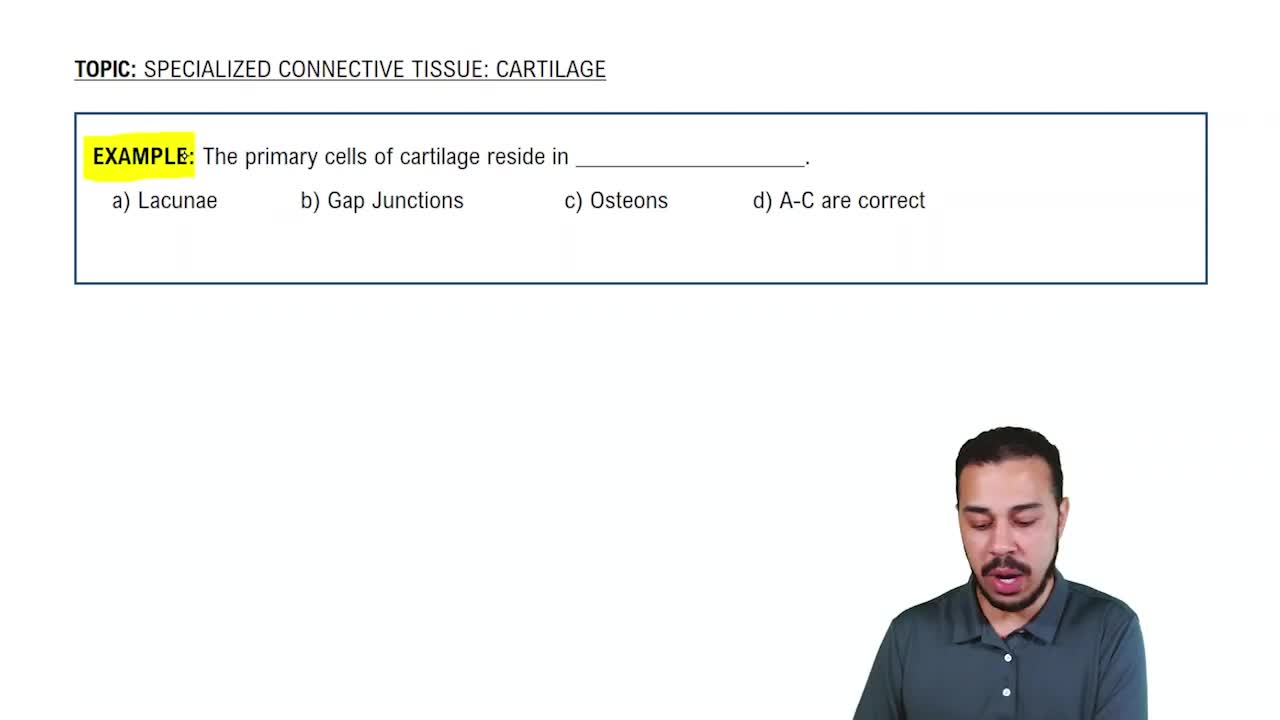
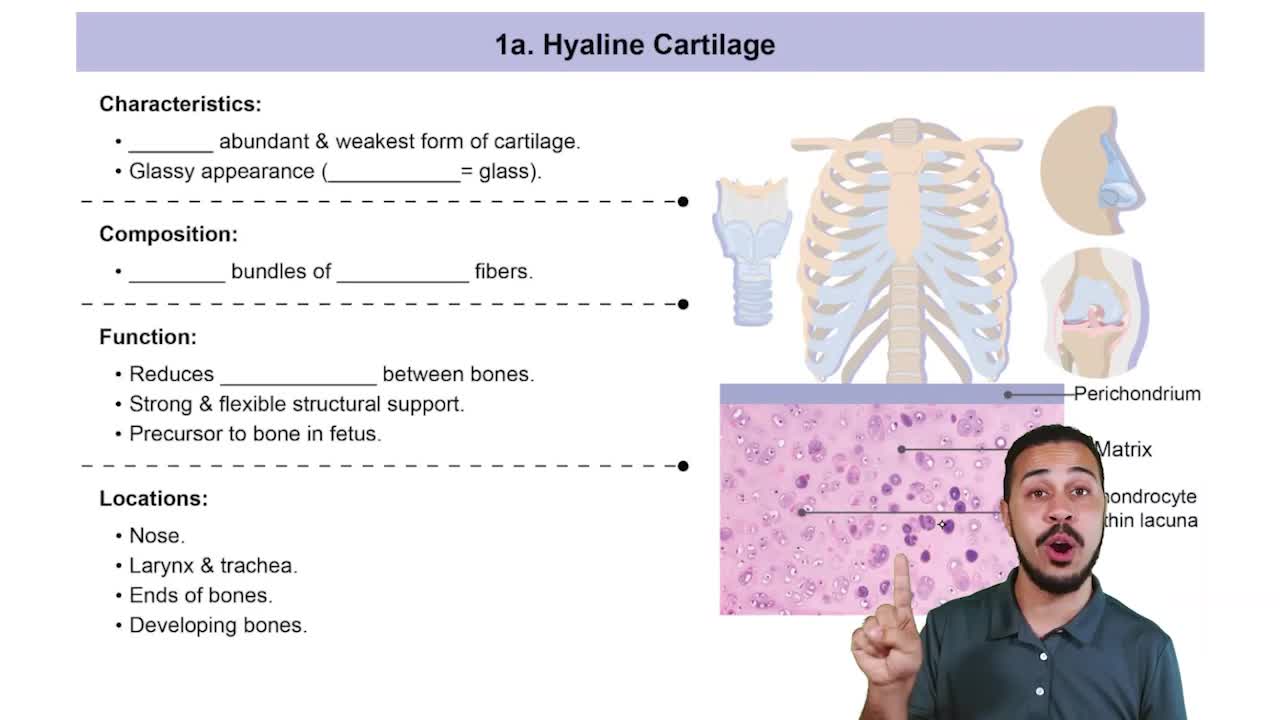
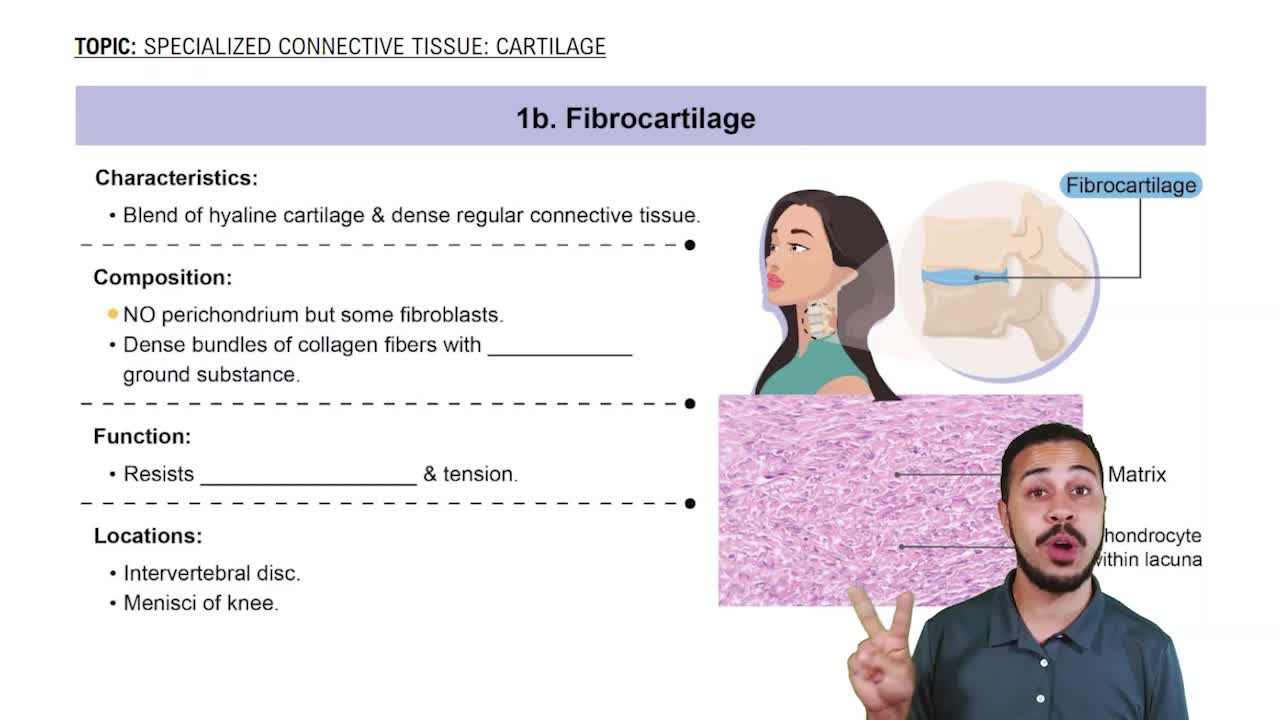
Hyaline, elastic, and fibrocartilage form the skeletal system. Hyaline is most common and provides support with flexibility, elastic cartilage is flexible, and fibrocartilage resists compression and absorbs shock.
The perichondrium is a dense connective tissue layer surrounding cartilage, providing nutrients and support. Cartilage matrix is gooey due to proteoglycans and glycosaminoglycans.
The axial skeleton includes the skull, vertebral column, and rib cage. The appendicular skeleton includes limbs and girdles (shoulder and pelvic).
Long bones are longer than wide (e.g., femur), short bones are cube-shaped (e.g., carpals), flat bones are thin and flat (e.g., sternum), and irregular bones have complex shapes (e.g., vertebrae).
Bones provide support, protection, movement via muscle attachment, mineral storage (calcium, phosphate), blood cell formation, and energy storage in yellow marrow.
Long bones have a diaphysis (shaft), epiphyses (ends), medullary cavity with marrow, and outer layers of compact and spongy bone.
Periosteum is a fibrous membrane covering bone surface with an outer fibrous layer and inner osteogenic layer. Endosteum lines internal bone surfaces and contains bone-forming cells.
Osteoblasts build bone, osteocytes maintain bone, and osteoclasts resorb bone during remodeling.
Hematopoiesis is blood cell formation occurring in red marrow (infants and some adult bones). Yellow marrow stores fat and replaces red marrow in adults.
Compact bone is dense with osteons, lamellae, central canals, and canaliculi. Spongy bone has trabeculae and spaces filled with marrow.
Osteoid is the organic, unmineralized bone matrix secreted by osteoblasts, mainly composed of collagen fibers.
Intramembranous ossification forms flat bones directly from mesenchyme. Endochondral ossification forms most bones by replacing hyaline cartilage.
Zones include resting, proliferation, hypertrophic, calcification, and ossification. Growth hormones and sex hormones regulate activity.
Remodeling units are groups of osteoblasts and osteoclasts. They are stimulated by mechanical stress and hormones to maintain bone strength.
Parathyroid hormone (PTH) increases blood calcium by stimulating osteoclasts, increasing absorption, and reducing excretion.
Fractures include simple, compound, comminuted, greenstick, and spiral, described by location, pattern, and skin involvement.
Repair steps: hematoma formation, fibrocartilaginous callus, bony callus, and bone remodeling. Osteoblasts and osteoclasts are involved.
Imbalances include osteoporosis (bone loss), rickets (soft bones), and osteomalacia. Symptoms include fractures and deformities; treatments vary.
Spine has cervical, thoracic, lumbar, sacral curvatures. Atlas supports the skull; axis allows head rotation.
Discs have an outer annulus fibrosus (fibrocartilage) and inner nucleus pulposus (gelatinous core) for shock absorption.
Paranasal sinuses are air-filled cavities that lighten the skull, warm and moisten air, and enhance voice resonance.
Fontanels are soft spots on infant skulls where bones have not yet fused, allowing brain growth and easier birth.
Female pelvis is wider, shallower, and has a larger pelvic inlet and outlet for childbirth compared to the male pelvis.
Joints are synarthroses (immovable), amphiarthroses (slightly movable), and diarthroses (freely movable).
Joints are fibrous, cartilaginous, or synovial, based on tissue type and presence of joint cavity.
Synovial joints have a joint cavity, articular cartilage, synovial membrane, and ligaments for stability.
Tendon sheaths are synovial-lined tubes around tendons; bursae are fluid-filled sacs reducing friction at joints.
Movements include flexion, extension, abduction, adduction, rotation, and gliding.
Types: plane (wrist), hinge (elbow), pivot (atlas-axis), condylar (knuckle), saddle (thumb), ball-and-socket (shoulder).