 뒤로
Anatomy & Physiology: Bones, Skeleton, and Joints
 3:56

이 집합의 용어 (24)
Hyaline, elastic, and fibrocartilage are the three main types of skeletal cartilages, each with distinct structure and locations.
Growth by adding new cartilage matrix on the surface of existing cartilage.
Growth from within the cartilage by chondrocyte division and matrix secretion.
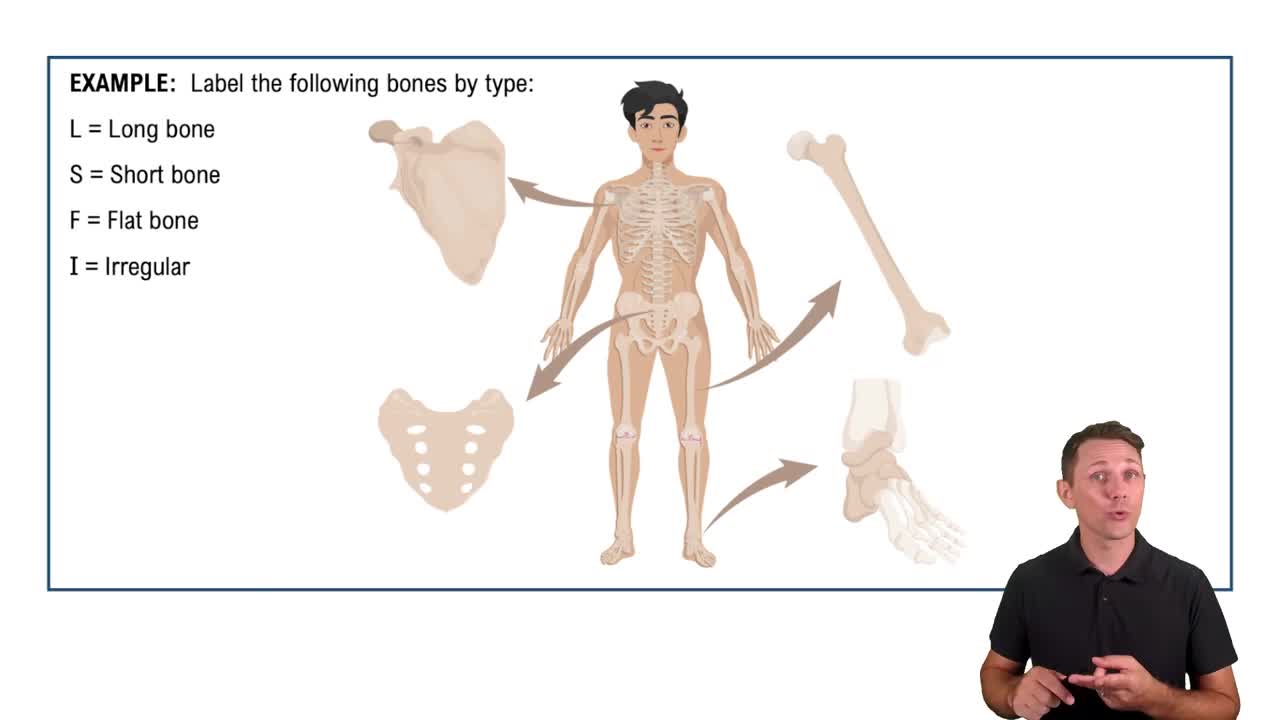
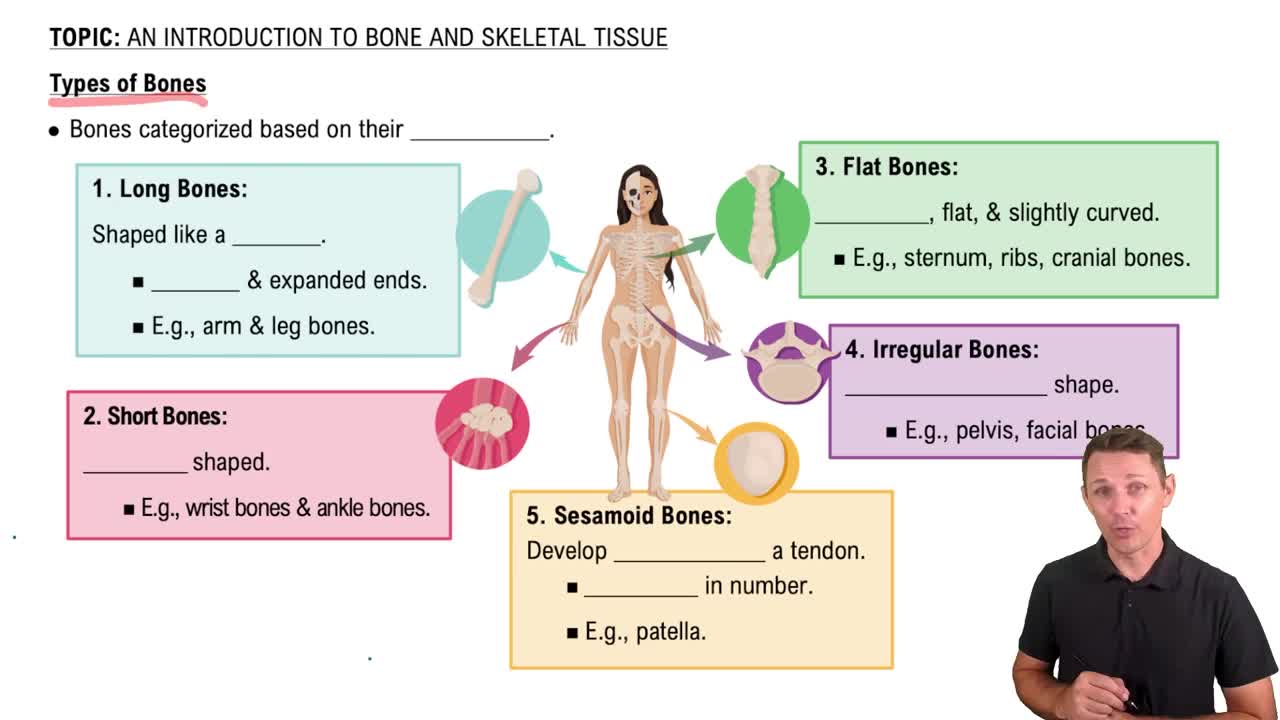
Long, short, irregular, and flat bones are the four main classifications based on shape.
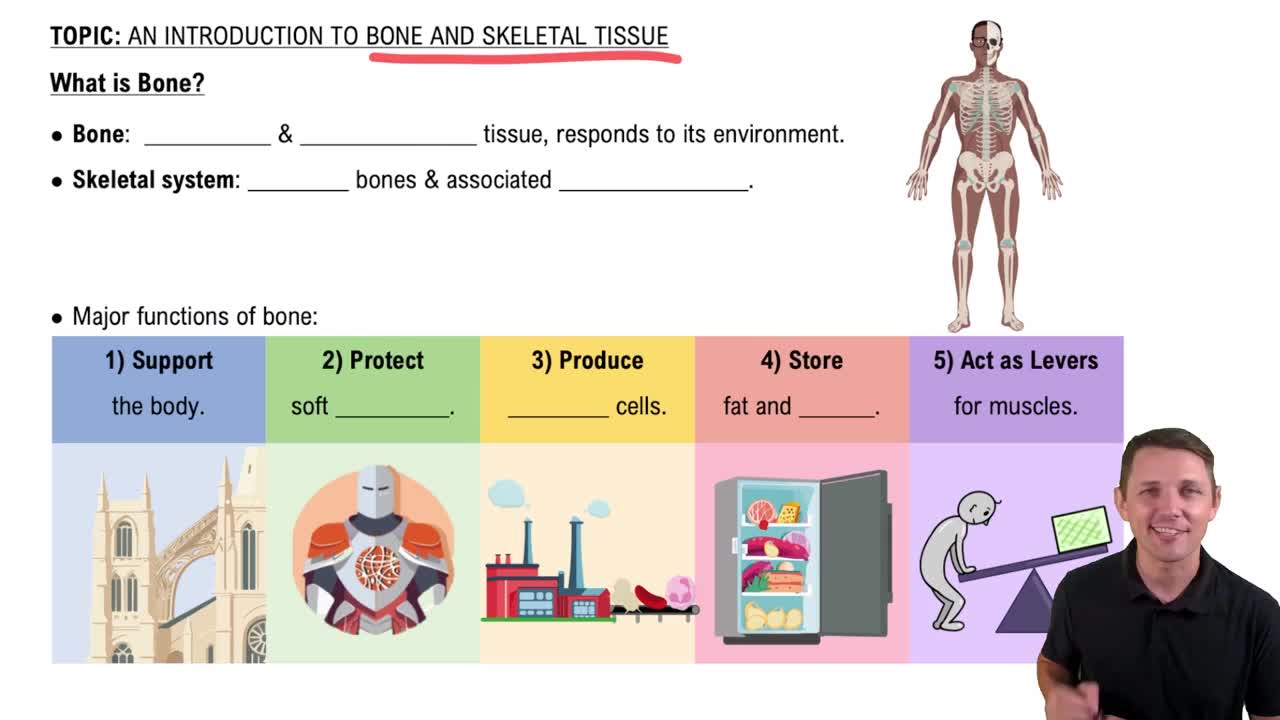
Support, protection, movement, mineral storage, blood cell formation, and energy storage.
Includes the diaphysis (shaft), epiphyses (ends), and bone membranes.
Cells that build bone by secreting bone matrix.
Cells that break down bone tissue during remodeling.
Concentric rings of bone matrix surrounding the central canal in osteons.
Small spaces housing osteocytes within the bone matrix.
Bone develops directly from mesenchymal tissue, mainly forming flat bones.
Bone develops by replacing hyaline cartilage, forming most bones of the body.
Growth hormone, parathyroid hormone (PTH), and calcitonin regulate bone growth and remodeling.
Includes the skull (with sutures), bony thorax, and vertebral column with curvatures.
Air-filled cavities in frontal, ethmoid, sphenoid, and maxillary bones that lighten the skull and enhance voice resonance.
Discs cushion vertebrae and allow flexibility; composed of nucleus pulposus and annulus fibrosus.
Vertebrae have a body, vertebral arch, and processes; types include cervical, thoracic, and lumbar.
Includes shoulder and pelvic girdles, and upper and lower limbs.
Synarthroses (immovable), amphiarthroses (slightly movable), and diarthroses (freely movable).
Sutures, syndesmoses, and gomphoses are types of fibrous joints with no joint cavity.
Fluid-filled sacs and tubular structures that reduce friction around joints and tendons.
Uniaxial, biaxial, multiaxial, gliding, and angular movements.
Complex synovial joint with ligaments, menisci, and bursae allowing flexion and extension.
Bursitis, tendonitis, and arthritis types: osteoarthritis (OA), rheumatoid arthritis (RA), and gouty arthritis.