Skip to main content
Anatomy & Physiology
나의 코스
배우기
시험 준비
AI 튜터
학습 가이드
교과서적 해결책
플래시카드
탐험해 보세요
앱을 사용해 보세요
나의 코스
배우기
시험 준비
AI 튜터
학습 가이드
교과서적 해결책
플래시카드
탐험해 보세요
앱을 사용해 보세요
뒤로
Anatomy & Physiology: Cardiovascular System and Genetics
카드를 뒤집기 위해 탭할 수 있습니다.
Define artery, capillary, and vein
카드를 뒤집기 위해 탭할 수 있습니다.
👆
Define artery, capillary, and vein
Artery
: blood vessel carrying blood away from the heart;
Capillary
: smallest blood vessels where exchange occurs;
Vein
: blood vessel carrying blood toward the heart.
진행 상황 추적
컨트롤 버튼이 '내비게이션' 모드로 변경되었습니다.
1/34
추천 영상
VideoThumbView.guidedCourse
03:39
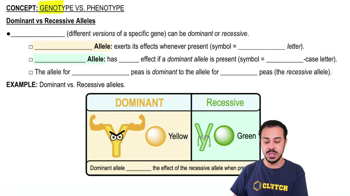
Dominant vs. Recessive Alleles
868
views
13
rank
1
comments
VideoThumbView.guidedCourse
06:36
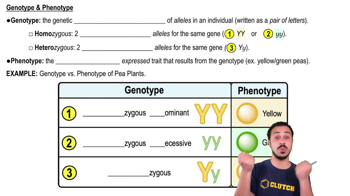
Genotype & Phenotype
668
views
12
rank
이 집합의 용어 (34)
하이드의 정의
Define artery, capillary, and vein
Artery
: blood vessel carrying blood away from the heart;
Capillary
: smallest blood vessels where exchange occurs;
Vein
: blood vessel carrying blood toward the heart.
What are the three tunics of blood vessels?
Tunica intima
(inner layer),
tunica media
(middle muscular layer), and
tunica externa
(outer connective tissue layer).
Compare tunic thickness among arteries, capillaries, and veins
Arteries have thick tunica media, veins have thinner tunica media and larger lumen, capillaries have only tunica intima for exchange.
Describe elastic and muscular arteries
Elastic arteries
conduct blood and have many elastic fibers;
muscular arteries
distribute blood and have more smooth muscle for vasoconstriction.
Define vasoconstriction and vasodilation
Vasoconstriction
: narrowing of blood vessels;
vasodilation
: widening of blood vessels.
Name types of capillaries and their locations
Continuous
: most tissues;
fenestrated
: kidneys, intestines;
sinusoidal
: liver, bone marrow.
What is the venous reservoir?
Veins that store blood and can constrict to increase venous return during demand.
Define anastomosis and its significance
Connection between blood vessels providing alternate blood flow routes, e.g., Circle of Willis.
Describe systemic and pulmonary circuits
Systemic circuit delivers oxygenated blood to body; pulmonary circuit carries deoxygenated blood to lungs.
What is a portal system?
A blood flow pathway where blood passes through two capillary beds before returning to the heart.
Describe the hepatic portal system
Carries nutrient-rich blood from digestive organs to the liver for processing.
Role of placenta and fetal shunts in fetal circulation
Placenta provides oxygen/nutrients; ductus venosus, foramen ovale, and ductus arteriosus bypass lungs and liver.
Changes in fetal cardiovascular structures at birth
Umbilical vessels close; foramen ovale and ductus arteriosus close, becoming ligaments.
Define blood flow, blood pressure, and peripheral resistance
Blood flow
: volume of blood moving through vessels;
blood pressure
: force blood exerts on vessel walls;
peripheral resistance
: opposition to flow.
Equation relating fluid flow, pressure, and resistance
Flow = Pressure difference / Resistance, or \(Q=\frac{\Delta P}{R}\).
Role of arterioles in blood flow regulation
Arterioles control blood flow to tissues and systemic blood pressure via vasoconstriction and vasodilation.
Factors affecting peripheral resistance
Local (e.g., chemicals), hormonal (e.g., epinephrine), and neural (e.g., sympathetic stimulation) factors.
Calculate pulse pressure (PP) and mean arterial pressure (MAP)
PP = systolic - diastolic pressure; MAP ≈ diastolic + 1/3 pulse pressure.
Equation relating MAP, cardiac output, and total peripheral resistance
MAP = CO × TPR, or \(MAP=CO \times TPR\).
Explain capillary exchange mechanisms
Exchange occurs via diffusion, filtration, and reabsorption driven by hydrostatic and osmotic pressures.
What causes edema related to net filtration pressure (NFP)?
Increased NFP causes excess fluid filtration into tissues; lymphatic system normally prevents edema.
How do muscular compression and respiratory pump aid venous return?
Muscle contractions and pressure changes during breathing push blood toward the heart.
Role of precapillary sphincters in autoregulation
They regulate blood flow into capillaries based on tissue needs.
Examples of chemicals causing vasodilation or vasoconstriction
Vasodilators: nitric oxide, histamine; vasoconstrictors: norepinephrine, endothelin.
Describe the baroreceptor reflex
Baroreceptors detect blood pressure changes and trigger autonomic responses to maintain homeostasis.
Role of autonomic nervous system in blood pressure regulation
Sympathetic increases heart rate and vasoconstriction; parasympathetic decreases heart rate.
Define chromosome, gene, allele, homologous chromosomes
Chromosome
: DNA molecule with genes;
gene
: DNA segment coding traits;
allele
: gene variant;
homologous chromosomes
: chromosome pairs.
Difference between homozygous and heterozygous genotypes
Homozygous
: identical alleles;
heterozygous
: different alleles for a gene.
Define genotype and phenotype
Genotype
: genetic makeup;
phenotype
: observable traits.
Explain dominant and recessive alleles
Dominant alleles express traits when present; recessive alleles express only if homozygous.
Compare incomplete dominance and codominance
Incomplete dominance: blended phenotype; codominance: both alleles expressed equally.
Difference between monogenic and polygenic inheritance
Monogenic: trait controlled by one gene; polygenic: trait controlled by multiple genes.
Role of sex chromosomes in sex determination
XX = female, XY = male; sex-linked traits are carried on sex chromosomes.
Inheritance of ABO blood types and Rhesus factor
ABO blood type determined by multiple alleles; Rh factor is either positive or negative based on presence of antigen.
 뒤로뒤로
 03:39