 뒤로
Anatomy & Physiology: Central Nervous System and Brain Functions
 0:50

이 집합의 용어 (28)
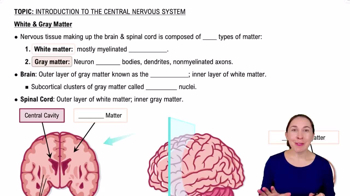
The CNS consists of the brain and spinal cord, responsible for processing and integrating information.
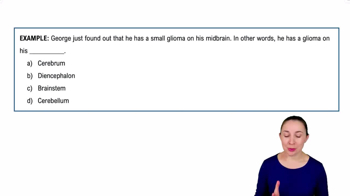
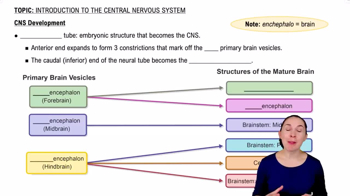
Cerebral hemispheres, diencephalon, brain stem, and cerebellum, each with distinct functions like higher cognition, sensory relay, autonomic control, and coordination.
Responsible for higher brain functions such as thought, action, and sensory processing; composed of cortex, white matter, and basal nuclei.
Includes the thalamus (sensory relay), hypothalamus (homeostasis and endocrine control), and epithalamus (sleep-wake regulation).
Controls basic life functions like breathing, heartbeat, and blood pressure; includes midbrain, pons, and medulla oblongata.
Coordinates voluntary movements, posture, balance, and speech; processes inputs from motor cortex and sensory pathways.
Divided into motor areas (voluntary movement), sensory areas (conscious sensation), and association areas (integration and cognition).
Spatial representation of body parts in the primary motor cortex, showing disproportionate control for precise movements.
Subcortical gray matter involved in movement control, cognition, and emotion; includes caudate nucleus, putamen, and globus pallidus.
Acts as a relay station for sensory and motor signals to the cerebral cortex, sorting and editing information.
Main visceral control center regulating autonomic nervous system, body temperature, hunger, thirst, sleep cycles, and endocrine system.
Epithalamus contains the pineal gland, which secretes melatonin to regulate sleep-wake cycles.
Part of the reticular formation that maintains cerebral cortical alertness and filters sensory input.
Network of brain structures involved in emotions, memory, and visceral responses, including the amygdala and hippocampus.
Includes declarative (facts), procedural (skills), motor, and emotional memory, processed and stored in different brain areas.
Short-term memory (STM) holds limited info temporarily; long-term memory (LTM) stores information indefinitely with consolidation.
Alpha (relaxed), beta (alert), theta (children/early sleep), and delta (deep sleep) waves reflect brain electrical activity patterns.
Non-REM sleep includes stages N1-N3 with slow-wave sleep; REM sleep involves rapid eye movement and dreaming with muscle inhibition.
Protective barrier formed by tight junctions in brain capillaries, regulating substance passage to maintain neural environment stability.
Provides buoyancy, cushions the brain and spinal cord, removes waste, and maintains chemical stability.
Extends from foramen magnum to lumbar region; gray matter inside (butterfly-shaped), white matter outside; protected by meninges and CSF.
Carry sensory information to the brain via chains of first-, second-, and third-order neurons; include dorsal column-medial lemniscal and spinothalamic tracts.
Deliver motor commands from brain to spinal cord; include direct (pyramidal) and indirect pathways controlling voluntary and subconscious movements.
Most neural pathways cross from one side of the CNS to the other, causing contralateral control of body functions.
Flaccid paralysis results from lower motor neuron damage causing muscle limpness; spastic paralysis results from upper motor neuron damage causing increased muscle tone.
The CNS develops from the neural tube, which forms primary brain vesicles that differentiate into major brain regions.
Include strokes (CVA), Alzheimer's disease, Parkinson's disease, Huntington's disease, and traumatic brain injuries.
Specialization of each hemisphere; left hemisphere typically dominant for language and logic, right for visual-spatial and creativity.