뒤로

Anatomy & Physiology (CH. 3): DNA, RNA, Protein Synthesis, and Cell Cycle

컨트롤 버튼이 '내비게이션' 모드로 변경되었습니다.
1/20
  • What is the role of transfer RNA (tRNA) in protein synthesis?

    tRNA carries specific amino acids and has an anticodon that pairs with the mRNA codon at the ribosome, adding its amino acid to the growing polypeptide chain during translation.
  • What is transcription in molecular biology?

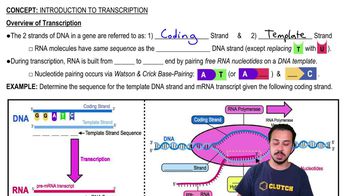
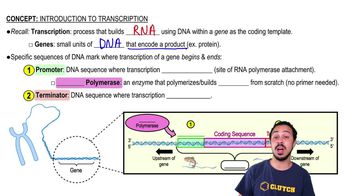
    Transcription is the process of transferring the DNA gene base sequence to a complementary mRNA base sequence, occurring on the DNA template strand with the help of RNA polymerase.
  • What is the function of transcription factors?

    Transcription factors loosen histones to expose DNA, bind to the promoter region, and mediate RNA polymerase binding to initiate transcription.
  • Describe the three main stages of transcription.

    Initiation: RNA polymerase binds promoter and starts mRNA synthesis. Elongation: RNA polymerase adds RNA nucleotides. Termination: mRNA synthesis ends at termination signal and mRNA is released.
  • What is the genetic code and how is it structured?

    The genetic code consists of 64 codons (three-base mRNA sequences) that specify amino acids or stop signals; redundancy allows some amino acids to be coded by multiple codons.
  • How does translation convert RNA to protein?

    Translation uses mRNA codons, tRNA anticodons, and ribosomes to assemble amino acids into a polypeptide chain according to the mRNA sequence.
  • What is the sequence of information flow from DNA to protein?

    DNA triplets → mRNA codons → tRNA anticodons → amino acids → protein.
  • What is semiconservative DNA replication?

    Each new DNA molecule consists of one old (parental) strand and one newly synthesized strand, ensuring genetic continuity.
  • What are the two major periods of the cell cycle?

    Interphase: cell grows and prepares for division. Mitotic phase (M phase): cell divides into two daughter cells.
  • What are the subphases of interphase and their functions?

    G1: cell growth and metabolism. S: DNA replication. G2: preparation for mitosis.
  • What happens during DNA replication in the S phase?

    DNA polymerase synthesizes new strands using primers, creating two identical daughter DNA molecules from the original.
  • What is the role of cyclins and Cdks in cell division?

    Cyclins regulate cell cycle progression by activating Cdks, which trigger enzyme cascades preparing the cell for mitosis.
  • What are the four stages of mitosis?

    Prophase, Metaphase, Anaphase, Telophase ensure equal distribution of duplicated DNA to daughter cells.
  • What key events occur during prophase?

    Chromatin condenses into chromosomes, mitotic spindle forms, centrosomes move to poles, and nuclear envelope breaks down.
  • What happens during metaphase?

    Chromosomes align at the metaphase plate (cell equator) with centromeres precisely positioned.
  • Describe the anaphase stage of mitosis.

    Sister chromatids separate at centromeres and are pulled to opposite poles by kinetochore motor proteins.
  • What occurs during telophase?

    Chromosomes uncoil into chromatin, nuclear envelopes reform, nucleoli reappear, and the spindle disappears.
  • What is cytokinesis and when does it occur?

    Cytokinesis is the division of the cytoplasm, beginning in late anaphase, where a contractile ring forms a cleavage furrow to separate daughter cells.
  • What are 'go' and 'stop' signals in cell division control?

    'Go' signals include surface-to-volume ratio and growth factors; 'stop' signals include contact inhibition when cells touch each other.
  • What is the G1 checkpoint and its significance?

    The G1 checkpoint (restriction point) assesses if the cell is ready to divide; failure to pass leads to G0 phase where division ceases.