 뒤로
Anatomy & Physiology: Chapter 3 - The Cell
 04:46

이 집합의 용어 (28)
1. Plasma Membrane
2. Cytoplasm (includes cytosol, organelles, cytoskeleton)
3. Nucleus
Physically isolates the cell, provides structural support, regulates transport, communicates with other cells, and identifies the cell.
Composed of polar hydrophilic phosphate heads facing water and nonpolar hydrophobic fatty acid tails facing inward, forming a barrier between intracellular and extracellular fluids.
The plasma membrane is a dynamic structure with phospholipids and proteins moving laterally, creating a fluid and mosaic-like arrangement.
Integral proteins span the membrane; Peripheral proteins are found on one side of the membrane.
Channels, carriers, receptors, enzymes, structural support proteins, and linker proteins.
ACE2 is an integral membrane protein that SARS-CoV-2 spike protein binds to, allowing viral entry into human cells.
Diffusion is the movement of solute molecules from higher to lower concentration, driven by a concentration gradient.
Simple diffusion passes nonpolar molecules directly through the bilayer; facilitated diffusion uses channel or carrier proteins for polar or charged molecules.
Osmosis is the movement of water from low to high solute concentration across a selectively permeable membrane, via aquaporins or between phospholipids.
Osmotic pressure pulls water inward to a solution; hydrostatic pressure pushes water outward against a membrane.
Tonicity compares solute concentrations across membranes: isotonic (equal), hypertonic (higher outside, cell shrinks), hypotonic (lower outside, cell swells).
Movement of solutes against their gradient using ATP directly; example: Sodium-Potassium Pump moves 3 Na+ out and 2 K+ in.
Uses energy from an ion gradient created by primary active transport to move another solute against its gradient, often via symporters or antiporters.
The electrical potential difference across the plasma membrane when the cell is at rest, typically negative inside relative to outside.
Endocytosis (phagocytosis, pinocytosis, receptor-mediated) and exocytosis, all requiring ATP.
Produce most of the cell's ATP through oxidative catabolism; contain their own DNA and ribosomes.
Membrane-bound sacs with acid hydrolases that digest macromolecules, degrade worn organelles, and destroy bacteria.
Network of protein filaments: actin filaments (support and movement), intermediate filaments (strength), microtubules (shape, organelle movement, cilia/flagella core).
Directs cellular activities, houses DNA, and is the site of RNA production for protein synthesis.
Initiation (RNA polymerase binds promoter), elongation (RNA strand synthesis), termination (RNA polymerase detaches and mRNA is released).
Messenger RNA (mRNA), transfer RNA (tRNA), and ribosomal RNA (rRNA).
Initiation (assembly of ribosome and start codon recognition), elongation (amino acid chain formation), termination (release of completed polypeptide).
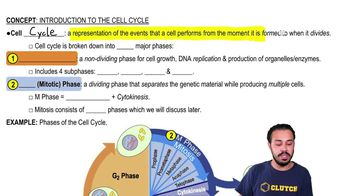
Ordered series of events from cell formation to division; major phases are interphase (growth and DNA replication) and mitotic phase (cell division).
DNA synthesis or replication, producing two identical DNA strands for daughter cells.
Prophase, metaphase, anaphase, telophase (followed by cytokinesis).
Programmed cell death to remove damaged or unnecessary cells.
Benign tumors remain localized; malignant tumors invade other tissues and can metastasize.