뒤로

Anatomy & Physiology: Chapter 3 - The Cell

컨트롤 버튼이 '내비게이션' 모드로 변경되었습니다.
1/20
  • What is the primary function of the plasma membrane?

    The plasma membrane controls the movement of substances in and out of the cell, maintaining homeostasis.
  • Name the main components of the plasma membrane.

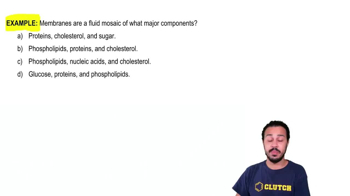
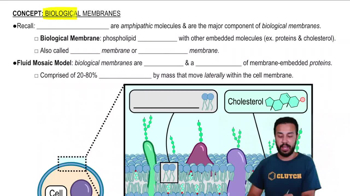
    The plasma membrane is mainly composed of a phospholipid bilayer, proteins, cholesterol, and carbohydrates.
  • What role do membrane proteins play?

    Membrane proteins function as receptors, channels, carriers, enzymes, and structural anchors.
  • Define selective permeability in the context of the plasma membrane.

    Selective permeability means the membrane allows certain molecules to pass while blocking others.
  • What is simple diffusion?

    Simple diffusion is the passive movement of molecules from high to low concentration without energy or assistance.
  • How does facilitated diffusion differ from simple diffusion?

    Facilitated diffusion requires membrane proteins to help molecules move down their concentration gradient without energy.
  • What is osmosis?

    Osmosis is the diffusion of water across a selectively permeable membrane from low to high solute concentration.
  • Describe active transport.

    Active transport moves molecules against their concentration gradient using energy, often via ATP.
  • What is endocytosis?

    Endocytosis is the process by which cells engulf substances by enclosing them in a vesicle formed from the plasma membrane.
  • What is exocytosis?

    Exocytosis is the process of vesicles fusing with the plasma membrane to release contents outside the cell.
  • Name three major organelles and their functions.

    • Nucleus: stores genetic material and controls cell activities.
    • Mitochondria: produces ATP through cellular respiration.
    • Endoplasmic reticulum: synthesizes proteins (rough ER) and lipids (smooth ER).
  • What is the function of ribosomes?

    Ribosomes synthesize proteins by translating messenger RNA.
  • Describe the role of the Golgi apparatus.

    The Golgi apparatus modifies, sorts, and packages proteins and lipids for transport.
  • What are lysosomes and their function?

    Lysosomes contain digestive enzymes that break down waste materials and cellular debris.
  • What is the cytoskeleton?

    The cytoskeleton is a network of protein filaments that provides cell shape, support, and facilitates movement.
  • Name two types of cellular extensions and their functions.

    • Cilia: move substances across the cell surface.
    • Flagella: propel the entire cell.
  • What is the function of microvilli?

    Microvilli increase the surface area of the plasma membrane to enhance absorption.
  • How do cells maintain homeostasis through membrane transport?

    Cells regulate the internal environment by controlling the movement of ions, nutrients, and waste via selective transport mechanisms.
  • What is the difference between passive and active transport?

    Passive transport does not require energy and moves substances down their concentration gradient; active transport requires energy to move substances against the gradient.
  • Explain the role of cholesterol in the plasma membrane.

    Cholesterol stabilizes the membrane's fluidity and integrity across temperature changes.