 뒤로
Anatomy & Physiology: Chemoreception and Taste
 5:05

이 집합의 용어 (20)
Chemoreceptors are sensory receptors that respond to chemical stimuli in the environment, such as molecules in food or air.
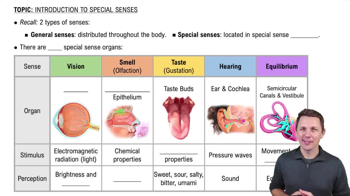
Gustation is the sense of taste, involving detection of chemical substances by taste buds on the tongue.
Microvilli or taste hair cells increase surface area on taste receptor cells to detect dissolved chemicals in saliva.
Olfaction is the sense of smell, detecting airborne chemical molecules via receptors in the nasal cavity.
Olfactory cilia are hair-like projections on olfactory receptor neurons that bind odor molecules to initiate smell signals.
The olfactory epithelium is a specialized tissue in the nasal cavity that contains olfactory receptor neurons for detecting odors.
Papillae are small bumps on the tongue surface that contain taste buds and help in mechanical manipulation of food.
A taste bud is a cluster of taste receptor cells located on papillae that detect different taste sensations.
The five basic tastes are sweet, sour, salty, bitter, and umami.
Taste receptor cells detect chemicals dissolved in saliva via microvilli, triggering nerve signals to the brain.
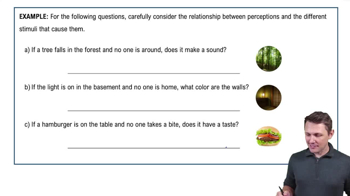
Olfaction and gustation work together to create the perception of flavor.
Olfactory receptor neurons send signals through their axons to the olfactory bulb in the brain for processing.
Chemoreceptors respond to chemical stimuli such as molecules in food, drink, or air.
Different papillae types (fungiform, foliate, circumvallate) house taste buds and vary in location and function.
The olfactory epithelium has basal cells that continuously regenerate olfactory receptor neurons.
Microvilli increase the surface area for chemical detection, enhancing taste sensitivity.
Taste signals are carried by the facial (VII), glossopharyngeal (IX), and vagus (X) nerves.
Umami is the savory taste sensation caused by amino acids like glutamate.
Olfactory cilia bind odor molecules, activating receptor proteins that start the smell signal cascade.
Saliva dissolves food chemicals so they can interact with taste receptor microvilli.