 뒤로
Anatomy & Physiology: Endocrine System and Blood Components
 7:06

이 집합의 용어 (20)
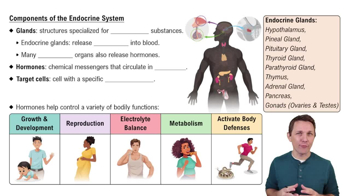
The pituitary, thyroid, parathyroid, adrenal, pineal, pancreas, ovaries, and testes.
The pancreas secretes insulin, which lowers blood glucose by facilitating cellular uptake.
The thyroid secretes thyroxine (T4) and triiodothyronine (T3), which regulate metabolism and growth.
Plasma, red blood cells (erythrocytes), white blood cells (leukocytes), and platelets (thrombocytes).
To carry oxygen from the lungs to body tissues using hemoglobin.
Neutrophils, lymphocytes, monocytes, eosinophils, and basophils.
Neutrophils are the first responders that phagocytize bacteria and debris.
Lymphocytes are responsible for specific immune responses, including antibody production and cell-mediated immunity.
Eosinophils combat parasitic infections and modulate allergic inflammatory responses.
Basophils release histamine and other chemicals during allergic reactions and inflammation.
Monocytes differentiate into macrophages and dendritic cells to phagocytize pathogens and present antigens.
Platelets are cell fragments that initiate blood clotting to prevent bleeding.
Presence or absence of specific antigens (A, B) on red blood cells and corresponding antibodies in plasma.
Blood type A has A antigens on RBCs and anti-B antibodies in plasma.
Blood type B has B antigens on RBCs and anti-A antibodies in plasma.
Blood type AB has both A and B antigens on RBCs and no anti-A or anti-B antibodies.
Blood type O has no A or B antigens on RBCs and both anti-A and anti-B antibodies in plasma.
The Rh factor is a protein antigen; Rh-positive means presence, Rh-negative means absence, important for transfusion compatibility.
Clumping (agglutination) indicates presence of the corresponding antigen on RBCs reacting with antibodies in the test serum.
To prevent immune reactions where antibodies attack incompatible donor RBC antigens, causing hemolysis.