 뒤로
Anatomy & Physiology Exam 2 Study Flashcards
 06:54

이 집합의 용어 (31)
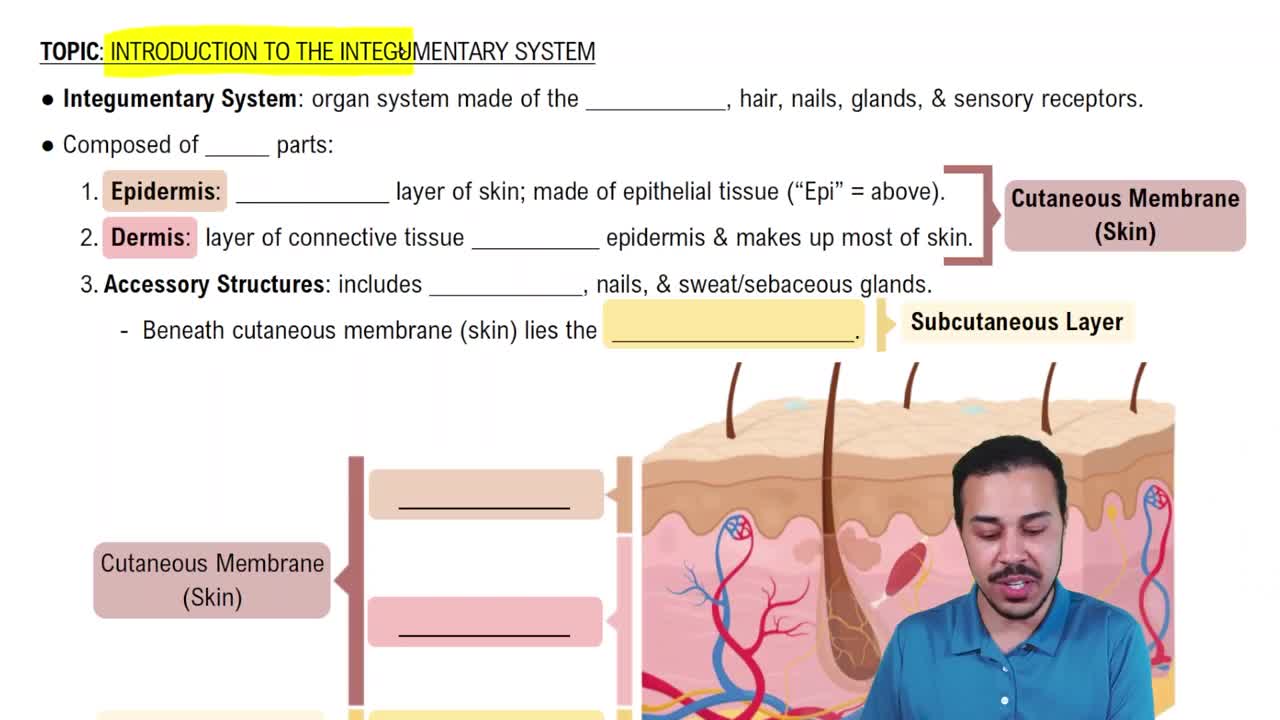
The epidermis and the dermis.
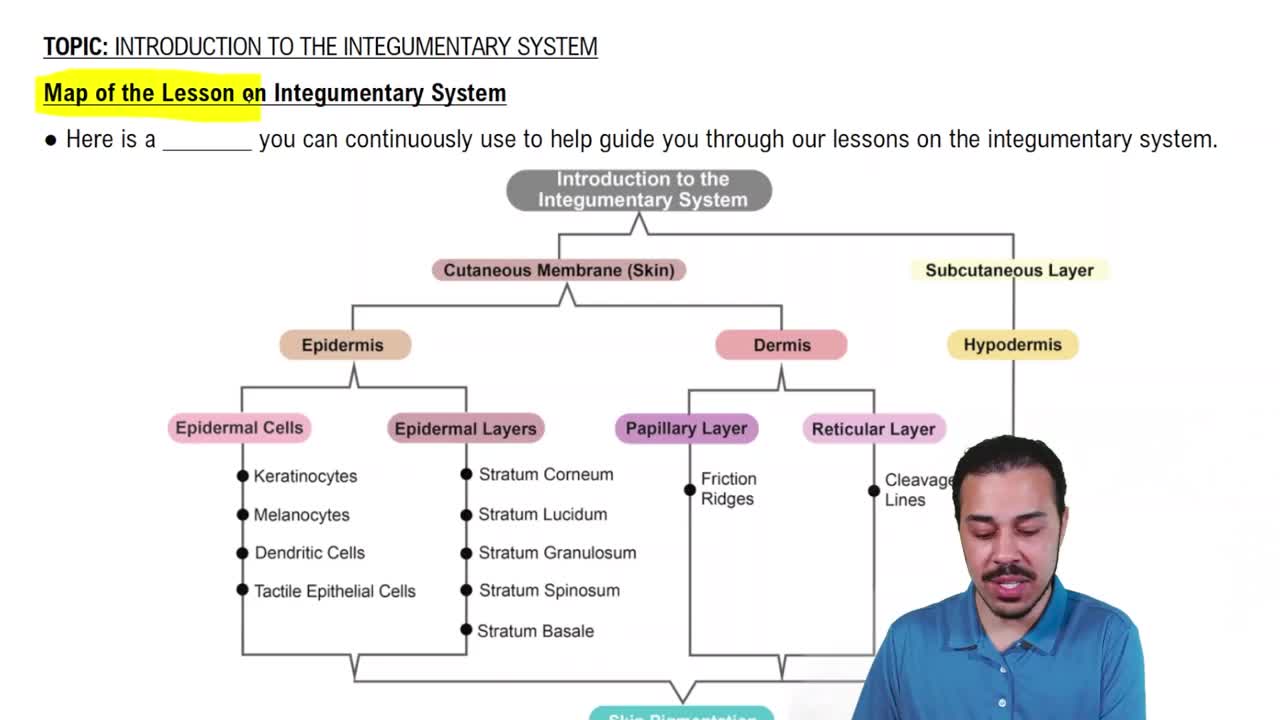
The epidermis is made of stratified squamous epithelial tissue and is the outermost layer of the skin.
From outer to inner: Stratum corneum, stratum lucidum (only in thick skin), stratum granulosum, stratum spinosum, stratum basale.
The papillary layer is made of areolar connective tissue. It contains capillaries, sensory neurons, and forms fingerprints.
The reticular layer is made of dense irregular connective tissue. It contains blood vessels, sweat glands, sebaceous glands, and pressure receptors.
A hair follicle is a sheath of epidermal cells that surrounds the root of a hair, found in the dermis layer of the skin.
Keratin makes up most of hair and is also found in nails and the outer layer of skin.
The arrector pili is a small muscle attached to hair follicles that causes hair to stand up (goosebumps), located in the dermis.
Nail growth starts at the nail matrix and nails are composed mostly of keratin.
First degree affects only the epidermis; second degree affects epidermis and part of dermis; third degree destroys epidermis, dermis, and may affect underlying tissues.
Spongy bone is found inside bones, especially at the ends of long bones; compact bone forms the dense outer layer.
Red marrow produces blood cells and is found in spongy bone; yellow marrow stores fat and is found in the medullary cavity.
Osteoblasts build bone, osteoclasts break down bone, and osteocytes maintain bone tissue.
Bone tissue is mostly made of collagen fibers and hydroxyapatite crystals (calcium phosphate).
Long: femur; Short: carpals; Flat: sternum; Irregular: vertebrae.
Intramembranous forms bone directly from mesenchyme; endochondral forms bone by replacing cartilage.
Bone lengthening occurs at the epiphyseal plate (growth plate) during development.
Osteoclasts resorb old bone; osteoblasts form new bone to maintain bone strength and calcium balance.
Hematoma formation, fibrocartilage callus formation, bony callus formation, and bone remodeling.
Calcium is vital for muscle contraction, nerve function, and blood clotting. Regulated by parathyroid hormone (PTH) and calcitonin.
Axial: skull, vertebrae, ribs; Appendicular: limbs, pelvic and pectoral girdles.
Kyphosis: excessive thoracic curvature; lordosis: excessive lumbar curvature; scoliosis: lateral spinal curvature.
Articular cartilage, synovial membrane, joint cavity with synovial fluid, ligaments, and joint capsule.
Origin is the fixed attachment point; insertion is the movable attachment point of a muscle.
Skeletal: voluntary, striated; Cardiac: involuntary, striated, intercalated discs; Smooth: involuntary, non-striated.
A tendon connects muscle to bone; a ligament connects bone to bone.
Actin and myosin are contractile proteins arranged in sarcomeres in skeletal muscle; smooth muscle has less organized filaments.
Motor neuron releases acetylcholine to stimulate muscle contraction.
ATP from creatine phosphate (immediate), anaerobic glycolysis (short-term), aerobic respiration (long-term), and stored ATP.
Anaerobic produces ATP without oxygen and creates lactic acid; aerobic requires oxygen and produces more ATP.
Agonist: prime mover; antagonist: opposes movement; synergist: assists the agonist.