 뒤로
Anatomy & Physiology Exam 3 Study Guide
 4:06

이 집합의 용어 (30)
Gastrin is a hormone produced by G cells in the stomach that stimulates gastric acid secretion and supports stomach movement.
Glycogen is stored mainly in the liver and skeletal muscles; liver glycogen maintains blood sugar, muscle glycogen fuels muscle contraction.
During prolonged fasting, the body shifts from glycogen use to fat breakdown, ketone production, and some protein breakdown.
Vitamins A (vision), D (calcium absorption), E (antioxidant), and K (clotting) are fat-soluble and support various body functions.
From lumen outward: mucosa, submucosa, muscularis externa, and serosa (or adventitia).
Stomach regions include cardia, fundus, body, and pyloric region.
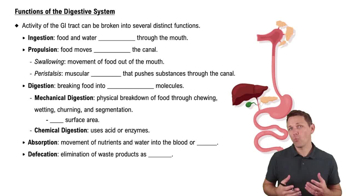
Mechanical digestion physically breaks food (chewing, churning); chemical digestion uses enzymes to split molecules.
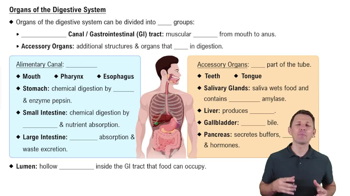
The small intestine digests and absorbs nutrients; it is the main site for nutrient absorption.
Key parts: enamel (hard crown covering), dentin (calcified substance), pulp (nerves and vessels), cementum (root covering).
Celiac trunk supplies foregut; superior mesenteric artery supplies most small intestine and proximal large intestine; inferior mesenteric artery supplies distal colon.
Parietal cells: HCl and intrinsic factor; chief cells: pepsinogen and gastric lipase; G cells: gastrin; mucous cells: protective mucus.
The portal triad includes a branch of the hepatic portal vein, a branch of the hepatic artery, and a bile ductule.
Lacteals are lymph capillaries in villi that absorb dietary long-chain fats as chylomicrons.
Liver: bile production and nutrient processing; gallbladder: stores and releases bile; pancreas: secretes enzymes, bicarbonate, insulin, and glucagon.
Kupffer cells are liver macrophages that remove bacteria, debris, and old blood cells from blood.
Bile contains water, bile salts, phospholipids, cholesterol, electrolytes, and bilirubin; it emulsifies fats to aid absorption.
The duodenum receives chyme, bile, and pancreatic juice; Brunner glands secrete alkaline mucus to protect it.
Formation of new glucose from noncarbohydrate precursors like lactate, glycerol, and amino acids, mainly in liver and kidneys.
BMR is the minimum energy needed to support vital functions at rest; influenced by muscle mass, body size, age, and thyroid hormones.
Heat stroke is a life-threatening condition with core temperature ≥104°F (40°C) and central nervous system impairment.
Heat transfer occurs via radiation (waves), conduction (contact), convection (moving air/water), and evaporation (sweat vaporization).
VLDL transports triglycerides; LDL delivers cholesterol to cells; HDL carries cholesterol back to liver.
Permanent teeth: 8 incisors (cut), 4 canines (tear), 8 premolars (crush), 12 molars (grind); formula per quadrant: 2-1-2-3.
Amylases digest starch; pepsin, trypsin, chymotrypsin digest proteins; lipases digest fats; maltase, sucrase, lactase digest disaccharides.
The pyloric sphincter regulates the release of stomach chyme into the duodenum in controlled amounts.
Buccal phase: voluntary bolus movement; pharyngeal phase: involuntary airway protection; esophageal phase: involuntary peristalsis to stomach.
Greater omentum: fatty fold from stomach over intestines; lesser omentum: connects liver to stomach and duodenum; both support viscera and carry vessels.
Iron: anemia; calcium: weak bones; potassium: weakness, arrhythmia; sodium: confusion/seizures; iodine: goiter; magnesium: neuromuscular issues; zinc: poor healing.
The liver synthesizes bile, albumin, clotting proteins; metabolizes nutrients; processes bilirubin; detoxifies substances.
Hydrostatic pressure pushes fluid out of capillaries; plasma colloid osmotic pressure pulls fluid in, mainly due to albumin.