 뒤로
Anatomy & Physiology Exam 3 Study Guide - Joints and Muscles
 04:06

이 집합의 용어 (25)
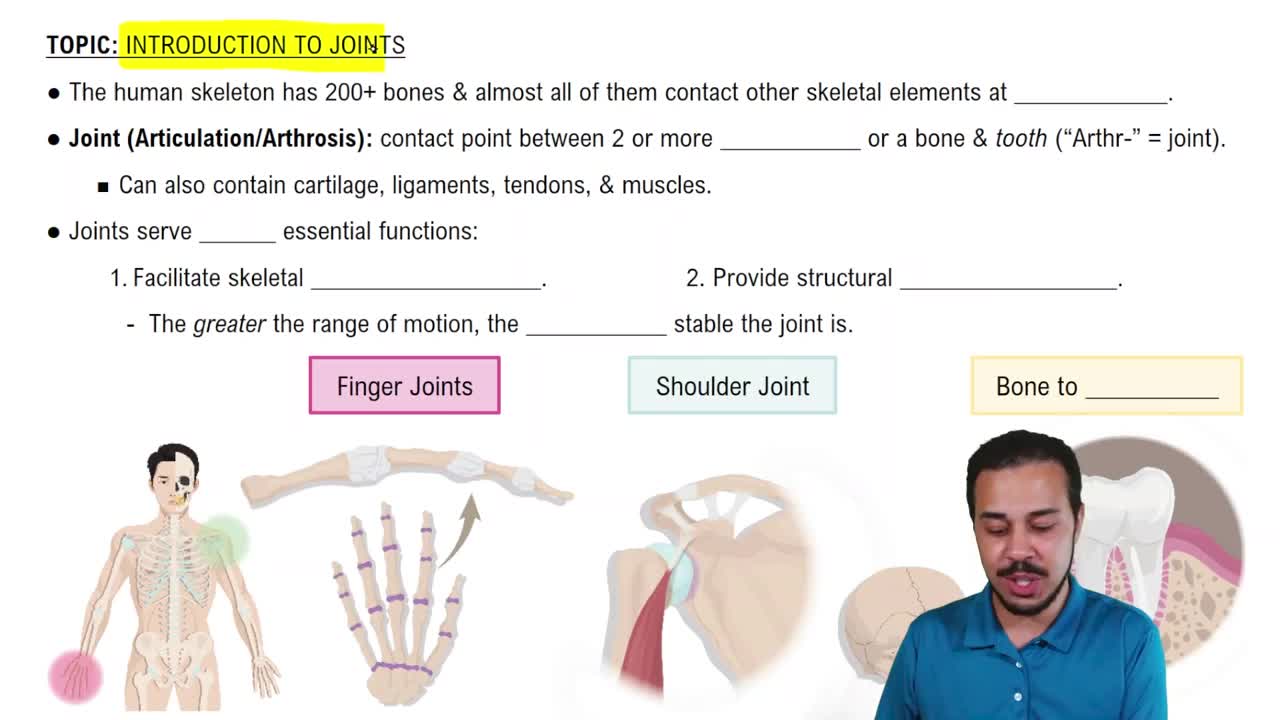
Articulations or joints allow for motion of the body and hold it together, sometimes providing protection.
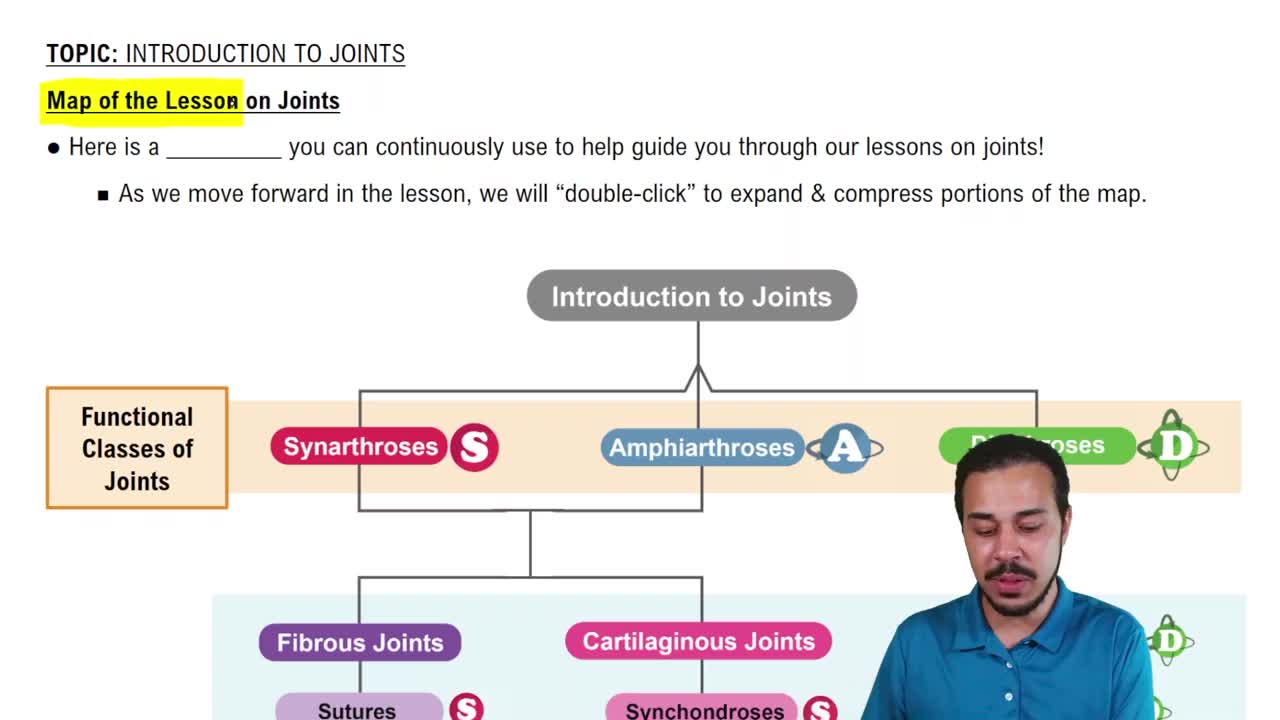
Fibrous joints, Cartilaginous joints, and Synovial joints.
Bones connected by collagen fibers; very little to no movement. Examples: Sutures (skull), Syndesmosis (ligaments between radius/ulna), Gomphosis (tooth roots).
Bones joined by cartilage without a joint cavity. Examples: Synchondrosis (epiphyseal plate), Symphysis (pubic symphysis, intervertebral discs).
Bones connected by a fluid-filled cavity, articular cartilage, enclosed in an articular capsule lined with a synovial membrane; all are diarthrotic (freely movable).
Plane, Condylar, Hinge, Saddle, Pivot, Ball-and-socket joints.
Articular cartilage, Articular capsule (fibrous layer and synovial membrane), Joint cavity, Synovial fluid, Reinforcing ligaments, Nerves and blood vessels.
Bursae reduce friction between ligaments, muscles, skin, tendons, and bones; tendon sheaths wrap around tendons to reduce friction.
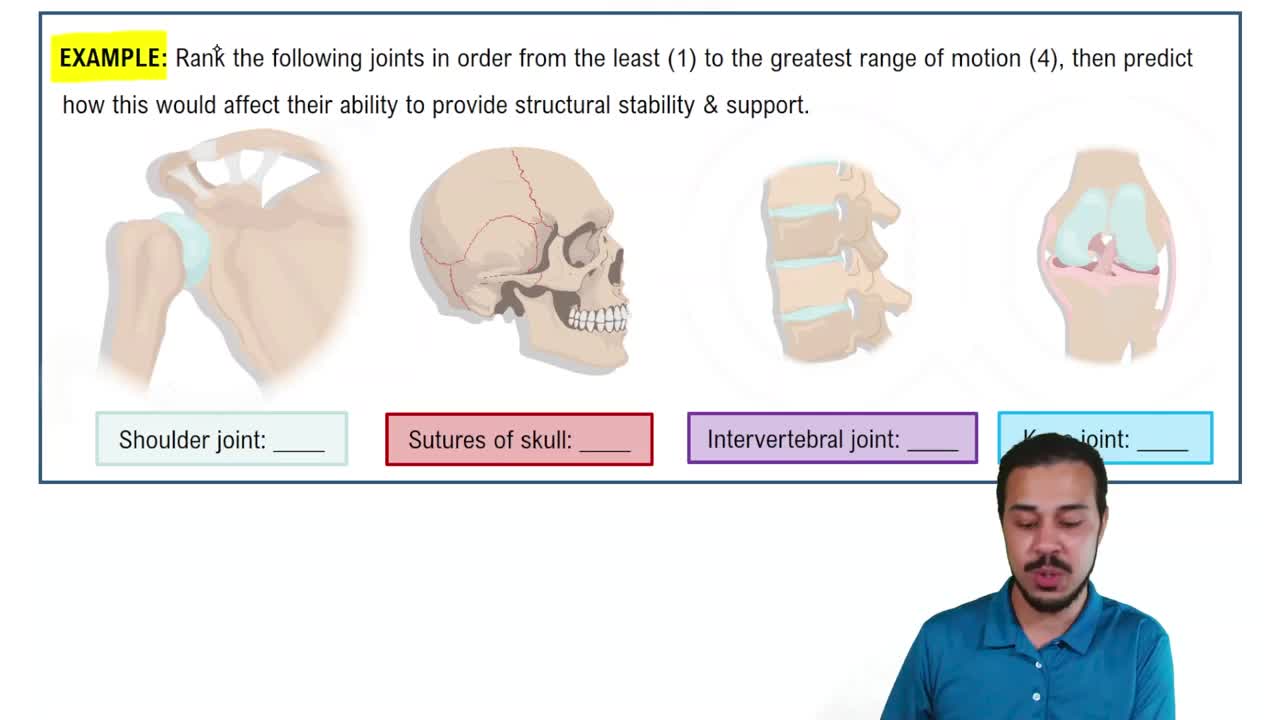
Shape of articular surfaces, muscle tone, and number and positioning of ligaments.
Synarthroses (immobile), Amphiarthroses (slightly mobile), Diarthroses (freely movable).
Gliding, Angular movements (flexion, extension, abduction, adduction, circumduction), and Rotation (medial and lateral).
Plane (gliding), Hinge (flexion/extension), Pivot (rotation), Condylar (biaxial), Saddle (biaxial), Ball-and-socket (multiaxial).
Head of humerus and glenoid cavity of scapula.
Glenoid labrum and rotator cuff tendons reinforce the joint.
Ruptured anterior cruciate ligament (ACL), ruptured tibial collateral ligament, and torn meniscus.
Osteoarthritis is degenerative and irreversible; rheumatoid arthritis is autoimmune with inflammation of synovial membrane.
Caused by bacteria transmitted by tick bites; treated with antibiotics.
Skeletal (voluntary, striated), Cardiac (involuntary, striated), Smooth (involuntary, non-striated).
Excitability, Contractility, Extensibility, Elasticity.
Epimysium (whole muscle), Perimysium (fascicle), Endomysium (muscle fiber).
Thin filaments slide past thick filaments; I band and Z disc shorten; H zone disappears; filaments do not change length.
Action potential causes release of acetylcholine, which binds to receptors and triggers depolarization of muscle fiber.
1) Cross-bridge formation, 2) Power stroke, 3) Detachment by ATP, 4) ATP hydrolysis resets myosin head.
Myosin heads remain attached to actin because no ATP is available to detach them after death.
Phosphorylation by creatine phosphate, anaerobic glycolysis, aerobic respiration.