 뒤로
Anatomy & Physiology: Homeostasis, Histology, and Skin
 01:59

이 집합의 용어 (29)
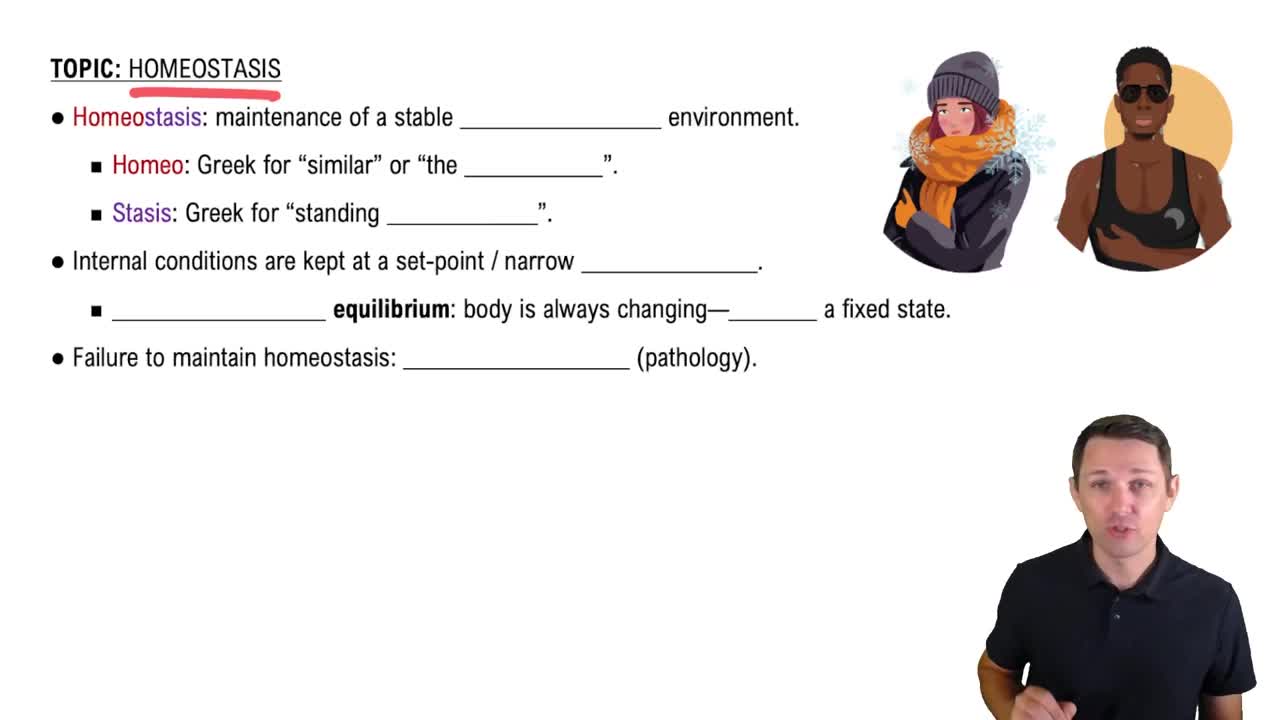
Homeostasis is the body's ability to maintain a relatively stable internal environment despite changes inside or outside the body.
Receptor detects change, Control center processes information and decides response, Effector carries out the response.
The receptor detects changes in the internal or external environment and sends information to the control center.
The control center receives information, compares it to the set point, and determines the appropriate response.
The effector carries out the response that changes the regulated condition to maintain homeostasis.
Negative feedback reverses a change to maintain stability; positive feedback amplifies a change until a specific event stops it.
Sweating to cool the body when too hot is an example of negative feedback.
Uterine contractions stimulate oxytocin release, which strengthens contractions, amplifying the process until delivery.
A set point is the target value or reference level around which a condition is regulated.
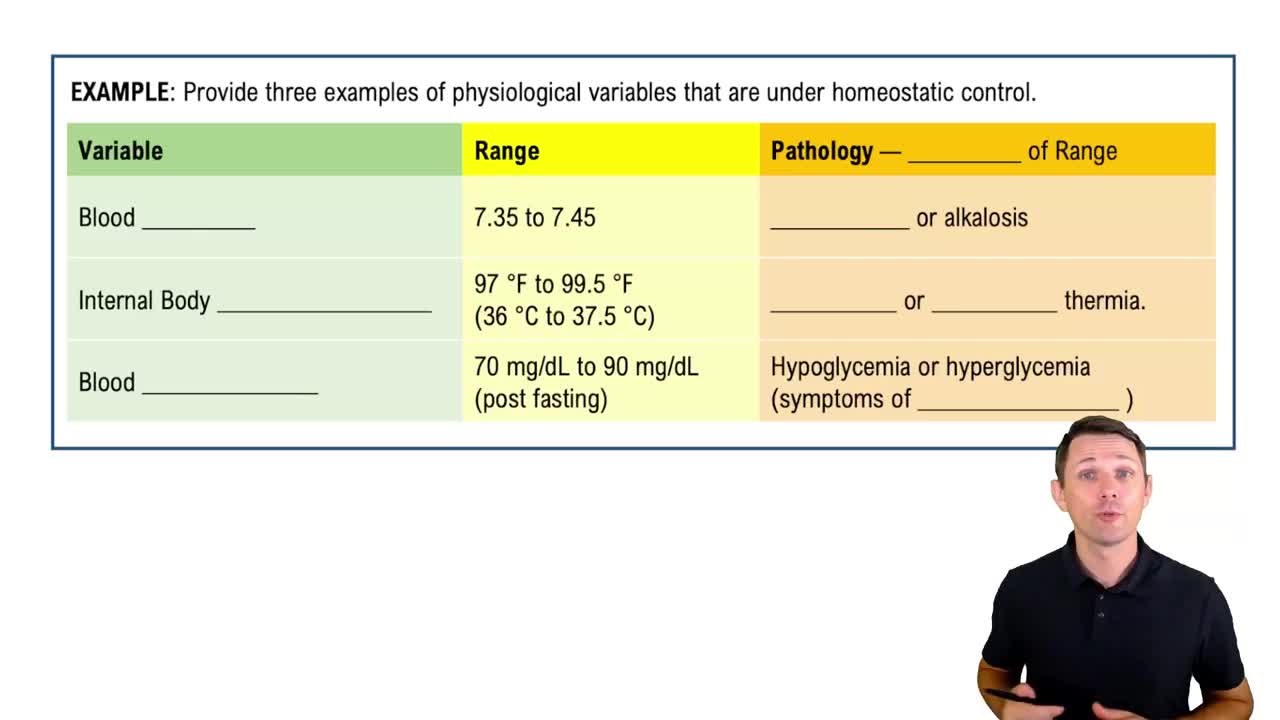
Homeostatic imbalance can cause conditions like diabetes, dehydration, hypothermia, hyperthermia, or acid-base imbalance.
Histology is the study of tissues under a microscope, focusing on groups of similar cells working together.
Epithelial, Connective, Muscle, and Nervous tissues.
Covers surfaces, lines cavities and organs, and forms glands.
Supports, binds, protects, stores energy, and transports substances; contains cells and abundant extracellular matrix.
Skeletal (voluntary), Cardiac (involuntary), Smooth (involuntary).
Receives, processes, and transmits information via electrical and chemical signals.
By number of cell layers (simple, stratified, pseudostratified, transitional) and cell shape (squamous, cuboidal, columnar).
Tendons connect muscle to bone; ligaments connect bone to bone.
Epidermis (outermost), Dermis (middle), Hypodermis (deepest, not technically skin).
The dermis contains blood vessels; the epidermis is avascular.
Stratum basale, Stratum spinosum, Stratum granulosum, Stratum lucidum (thick skin only), Stratum corneum.
Produce keratin, forming the main protective barrier of the skin.
Produce melanin, which protects DNA from UV radiation and contributes to skin color.
Thick skin has a thicker epidermis and stratum lucidum, found on palms and soles; thin skin covers most of the body and lacks stratum lucidum.
Papillary layer (areolar connective tissue) and Reticular layer (dense irregular connective tissue).
Produce watery sweat for temperature regulation through evaporative cooling.
Blood vessels near the skin surface dilate, increasing blood flow and heat loss.
Hemostasis, Inflammation, Proliferation, Remodeling.
First-degree: epidermis only; Second-degree: epidermis and part of dermis; Third-degree: full thickness of epidermis and dermis.