 뒤로
Anatomy & Physiology: Integumentary System and Hair
 06:54

이 집합의 용어 (34)
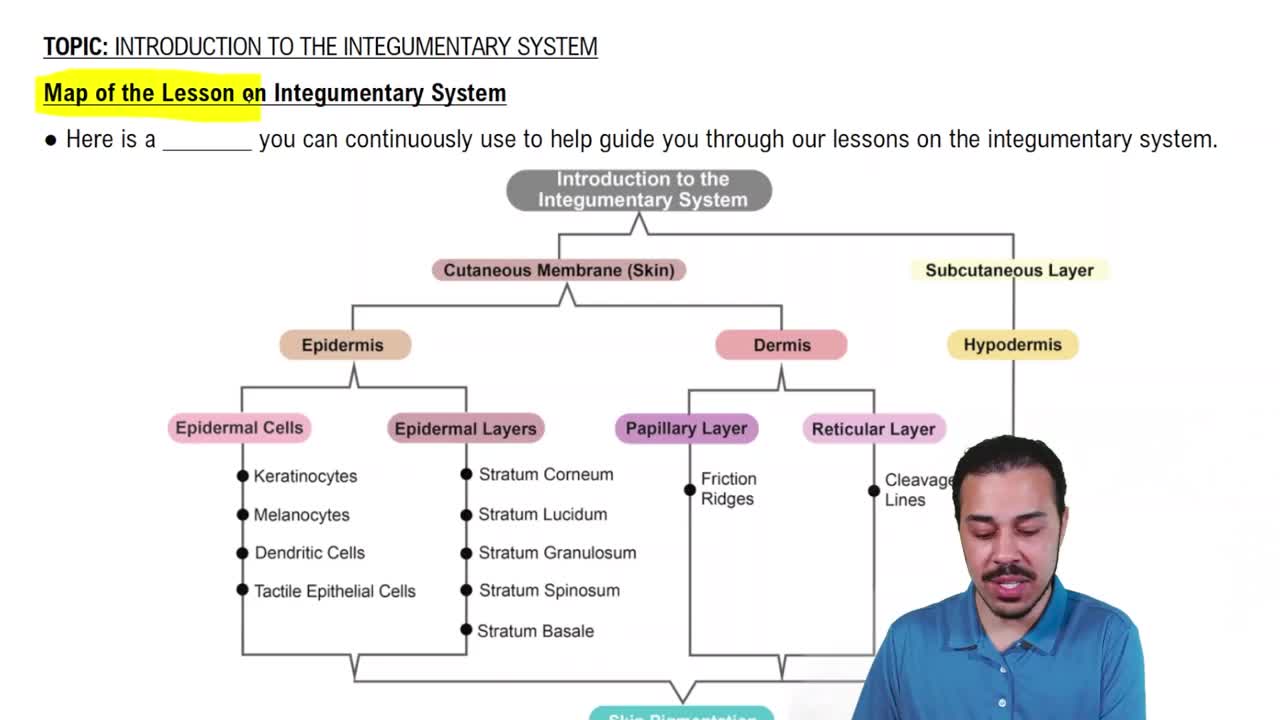
Four main types of cells in the epidermis
1. Keratinocytes
2. Melanocytes
3. Dendritic (Langerhans) Cells
4. Tactile (Merkel) Epithelial Cells
Cells in the Stratum Basale (three)
Basal Cells, Melanocytes, Tactile (Merkel) epithelial cells
Continuously divide and replace cells, pushing them into the next epidermal layer.
Specialized epithelial cells that work with nerves to detect touch.
Produce melanin, a pigment that protects skin from UV damage.
Cells in the Stratum Spinosum (two)
Keratinocytes and Dendritic (Langerhans) cells
Stratum Lucidum is present only in thick skin, not thin skin.
Responsible for keratin production in the epidermis.
Help initiate immune responses in the skin.
Which layer forms epidermal ridges and what is its function?
Stratum Basale forms ridges that create fingerprints, increase surface area, and strengthen epidermis-dermis bond.
Stratum Basale is deepest and connects to the basement membrane via hemidesmosomes.
Cells have stopped dividing and produce large amounts of keratin.
Flattened, densely packed cells filled with keratin.
15-30 layers of flattened, dead, keratinized epithelial cells connected by desmosomes.
Carotene
Converted into Vitamin A, needed for epithelial maintenance and photoreceptor pigment synthesis in the eye.
Melanin
A vesicle that stores melanin and colors the epidermis.
Increases with sun exposure.
Papillary layer and Reticular layer
Contains dermal papillae, areolar connective tissue, capillaries, lymphatic vessels, and sensory neurons supplying the epidermis.
Contains dense irregular connective tissue (net-like collagen and elastic protein fibers), sweat & oil glands, hair roots, and pressure receptors.
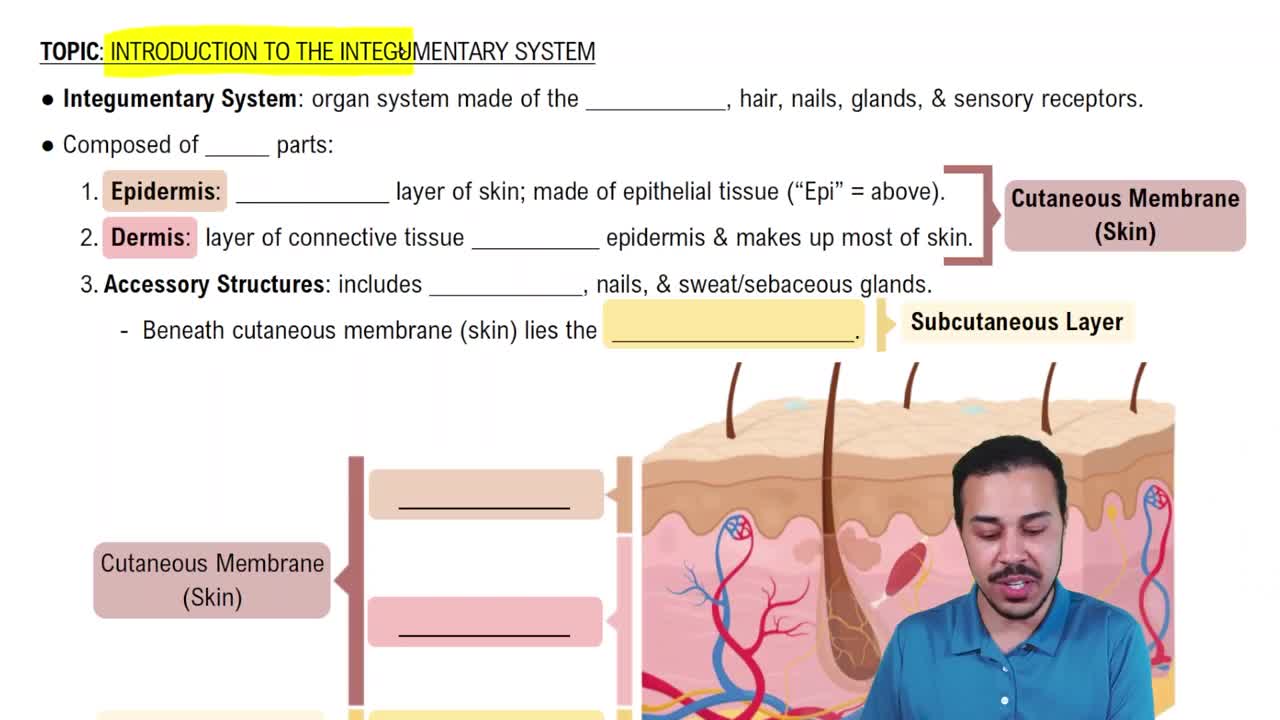
Subcutaneous layer (not technically part of the integument).
Stabilizes skin position relative to underlying tissue and allows independent movement.
Areolar connective tissue with many fat cells.
Hair papilla
Hair matrix, located just above the hair papilla.
Hair root
The visible portion of hair above the skin surface.
Arrector pili muscle, made of smooth muscle.
Cuticle (surface, hard keratin), Cortex (middle, hard keratin), Medulla (core, soft keratin).
Sebaceous (oil) glands and Sudoriferous (sweat) glands
Apocrine: secrete into hair follicles (Merocrine secretion); located in armpits, nipples, pubic region. Eccrine: secrete directly onto skin surface; widely distributed; function in evaporative cooling.
Nail body, nail bed, nail root, cuticle, lunula