Skip to main content
Anatomy & Physiology
나의 코스
배우기
시험 준비
AI 튜터
학습 가이드
교과서적 해결책
플래시카드
탐험해 보세요
앱을 사용해 보세요
나의 코스
배우기
시험 준비
AI 튜터
학습 가이드
교과서적 해결책
플래시카드
탐험해 보세요
앱을 사용해 보세요
뒤로
Anatomy & Physiology: Integumentary System Flashcards
카드를 뒤집기 위해 탭할 수 있습니다.
Integumentary system
카드를 뒤집기 위해 탭할 수 있습니다.
👆
Integumentary system
The body system consisting of the skin, hair, nails, glands, and nerves that protects the body and regulates temperature.
진행 상황 추적
컨트롤 버튼이 '내비게이션' 모드로 변경되었습니다.
1/20
추천 영상
VideoThumbView.guidedCourse
06:54
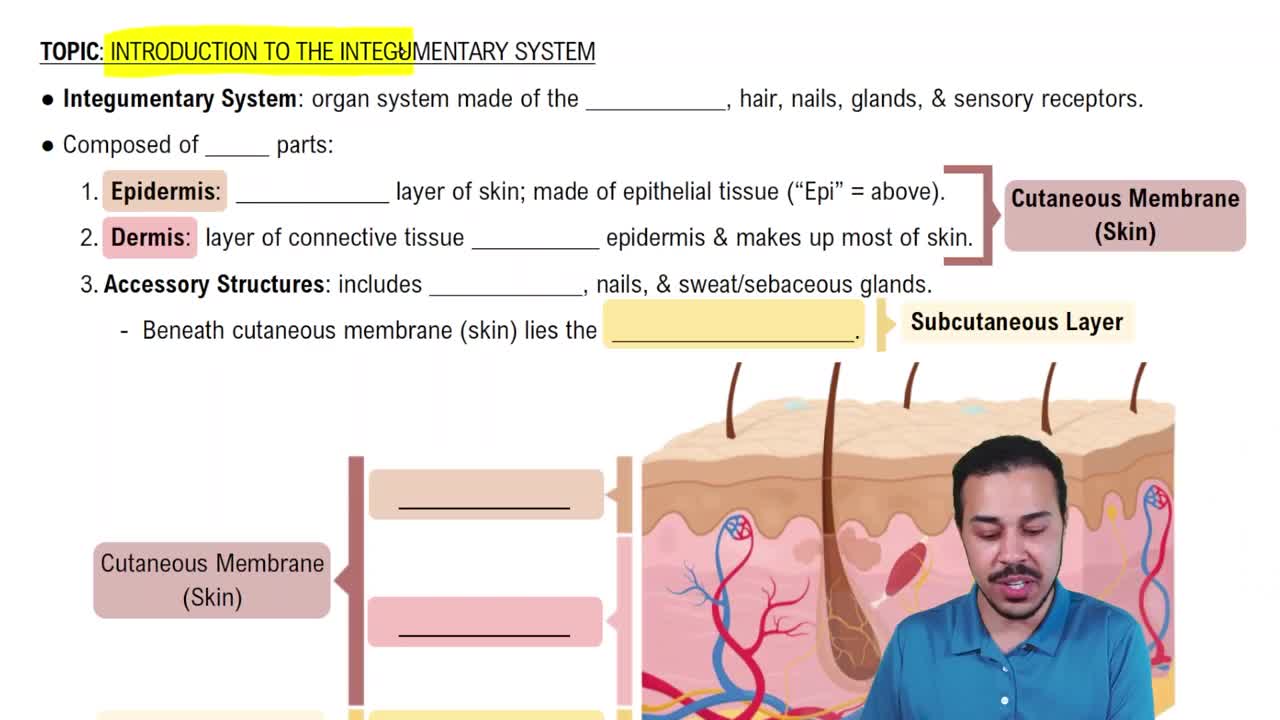
Introduction to the Integumentary System
24091
views
820
rank
3
comments
VideoThumbView.guidedCourse
03:40
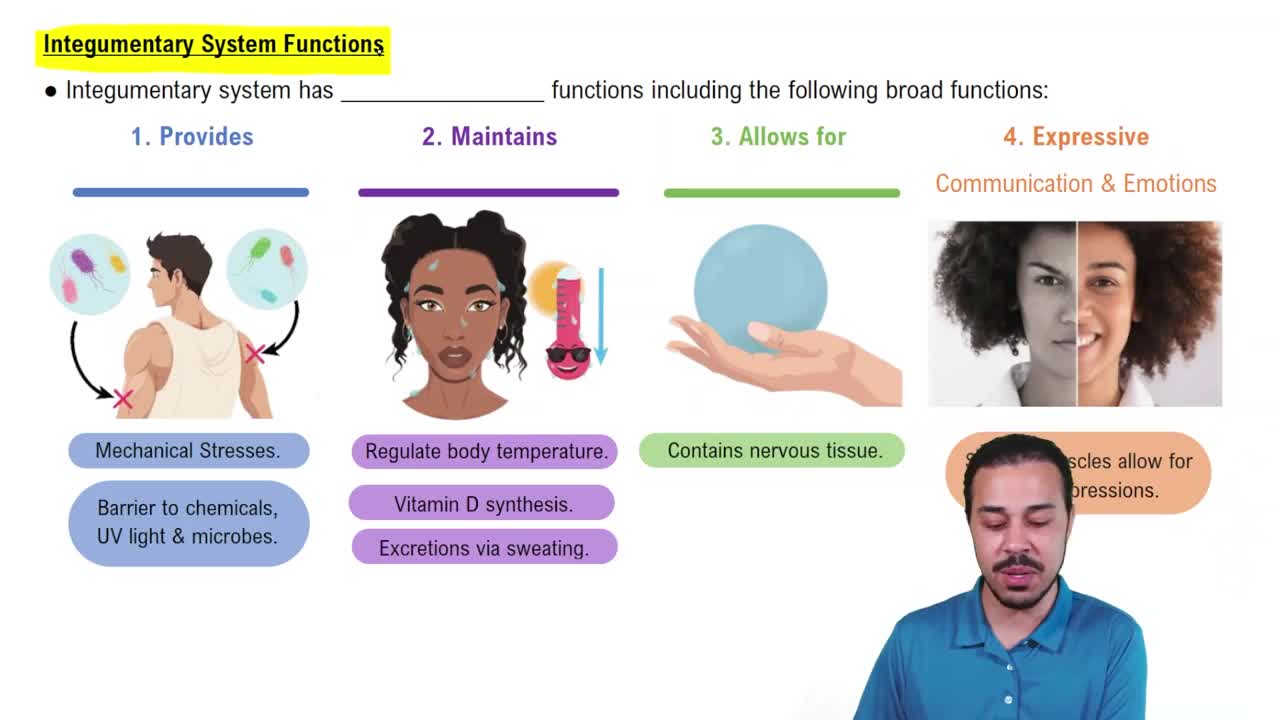
Integumentary System Functions
15645
views
395
rank
1
comments
VideoThumbView.guidedCourse
02:47
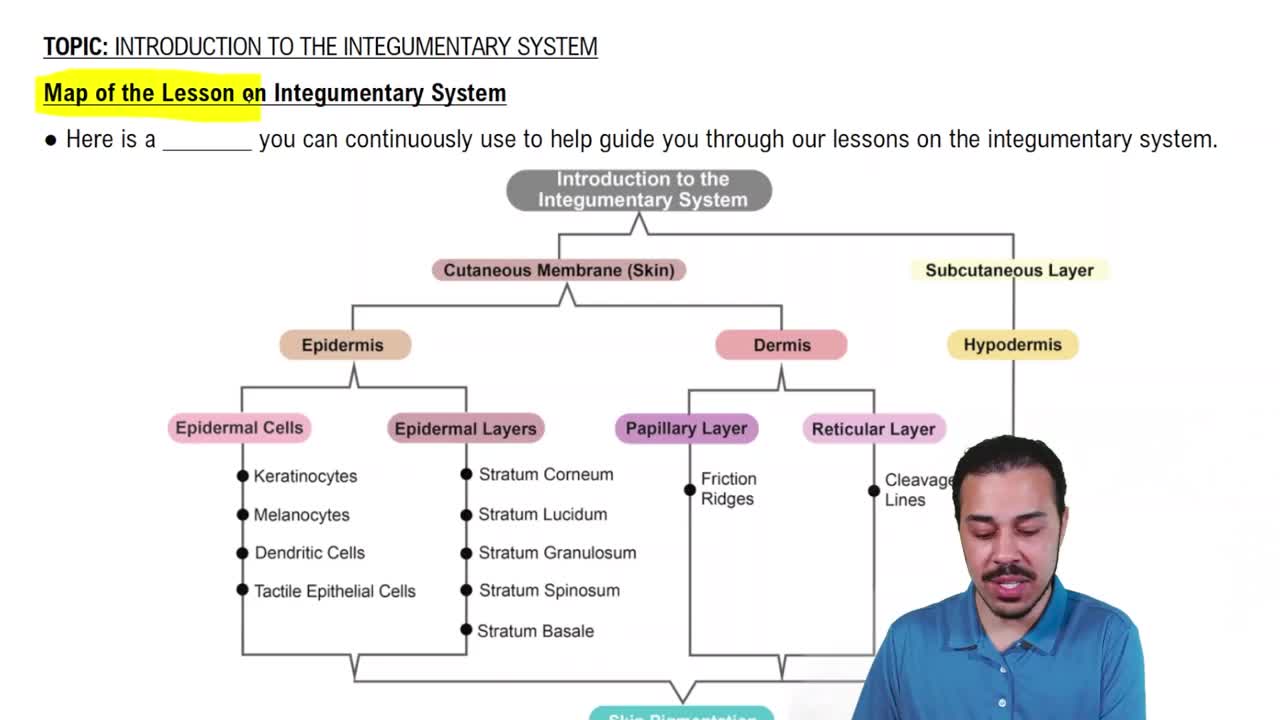
Map of the Lesson on Integumentary System
13788
views
649
rank
6
comments
이 집합의 용어 (20)
하이드의 정의
Integumentary system
The body system consisting of the skin, hair, nails, glands, and nerves that protects the body and regulates temperature.
Epidermis
The outermost layer of skin composed mainly of keratinized stratified squamous epithelium.
Dermis
The thick layer of living tissue below the epidermis that contains blood vessels, nerves, hair follicles, and glands.
Hypodermis (subcutaneous layer)
The deepest layer of skin made of fat and connective tissue that insulates and cushions the body.
Keratinocytes
The primary cell type in the epidermis responsible for producing keratin, a protective protein.
Melanocytes
Cells in the epidermis that produce melanin, the pigment responsible for skin color and UV protection.
Langerhans cells
Immune cells in the epidermis that help detect and fight pathogens.
Stratum corneum
The outermost layer of the epidermis consisting of dead, flattened keratinized cells.
Stratum basale
The deepest layer of the epidermis where new keratinocytes are produced.
Hair follicle
A structure in the dermis that produces hair by packing keratinized cells.
Sebaceous gland
A gland connected to hair follicles that secretes sebum to lubricate skin and hair.
Sweat gland
A gland that produces sweat to help regulate body temperature and excrete waste.
Arrector pili muscle
A small muscle attached to hair follicles that causes hair to stand up (goosebumps).
Nail matrix
The tissue under the nail that produces new nail cells.
Melanin
The pigment produced by melanocytes that gives skin its color and protects against UV radiation.
Function of the integumentary system
Protection, temperature regulation, sensation, excretion, and vitamin D synthesis.
Callus
Thickened skin area caused by repeated pressure or friction.
Burn classification: First degree
A burn affecting only the epidermis causing redness and pain.
Burn classification: Second degree
A burn affecting the epidermis and part of the dermis causing blisters and pain.
Burn classification: Third degree
A burn destroying the epidermis and dermis, possibly affecting deeper tissues, often painless due to nerve damage.
 뒤로뒤로
 06:54