 뒤로
Anatomy & Physiology: Key Concepts from Exam 1 Study Guide
 2:53

이 집합의 용어 (21)
Homeostasis is the maintenance of relatively stable internal conditions despite continuous environmental changes, a dynamic state of equilibrium where internal conditions adjust but remain within narrow limits.
Anatomy studies body structures and their relationships; Physiology studies body function. Gross anatomy looks at large structures; microscopic anatomy studies cells (cytology) and tissues (histology); developmental anatomy studies changes over lifespan.
Chemical level (atoms/molecules) > Cellular level (cells/organelles) > Tissue level (groups of similar cells) > Organ level (multiple tissues) > Organ system level (organs working together) > Organismal level (whole body).
Maintaining boundaries, movement, responsiveness, digestion, metabolism, excretion, reproduction, and growth.
Nutrients, oxygen, water, normal body temperature, and appropriate atmospheric pressure are essential for survival.
Sagittal (divides body into right and left), Frontal (coronal) (divides into anterior and posterior), and Transverse (horizontal) (divides into superior and inferior parts).
Superior (cranial) means toward the head or upper part; Inferior (caudal) means away from the head or lower part of the body.
Body erect, feet slightly apart, palms facing forward, thumbs pointing away from the body; standard reference for anatomical terms.
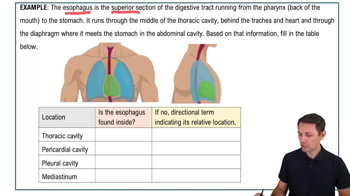
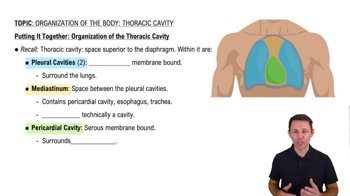
Dorsal body cavity (cranial and vertebral cavities) protects nervous system; Ventral body cavity (thoracic and abdominopelvic cavities) houses internal organs.
Thin, double-layered membranes: parietal serosa lines cavity walls; visceral serosa covers organs; fluid-filled cavity between reduces friction.
DNA is double-stranded, contains deoxyribose sugar, and uses thymine; RNA is single-stranded, contains ribose sugar, and uses uracil instead of thymine.
Carbohydrates: monosaccharides > polysaccharides; Proteins: amino acids > polypeptides; Nucleic acids: nucleotides > DNA or RNA; Lipids do not form true polymers.
Integumentary, Skeletal, Muscular, Nervous, Endocrine, Cardiovascular, Lymphatic, Respiratory, Digestive, Urinary, and Reproductive systems.
Receptor senses changes; Control center processes input and sets set point; Effector carries out response to maintain homeostasis.
Negative feedback reduces or shuts off original stimulus; Positive feedback enhances or exaggerates the stimulus, often in infrequent events.
Cells are the smallest unit of life; all organisms are made of cells; cells arise only from other cells.
Nucleus: control center; Mitochondria: ATP production; Ribosomes: protein synthesis; Rough ER: protein modification; Smooth ER: lipid synthesis and detox; Golgi apparatus: packaging; Lysosomes: digestion; Peroxisomes: detoxification; Cytoskeleton: structure and transport.
Phospholipid bilayer with cholesterol for fluidity, glycolipids for glycocalyx, and proteins for transport, receptors, enzymes, identity markers, and anchors.
Passive transport moves substances down concentration gradient without energy; active transport requires ATP to move substances against gradient.
Interphase: cell grows and prepares; Mitosis: nuclear division (prophase, metaphase, anaphase, telophase); Cytokinesis: cytoplasm division.
Programmed cell death that cleanly eliminates damaged or unneeded cells without harming neighbors.