 뒤로
Anatomy & Physiology: Key Concepts on Organization, Tissues, Skin, and Axial Skeleton
 05:04

이 집합의 용어 (30)
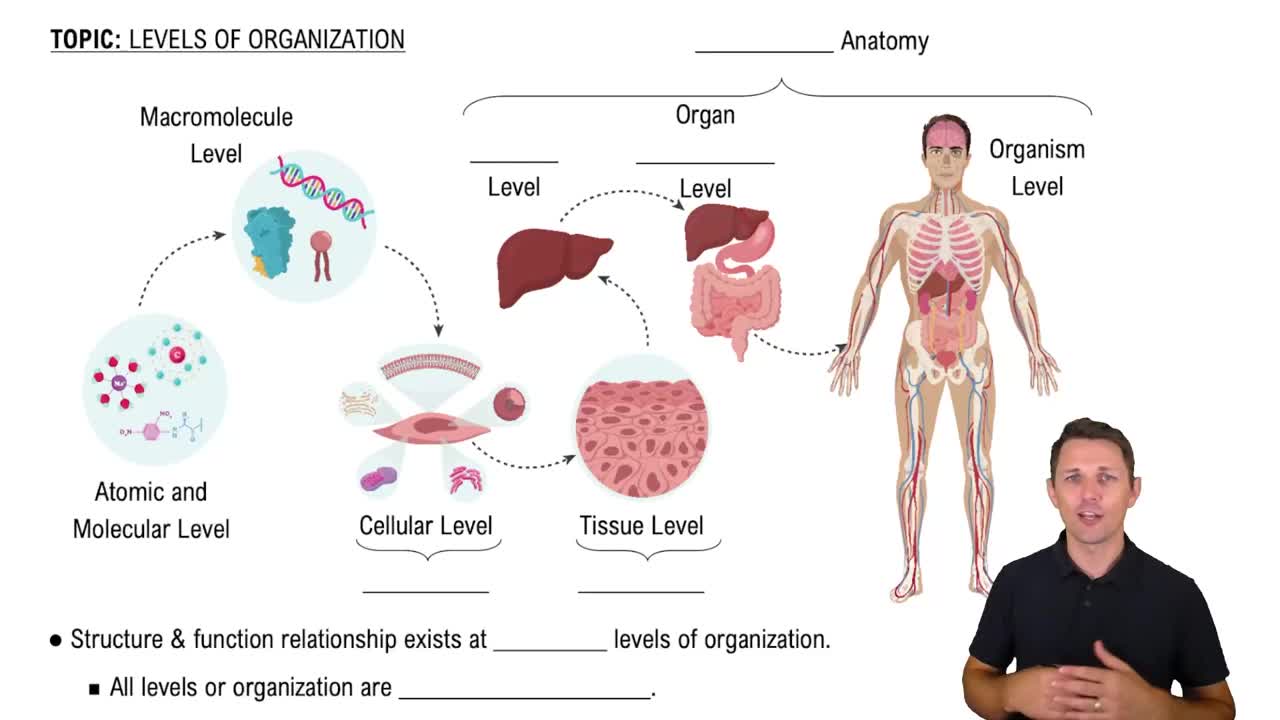
From simplest to most complex: chemical, cellular, tissue, organ, organ system, and organism.
Heart, blood vessels, and blood; responsible for transporting nutrients, gases, and wastes.
Examples include cephalic (head), thoracic (chest), abdominal, pelvic, brachial (arm), and crural (leg).
Frontal (coronal), sagittal, and transverse (horizontal) planes divide the body for study.
Terms like anterior/posterior, superior/inferior, medial/lateral, and proximal/distal describe locations.
Thoracic cavity (contains lungs and heart) and abdominopelvic cavity (contains digestive, urinary, and reproductive organs).
Protects and houses the lungs and heart; supports respiration and circulation.
Epithelial, connective, muscle, and nervous tissues.
Protection, absorption, filtration, secretion, and sensory reception.
Cell shape and layering (simple, stratified) relate to roles like absorption or protection.
Connective tissue proper, supporting connective tissue (cartilage and bone), and fluid connective tissue (blood).
Support, protection, binding organs, storing energy, and immune responses.
Cartilage provides flexible support; bone provides rigid support and protection.
Mucous, serous, cutaneous, and synovial membranes, each with specific protective and functional roles.
Skeletal (voluntary movement), cardiac (heart contraction), and smooth (involuntary organ control).
Composed of neurons and neuroglia; responsible for transmitting electrical signals and processing information.
Layers include stratum basale, stratum spinosum, stratum granulosum, and stratum corneum; provides protection and waterproofing.
Supports epidermis, contains blood vessels, nerves, hair follicles, and glands; provides strength and elasticity.
Also called hypodermis; stores fat, insulates, and cushions the body.
Melanin production, blood flow, and carotene; melanocytes increase melanin in response to sunlight.
Hair texture depends on shape of hair shaft; color depends on type and amount of melanin.
Sweat glands (sweat), sebaceous glands (sebum), and ceruminous glands (earwax).
Inflammation, clot formation, tissue regeneration, and scar formation.
Support and protect the brain, spinal cord, and organs of the thorax; provide attachment points for muscles.
Allow passage of nerves and blood vessels; important for cranial nerve function and circulation.
Protect eyes, support nasal structures, and lighten the skull while enhancing voice resonance.
Infants have fontanelles and more flexible sutures; adults have fused sutures and fully developed bones.
Cervical and lumbar curves are convex anteriorly; thoracic and sacral curves are concave anteriorly; they provide balance and absorb shock.
Cervical, thoracic, lumbar, sacral, and coccygeal; each has unique size, shape, and function.
Allow chest expansion for breathing while providing stability and protection.