뒤로

Anatomy & Physiology: Lymphatic and Endocrine System Structures

컨트롤 버튼이 '내비게이션' 모드로 변경되었습니다.
1/30
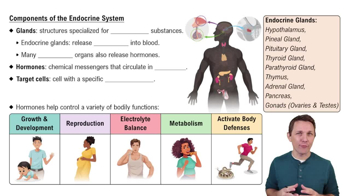
  • Adrenal gland

    A paired endocrine gland located above each kidney, consisting of the adrenal cortex and adrenal medulla.
  • Adrenal cortex

    The outer region of the adrenal gland that produces steroid hormones like cortisol and aldosterone.
  • Adrenal medulla

    The inner part of the adrenal gland that secretes catecholamines such as adrenaline and noradrenaline.
  • Anterior pituitary lobe (adenohypophysis)

    The front lobe of the pituitary gland that produces hormones like growth hormone, prolactin, and ACTH.
  • Posterior pituitary lobe (neurohypophysis)

    The back lobe of the pituitary gland that stores and releases oxytocin and vasopressin produced by the hypothalamus.
  • Hypothalamus

    A brain region controlling the pituitary gland and regulating homeostasis, including temperature, hunger, and hormone release.
  • Thyroid gland

    An endocrine gland in the neck that produces thyroid hormones regulating metabolism.
  • Parathyroid glands

    Small glands located on the thyroid that regulate calcium levels through parathyroid hormone secretion.
  • Pineal gland

    A small endocrine gland in the brain that produces melatonin to regulate sleep-wake cycles.
  • Pancreas

    An organ with both endocrine and exocrine functions; it produces insulin and glucagon to regulate blood sugar.
  • Thymus

    A lymphoid organ where T lymphocytes mature, important for immune system development.
  • Spleen

    An organ that filters blood, recycles red blood cells, and supports immune responses.
  • Lymph

    A clear fluid containing white blood cells that circulates through lymphatic vessels.
  • Lymphatic capillaries

    Small, thin-walled vessels that absorb interstitial fluid and transport it as lymph.
  • Afferent lymphatic vessels

    Vessels that carry lymph toward a lymph node.
  • Efferent lymphatic vessels

    Vessels that carry lymph away from a lymph node.
  • Axillary lymph nodes

    Lymph nodes located in the armpit region that filter lymph from the upper limbs and chest.
  • Cervical lymph nodes

    Lymph nodes in the neck that filter lymph from the head and neck.
  • Inguinal lymph nodes

    Lymph nodes in the groin area that filter lymph from the lower limbs and external genitalia.
  • Jugular trunk

    Lymphatic trunks (right and left) that drain lymph from the head and neck into the venous system.
  • Thoracic duct

    The largest lymphatic vessel that drains lymph from most of the body into the left subclavian vein.
  • Right lymphatic duct

    A lymphatic vessel that drains lymph from the right upper limb, right thorax, and right side of the head into the right subclavian vein.
  • Cisterna chyli

    A dilated sac at the lower end of the thoracic duct that collects lymph from the intestinal and lumbar trunks.
  • Lumbar trunk

    Lymphatic trunks (right and left) that drain lymph from the lower limbs and pelvic region.
  • Intestinal trunk

    A lymphatic trunk that drains lymph from the intestines and abdominal organs.
  • Subclavian trunk

    Lymphatic trunks (right and left) that drain lymph from the upper limbs into the venous system.
  • Palatine tonsils

    Paired lymphoid tissues located at the back of the oral cavity that help protect against inhaled or ingested pathogens.
  • Pharyngeal tonsil (adenoids)

    A single lymphoid tissue located in the nasopharynx that traps pathogens entering through the nasal passage.
  • Lingual tonsil

    Lymphoid tissue located at the base of the tongue involved in immune defense.
  • Peyer’s patches

    Aggregated lymphoid nodules in the small intestine that monitor intestinal bacteria and prevent pathogen growth.