 뒤로
Anatomy & Physiology: Lymphatic, Immune, and Respiratory Systems
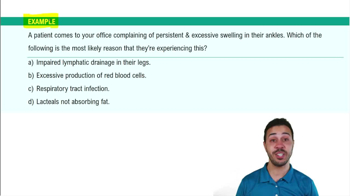
 3:32

이 집합의 용어 (29)
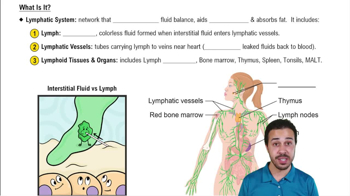
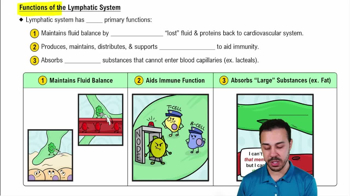
Fluid balance, immune defense, and fat absorption. Returns leaked fluids to blood and provides immune system structure.
Hydrostatic and colloid osmotic pressures force fluid out of blood capillaries; up to 3 L daily becomes interstitial fluid, which lymphatic vessels collect and return to blood.
Lymphatic capillaries in the small intestine that absorb and transport digested fats as chyle.
Blind-ended, more permeable than blood capillaries, absent in bones and teeth, and astrocytes form drainage channels in the brain.
Nine major trunks; right lymphatic duct drains right upper limb and right head/thorax, thoracic duct drains the rest of the body.
Skeletal muscle milking, thoracic pressure changes, arterial pulse waves, and smooth muscle contractions in vessel walls.
T cells: manage immune response; B cells: produce antibodies; macrophages: phagocytize and activate T cells; dendritic cells: antigen presentation; reticular cells: structural support.
Red bone marrow: B cell maturation; Thymus: T cell maturation, most active in childhood.
Lymph nodes: filter lymph and activate lymphocytes; Spleen: immune surveillance, stores platelets, removes old RBCs; MALT: mucosa-associated lymphoid tissue guarding entryways.
Cortex: dendritic cells; Medulla: B, T, plasma cells; lymph enters afferent vessels and exits efferent vessels; filters lymph.
White pulp: immune function; Red pulp: destroys old RBCs and pathogens.
1st: surface barriers (skin, mucosa); 2nd: innate internal defenses (phagocytes, inflammation, NK cells); 3rd: adaptive immunity (lymphocytes, antibodies).
1. Phagocyte binds particle; 2. Particle enclosed in phagosome; 3. Phagosome fuses with lysosome forming phagolysosome; 4. Digestion of particle.
Kill cancer and virus-infected cells by inducing apoptosis without prior sensitization.
Specific, systemic, has memory; includes humoral immunity (B cells/antibodies) and cellular immunity (T cells).
Substances that provoke an immune response; complete antigens have immunogenicity and reactivity; haptens are incomplete antigens that become immunogenic when bound to proteins.
Positive selection: T cells must recognize self MHC; negative selection: T cells reacting to self antigens are destroyed (clonal deletion).
Primary: lag 3-6 days, peak at 10 days; Secondary: faster and stronger due to memory cells.
Precipitation, Lysis via complement, Agglutination, Neutralization.
CD4+ helper and regulatory T cells activate immune responses; CD8+ cytotoxic T cells kill infected or abnormal cells.
Inspiration: diaphragm and intercostal muscles contract, increasing thoracic volume; Expiration: muscles relax, volume decreases.
Pressure of a gas is inversely proportional to its volume; as lung volume increases, pressure decreases, causing air to flow in.
Amount of air moved into or out of lungs during normal breath.
Air remaining in lungs after maximal expiration, preventing lung collapse.
Reduces surface tension to prevent alveolar collapse; deficiency causes infant respiratory distress syndrome.
Dalton's Law: total pressure is sum of partial pressures; Henry's Law: gas dissolves in liquid proportional to partial pressure and solubility.
Lower pH and higher PCO2 reduce hemoglobin's affinity for oxygen, facilitating oxygen release to tissues.
Anemic, ischemic, histotoxic, and hypoxemic hypoxia, each caused by different mechanisms reducing oxygen delivery or use.
Medullary centers: VRG (rhythm), DRG (integration); pontine centers: modify breathing patterns.