 뒤로
Anatomy & Physiology: Osseous Tissue and Skeletal System
 3:56

이 집합의 용어 (21)
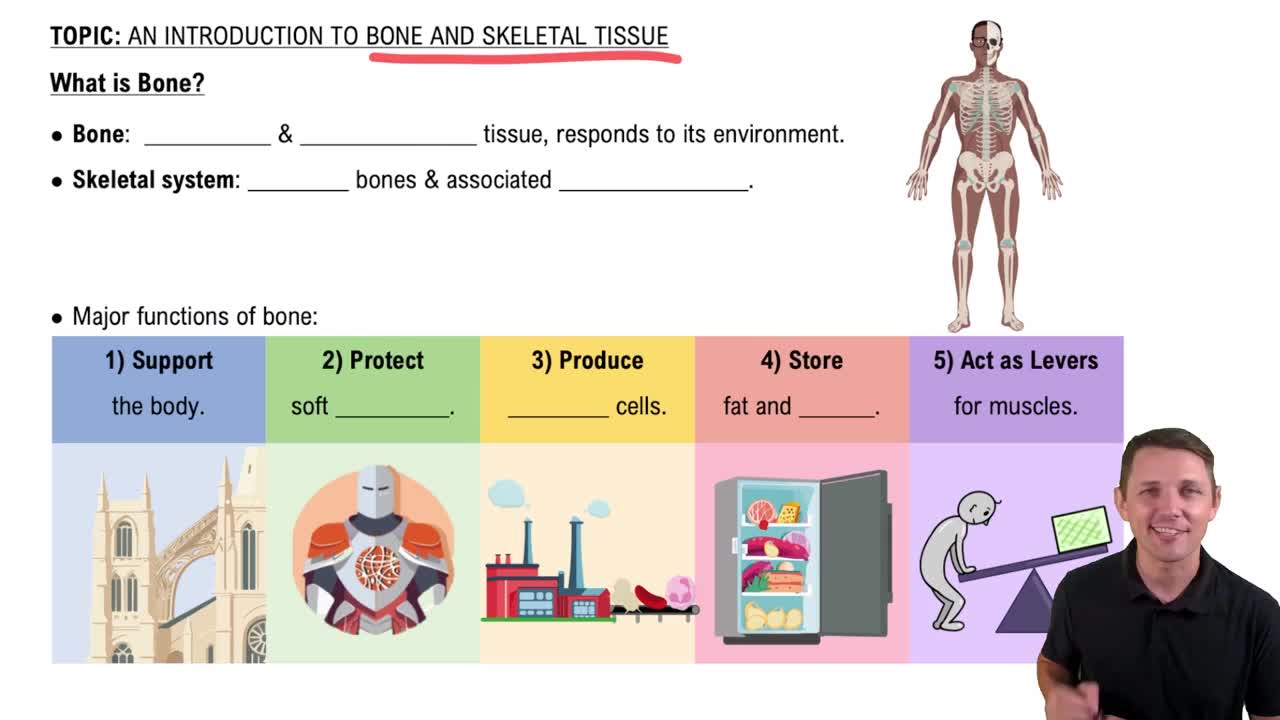
Support, storage of minerals and lipids, blood cell production, protection, and leverage for movement.
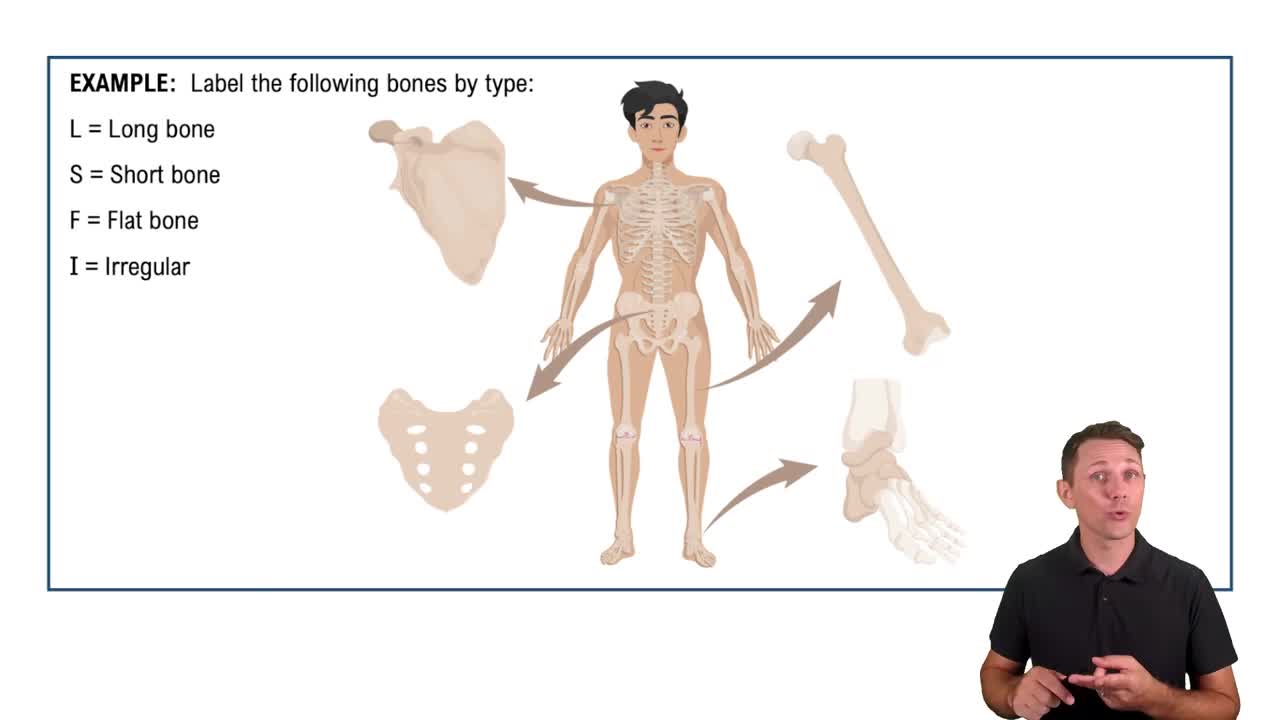
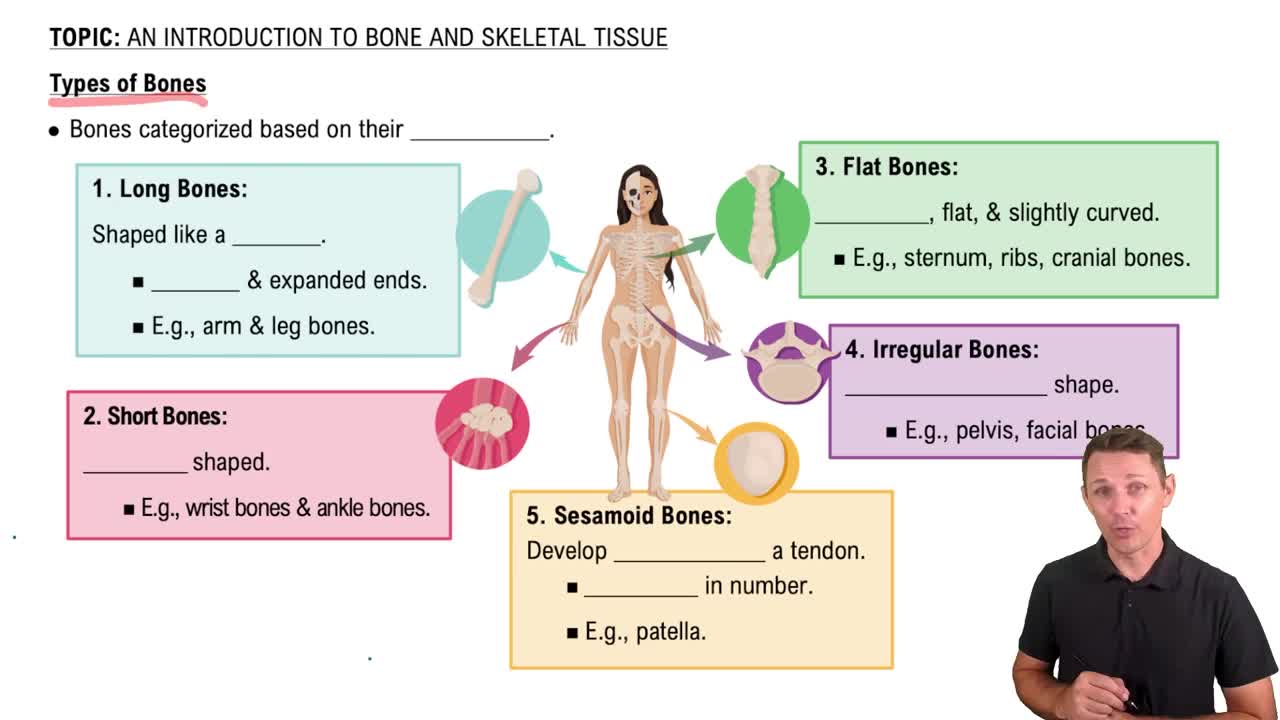
Sutural, irregular, short, flat, long, and sesamoid bones.
Thin with parallel surfaces; composed of spongy bone (diploë) between two layers of compact bone.
Consists of diaphysis (shaft), metaphysis (growth region), and epiphysis (ends), with compact bone surrounding spongy bone and a medullary cavity.
Two thirds mineral (calcium phosphate as hydroxyapatite) and one third collagen fibers.
Osteoprogenitor (stem cells), osteoblasts (bone-forming), osteocytes (mature bone cells), and osteoclasts (bone-resorbing).
Secrete organic components of bone matrix (osteoid) and initiate calcification.
Maintain bone matrix and help repair damaged bone; reside in lacunae connected by canaliculi.
Multinucleate cells that dissolve bone matrix by secreting acids and enzymes, releasing stored minerals.
Osteon, composed of concentric lamellae around a central (Haversian) canal containing blood vessels.
Small canals that connect lacunae and allow exchange of nutrients and wastes between osteocytes and blood vessels.
Network of trabeculae without osteons; spaces filled with red or yellow bone marrow.
Outer membrane covering bone except at joints; has fibrous and cellular layers; provides blood supply and participates in growth and repair.
Lines inner surfaces of bone including medullary cavity; contains osteoblasts, osteoclasts, and progenitor cells; active in growth and repair.
Bone replaces hyaline cartilage through stages: cartilage enlargement, calcification, blood vessel invasion, spongy bone formation, and remodeling.
Bone develops directly from mesenchymal tissue; forms flat bones like mandible and clavicle.
Growth hormone, thyroxine, estrogens, androgens stimulate osteoblasts; calcitonin and parathyroid hormone regulate calcium balance.
Increases blood calcium by stimulating osteoclasts, increasing intestinal absorption via calcitriol, and reducing kidney excretion.
Decreases blood calcium by inhibiting osteoclasts, reducing intestinal absorption, and increasing kidney excretion.
1. Hematoma formation, 2. Callus formation, 3. Spongy bone formation, 4. Compact bone remodeling.
Bone mass decreases (osteopenia), leading to osteoporosis; bones become thinner, weaker, and more fragile.