 뒤로
Anatomy & Physiology: Respiratory System
 4:28

이 집합의 용어 (22)
The major organs include the nose, pharynx, larynx, trachea, bronchi, and lungs (alveoli).
They increase surface area, create air turbulence within the nasal cavity, and help trap inhaled particles.
Nasopharynx (superior), oropharynx (middle), and laryngopharynx (inferior).
The epiglottis is a flap of elastic cartilage that protects the larynx by routing food to the esophagus and air toward the trachea during swallowing.
Vocal folds (true vocal cords) vibrate with expelled air to produce sound for speech.
The trachea is a 4-inch tube reinforced with C-shaped hyaline cartilage rings, lined with pseudostratified ciliated columnar epithelium (PCCE) that traps debris and moves mucus upward.
Pleura are membranes: the pulmonary (visceral) pleura covers lungs, and the parietal pleura lines the thoracic cavity. Pleural fluid reduces friction during breathing.
The respiratory zone includes respiratory bronchioles, alveolar ducts, alveolar sacs, and alveoli.
The respiratory membrane is formed by alveolar and capillary walls; it allows gas exchange by diffusion between air and blood.
Alveolar macrophages (dust cells) protect lungs by engulfing bacteria, carbon particles, and debris.
Surfactant is a lipid molecule secreted by alveolar cells that reduces surface tension to prevent alveolar collapse.
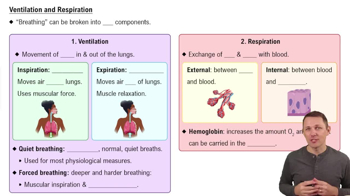
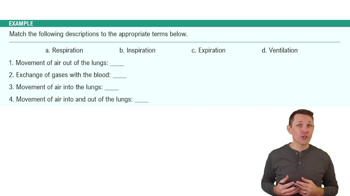
1. Pulmonary ventilation (breathing)
2. External respiration (gas exchange in lungs)
3. Respiratory gas transport (bloodstream transport)
4. Internal respiration (gas exchange in tissues)
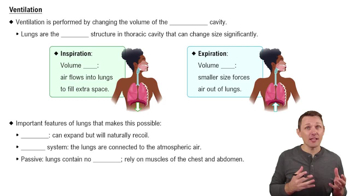
The diaphragm contracts downward and external intercostal muscles contract outward, increasing lung volume and decreasing alveolar pressure, causing air to flow in.
Diaphragm and intercostal muscles relax, lung volume decreases, alveolar pressure increases, and air flows out of the lungs.
Most oxygen binds to hemoglobin forming oxyhemoglobin, while a small amount dissolves in plasma.
Most carbon dioxide is transported as bicarbonate ion (HCO3-) in plasma; some binds to hemoglobin at different sites forming carbaminohemoglobin.
External respiration is gas exchange between alveoli and pulmonary blood; internal respiration is gas exchange between blood and tissue cells.
In the medulla oblongata (ventral respiratory group) and the pons, which regulate breathing rhythm and smoothness.
Increased carbon dioxide (CO2) levels in blood, which lower pH, stimulate the medulla to increase breathing rate and depth.
Inflammation of lower respiratory mucosa with excessive mucus production, impairing ventilation and gas exchange.
Destruction of alveolar walls, lung fibrosis, loss of elasticity, and difficulty exhaling, leading to overinflated lungs.
Adenocarcinoma, squamous cell carcinoma, and small cell carcinoma, often caused by smoking.