 뒤로
Anatomy & Physiology: Skeletal System
 3:56

이 집합의 용어 (20)
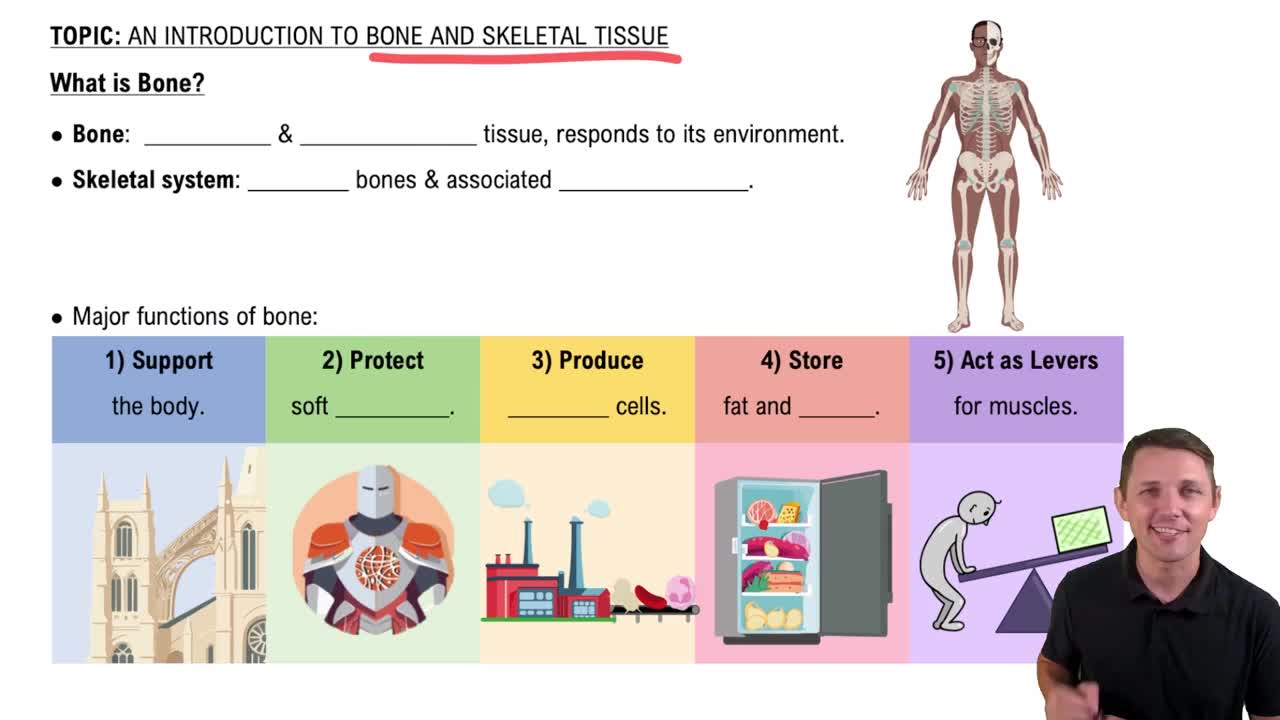
The skeletal system provides support, protection for organs, movement by attachment sites for muscles, mineral storage, and blood cell production.
Compact bone is dense and forms the outer layer; spongy bone is porous and found inside bones, containing marrow.
Red marrow produces blood cells; yellow marrow stores fat.
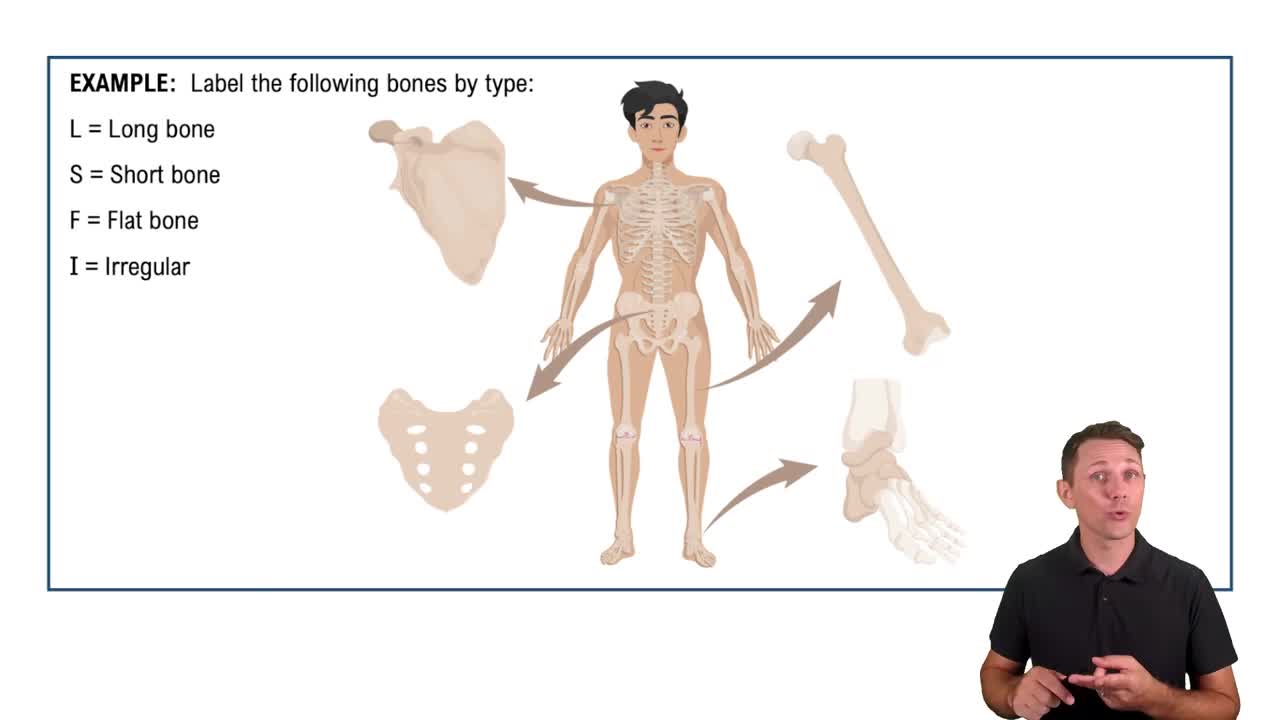
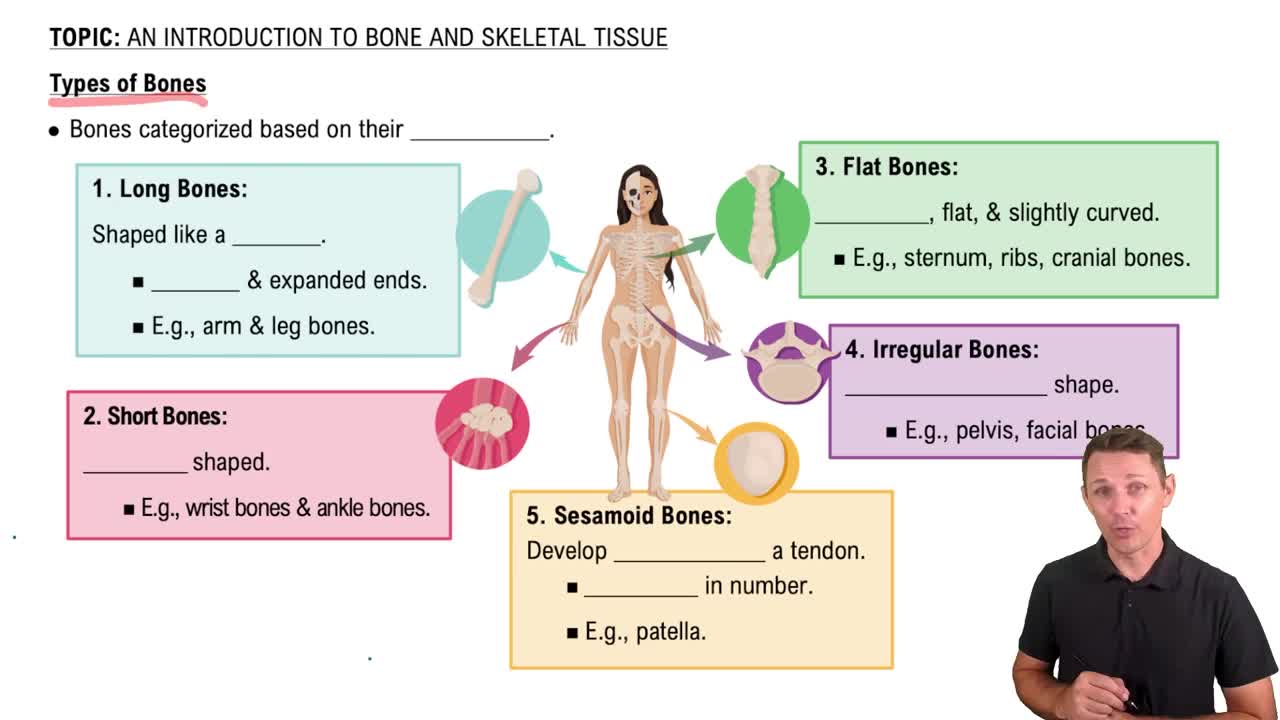
Long, short, flat, and irregular bones.
Consists of a diaphysis (shaft), epiphyses (ends), medullary cavity, and articular cartilage.
A dense connective tissue layer covering the bone surface, containing nerves and blood vessels.
Osteoblasts build bone by producing matrix.
Osteoclasts resorb bone, helping in remodeling and calcium release.
Continuous cycle of bone resorption by osteoclasts and formation by osteoblasts to maintain bone strength and mineral balance.
Calcium and phosphorus are stored mainly as hydroxyapatite crystals.
A growth plate of cartilage in long bones where lengthening occurs during development.
An articulation is a joint where two or more bones meet, allowing movement or stability.
Fibrous (immovable), cartilaginous (slightly movable), and synovial (freely movable) joints.
It lubricates synovial joints to reduce friction during movement.
Skull, vertebral column, ribs, and sternum.
Limbs, pectoral girdle (shoulder), and pelvic girdle (hip).
A condition characterized by decreased bone density and increased fracture risk.
Hormones like growth hormone, calcitonin, and parathyroid hormone regulate bone growth and calcium balance.
Compact bone has tightly packed osteons; spongy bone has a lattice-like network of trabeculae.
The central cavity inside the diaphysis of long bones that contains marrow.