Skip to main content
Anatomy & Physiology
나의 코스
배우기
시험 준비
AI 튜터
학습 가이드
교과서적 해결책
플래시카드
탐험해 보세요
앱을 사용해 보세요
나의 코스
배우기
시험 준비
AI 튜터
학습 가이드
교과서적 해결책
플래시카드
탐험해 보세요
앱을 사용해 보세요
뒤로
Anatomy & Physiology: Skeletal System and Joints
카드를 뒤집기 위해 탭할 수 있습니다.
Types of skeletal cartilage
카드를 뒤집기 위해 탭할 수 있습니다.
👆
Types of skeletal cartilage
Hyaline
,
elastic
, and
fibrocartilage
are the three types, differing in fiber composition and location.
진행 상황 추적
컨트롤 버튼이 '내비게이션' 모드로 변경되었습니다.
1/29
추천 영상
3:56
What is Bone?
29017
views
922
rank
3
comments
3:00
An Introduction to Bone and Skeletal Tissue Example 2
16234
views
349
rank
1
comments
4:14
Types of Bones
19280
views
493
rank
1
comments
이 집합의 용어 (29)
하이드의 정의
Types of skeletal cartilage
Hyaline
,
elastic
, and
fibrocartilage
are the three types, differing in fiber composition and location.
Appositional growth of cartilage
Growth by adding new cartilage matrix on the surface from chondroblasts in the perichondrium.
Interstitial growth of cartilage
Growth from within the cartilage by division of chondrocytes and secretion of new matrix.
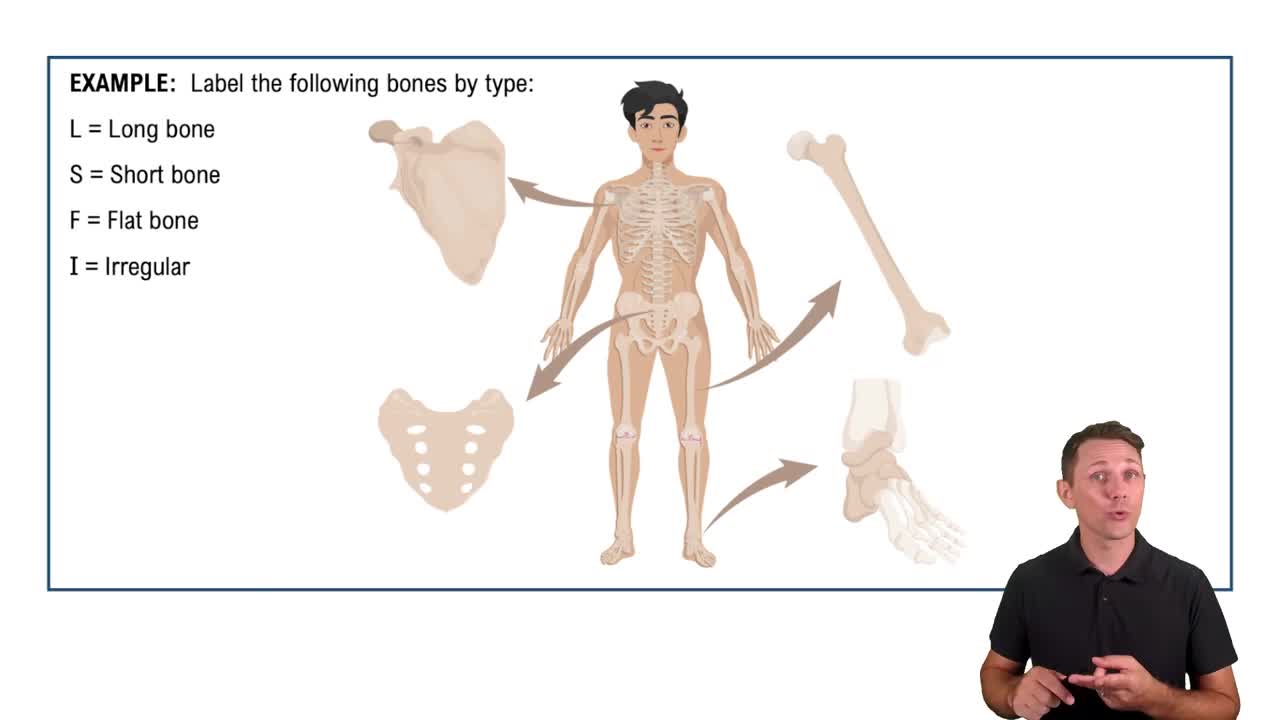
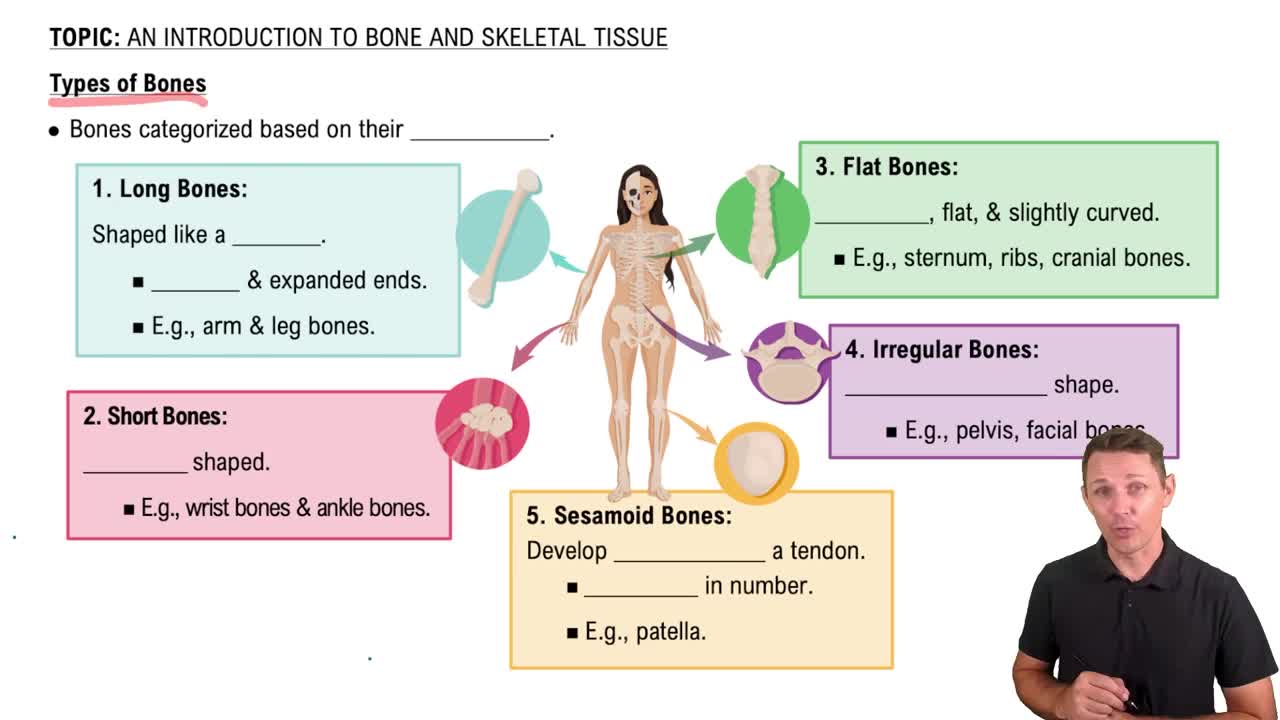
Classification of bones by shape
Long
,
short
,
flat
, and
irregular
bones based on shape and structure.
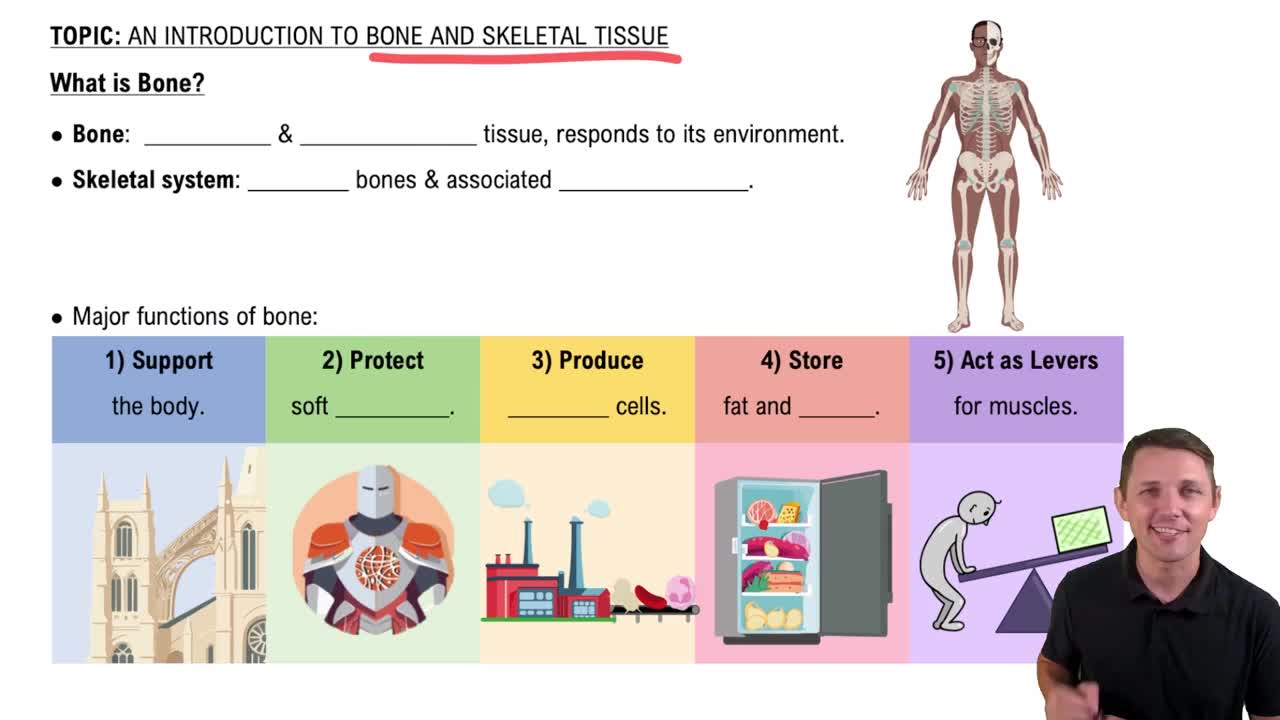
Functions of bones
Support, protection, movement, mineral storage, blood cell formation, and energy storage.
Structure of a typical long bone
Includes
diaphysis
(shaft),
epiphyses
(ends), and membranes like periosteum.
Osteoblast function
Cells that build bone by secreting bone matrix.
Osteoclast function
Cells that break down bone tissue for remodeling and calcium release.
Osteon structure
The basic unit of compact bone, consisting of concentric lamellae around a central canal.
Lamellae in bone
Concentric rings of bone matrix in an osteon.
Lacunae in bone
Small spaces housing osteocytes within the bone matrix.
Intramembranous ossification
Bone develops directly from mesenchymal tissue, forming flat bones like the skull.
Endochondral ossification
Bone forms by replacing hyaline cartilage, typical in long bones.
Role of growth hormone in bone growth
Stimulates overall bone growth by promoting cartilage cell division at epiphyseal plates.
Parathyroid hormone (PTH) effect on bone
Increases blood calcium by stimulating osteoclast activity to break down bone.
Calcitonin effect on bone
Lowers blood calcium by inhibiting osteoclasts and promoting bone formation.
Axial skeleton components
Includes the skull, vertebral column, and bony thorax.
Paranasal sinuses
Air-filled cavities in frontal, ethmoid, sphenoid, and maxillary bones that lighten the skull.
Intervertebral disc function
Acts as a cushion and shock absorber between vertebrae.
General vertebrae structure
Consists of a body, vertebral arch, and processes; varies among cervical, thoracic, and lumbar regions.
Appendicular skeleton components
Includes shoulder girdle, pelvic girdle, and upper and lower limbs.
Synarthroses joints
Immovable joints, such as sutures in the skull.
Amphiarthroses joints
Slightly movable joints, like intervertebral discs.
Diarthroses joints
Freely movable synovial joints.
Fibrous joints types
Includes sutures, syndesmoses, and gomphoses, connected by fibrous tissue.
Bursae and tendon sheaths
Fluid-filled sacs and tubes that reduce friction around joints and tendons.
Movements allowed by synovial joints
Uniaxial, biaxial, multiaxial, gliding, and angular movements.
Knee joint structure
A complex synovial joint with ligaments, menisci, and bursae for stability and movement.
Common joint disorders
Includes bursitis, tendonitis, and arthritis types like osteoarthritis, rheumatoid arthritis, and gouty arthritis.
 뒤로뒤로
 3:56