 뒤로
Anatomy & Physiology: Skeletal System Flashcards
 3:56

이 집합의 용어 (36)
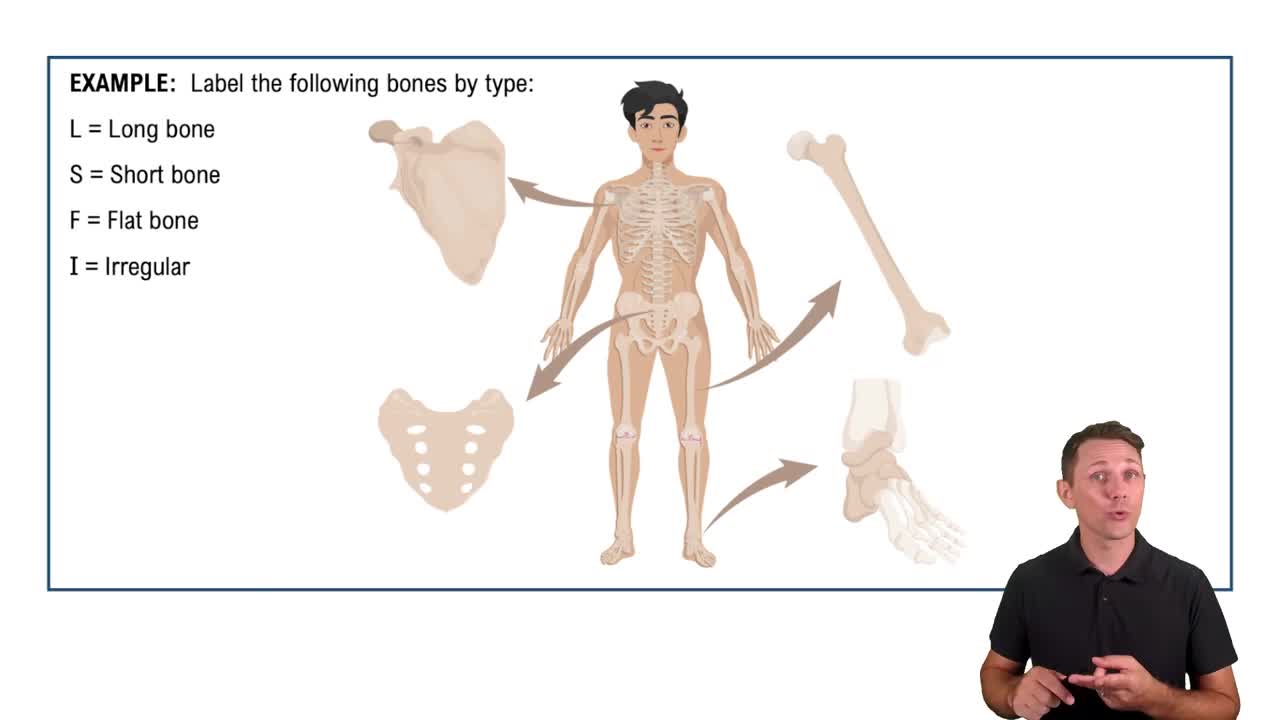
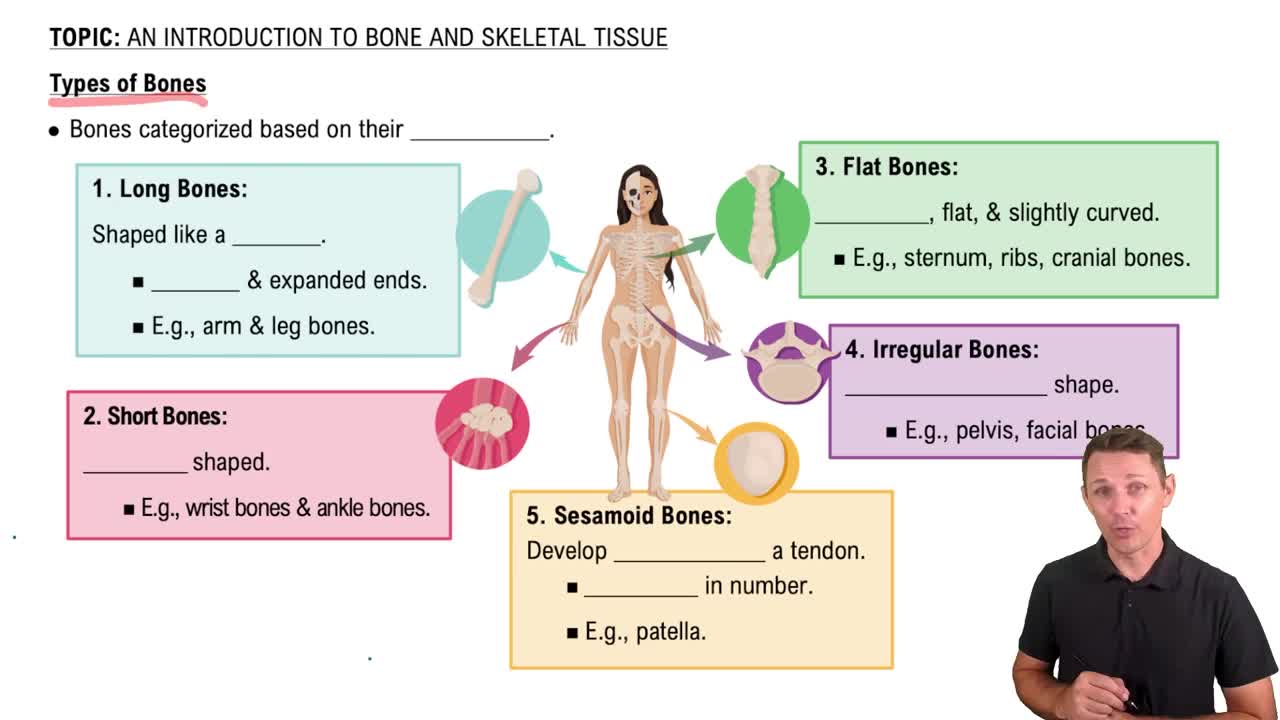
long bones
Femur, Humerus , Radius (thumb-side forearm). ulna, Metacarpals, Phalanges, Tibia, Fibula. clavicles, metatarsals,
short bones
Carpals (wrist) and Tarsals (ankle).
flat bones
Frontal (forehead), Ribs (rib cage), and Scapula (shoulder blade), . hyoid, pelvis, Parietal
irregular bones
sacrum, sternum, zygomatic, vertebrae, mandible.
sesamoid bone
Patella (kneecap).
7 vertebrae; they are the smallest vertebrae located in the neck.
Supports the head and allows nodding YES motion.
Has the dens which allows shaking the head NO.
12 vertebrae attached to ribs; medium-sized; located in the middle back.
5 vertebrae; largest size; located in the lower back.
Base of spine; 5 fused irregular bones attached to hip bones.
Tailbone; usually 4 fused irregular bones at the spine's end.
Ribs, Sternum, and Thoracic vertebrae protect the heart and lungs.
1. Manubrium (top, attaches clavicles), 2. Body (middle, attaches costal cartilage), 3. Xiphoid process (bottom).
24 ribs (12 pairs): True (1–7, direct sternum attachment), False (8–12, no direct attachment), Vertebrochondral (8–10, indirect attachment), Floating (11–12, no sternum attachment).
Clavicles and Scapulae; attach arms to axial skeleton; high mobility, low stability.
Long, S-shaped collarbone; commonly broken; connects sternum to scapula.
Flat shoulder blade; connects with humerus and clavicle; many muscle attachments; not attached to vertebral column.
Hip bones (coxal bones) and sacrum; attach legs to axial skeleton; protect pelvic organs; high stability, low mobility.
three parts of the hip bone.
1. Ilium (upper, flared), 2. Pubis (front, joined at pubic symphysis), 3. Ischium (sitting bone).
Socket on the hip bone where the femur connects.
22 bones total: 8 cranial bones and 14 facial bones.
The mandible (lower jaw) is the only movable skull bone.
Immovable joints between skull bones.
cranial bones and characteristics.
Frontal (forehead), Parietal (top/sides), Occipital (back), Temporal (sides/bottom), Sphenoid (butterfly-shaped, keystone), Ethmoid (nasal cavity).
facial bones.
Maxilla (upper jaw), Mandible (lower jaw), Zygomatic (cheekbone), Nasal, Lacrimal (tear duct), Vomer (nasal septum).
bones in the body
206
thoracic vertebrae
12 pairs, of ribs, 24 total.
lumbar
5, largest vertebrae
cervical vertebrae
7 in neck
sacrum
to hips, 5 bones, 1 bone by age 30
coccyx
tailbone , 4 bones, 1 bone at 30
how many curves in the vertebrae
4
how many in the vertebrae
26
Sternum bones, top to bottom
Manubrium, Body, Xiphoid
hip bones
sacrum (the big part), liium, ( look like ears), pubis, (the bridge part), lschium, (the end part) acetabulum, (holes)