 뒤로
Anatomy & Physiology: Skin and Body Membranes
 4:09

이 집합의 용어 (24)
Cover surfaces, line cavities, and form protective sheets around organs.
Epithelial membranes (cutaneous, mucous, serous) and connective tissue membranes (synovial).
Keratinized stratified squamous epithelium (epidermis) and underlying dense connective tissue (dermis).
Line body cavities open to the exterior; adapted for absorption and secretion.
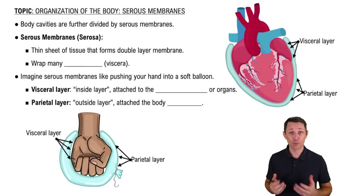
Simple squamous epithelium overlying areolar connective tissue; line closed body cavities; separated by serous fluid.
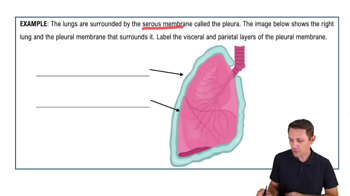
Visceral layer covers organs; parietal layer lines cavity walls.
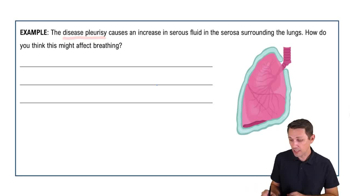
Peritoneum (abdominal cavity), pleura (lungs), and pericardium (heart).
Composed only of connective tissue; line joint capsules and secrete lubricating synovial fluid.
Protection from mechanical, chemical, bacterial, UV, thermal damage, and desiccation; heat regulation; excretion; vitamin D synthesis.
Epidermis (outer, keratinized stratified squamous epithelium) and dermis (dense connective tissue).
Layer beneath dermis; mostly adipose tissue; anchors skin to underlying organs; not technically part of skin.
Stratum basale, stratum spinosum, stratum granulosum, stratum lucidum (only in thick skin), stratum corneum.
Deepest epidermal layer; contains mitotically active cells that produce daughter cells pushed upward.
Outermost layer of dead, keratin-filled cells; prevents water loss from skin.
Melanin; production increases with exposure to sunlight.
Papillary layer: upper, contains dermal papillae and sensory receptors; reticular layer: deeper, contains blood vessels, glands, and pressure receptors.
Melanin, carotene (orange-yellow pigment), and hemoglobin (red from blood cells).
Redness: inflammation, fever, allergy; Pallor: emotional stress, anemia, low blood pressure.
Sebaceous (oil) glands and sweat (sudoriferous) glands.
Produce sebum to lubricate skin and hair, prevent brittleness, and kill bacteria.
Eccrine glands: open to skin surface, produce clear sweat; Apocrine glands: open into hair follicles, produce milky sweat with fatty acids and proteins.
Mostly water, salts, vitamin C, metabolic wastes; helps dissipate heat, excretes wastes, and inhibits bacteria.
Hair follicle, arrector pili muscle (raises hair), sebaceous gland, and sudoriferous gland.
Heavily keratinized epidermal modifications; parts include free edge, body, root, cuticle, and nail matrix.