 뒤로
Anatomy & Physiology: Structural Levels, Body Divisions, and Systems
 05:04

이 집합의 용어 (24)
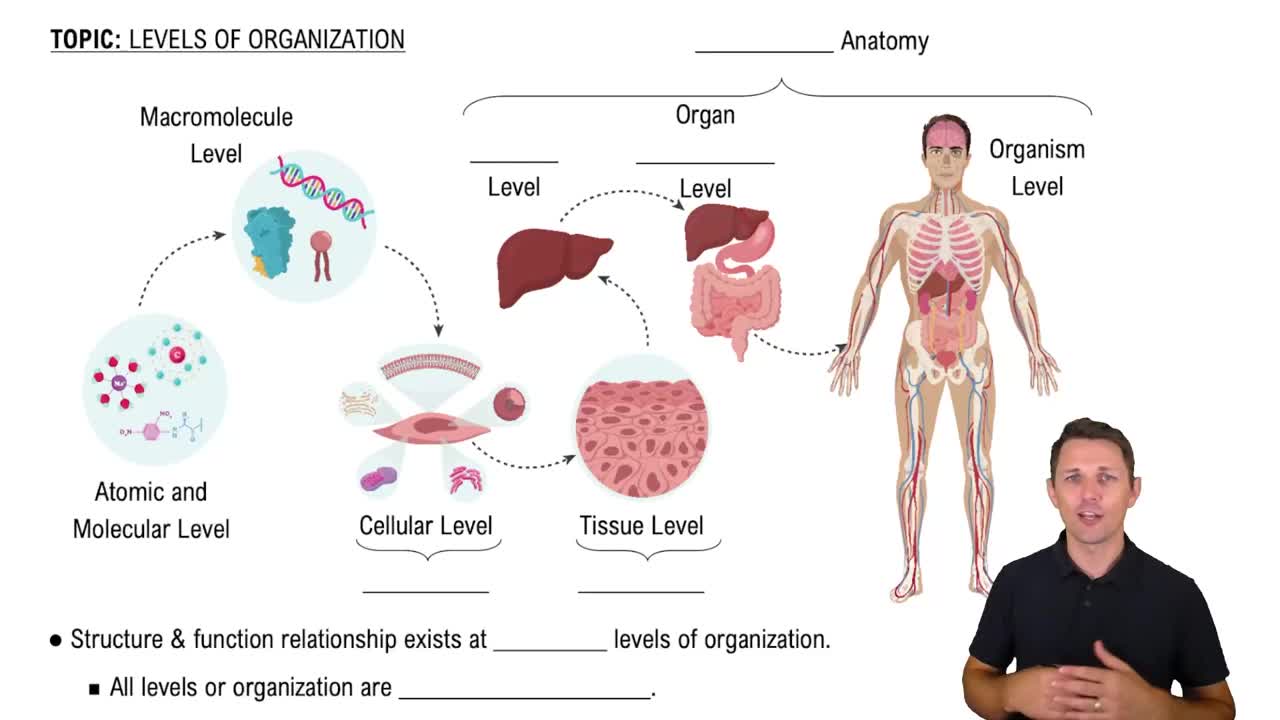
Anatomy is the study of the structure of body parts and their relationships to one another.
Physiology is the study of the function of the body and how body parts work to carry out life-sustaining activities.
The principle that form (anatomy) determines function (physiology), meaning what a structure can do depends on its specific form.
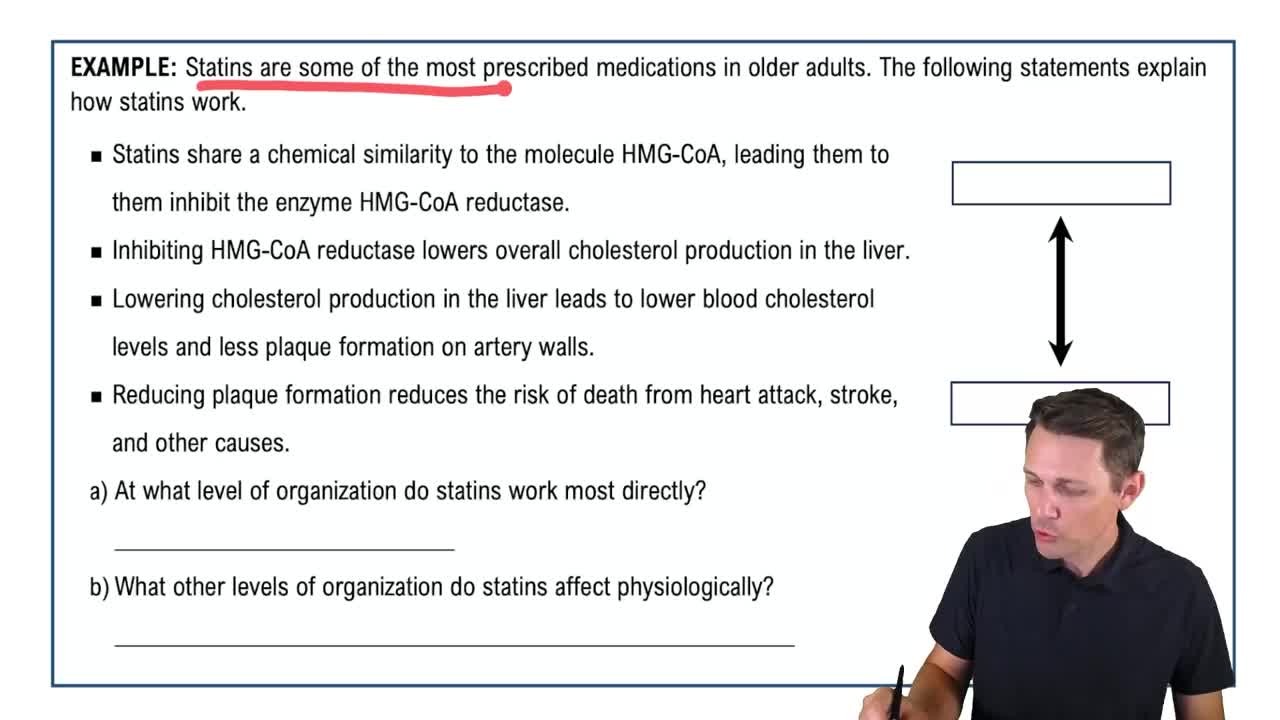
Chemical, Cellular, Tissue, Organ, Organ system, Organismal levels.
Regional anatomy, System anatomy, and Surface anatomy.
Structures too small to be seen with the naked eye, including cytology (cells) and histology (tissues).
Maintaining boundaries, movement, responsiveness, digestion, metabolism, excretion, reproduction, and growth.
Nutrients, oxygen, water, normal body temperature, and appropriate atmospheric pressure.
Integumentary, Skeletal, Muscular, Nervous, Endocrine, Cardiovascular, Lymphatic, Respiratory, Digestive, Urinary, Reproductive systems.
An organ contains two or more types of tissues; an organ system is a group of organs that work closely together to perform a function.
Maintenance of relatively stable internal conditions despite continuous environmental changes; a dynamic state of equilibrium.
Receptor (detects change), Control center (determines set point and response), and Effector (carries out response).
By reducing or shutting off the original stimulus to return the variable to its set point (e.g., body temperature regulation).
Positive feedback enhances or exaggerates the original stimulus (e.g., blood clotting, labor contractions).
Body erect, feet slightly apart, facing forward, arms at sides, palms facing forward with thumbs pointing away from the body.
Superior means toward the head or upper part; Inferior means away from the head or lower part.
Anterior means toward or at the front; Posterior means toward or at the back.
Medial means toward the midline; Lateral means away from the midline.
Proximal means closer to the origin of a body part; Distal means farther from the origin.
Sagittal (divides body into right and left), Frontal (coronal) (divides body into front and back), and Transverse (divides body into upper and lower parts).
Ventral cavity (thoracic and abdominopelvic cavities) and Dorsal cavity (cranial and vertebral cavities).
They are thin, double-layered membranes that cover cavity walls (parietal serosa) and organs (visceral serosa), secreting lubricating serous fluid.
Right upper quadrant (RUQ), Left upper quadrant (LUQ), Right lower quadrant (RLQ), Left lower quadrant (LLQ).
Epigastric, Umbilical, Pubic (hypogastric), Right and Left hypochondriac, Right and Left lateral (lumbar), Right and Left inguinal (iliac) regions.