 뒤로
뒤로Anatomy & Physiology: Tissue Types and Characteristics
 03:32
03:32
이 집합의 용어 (19)
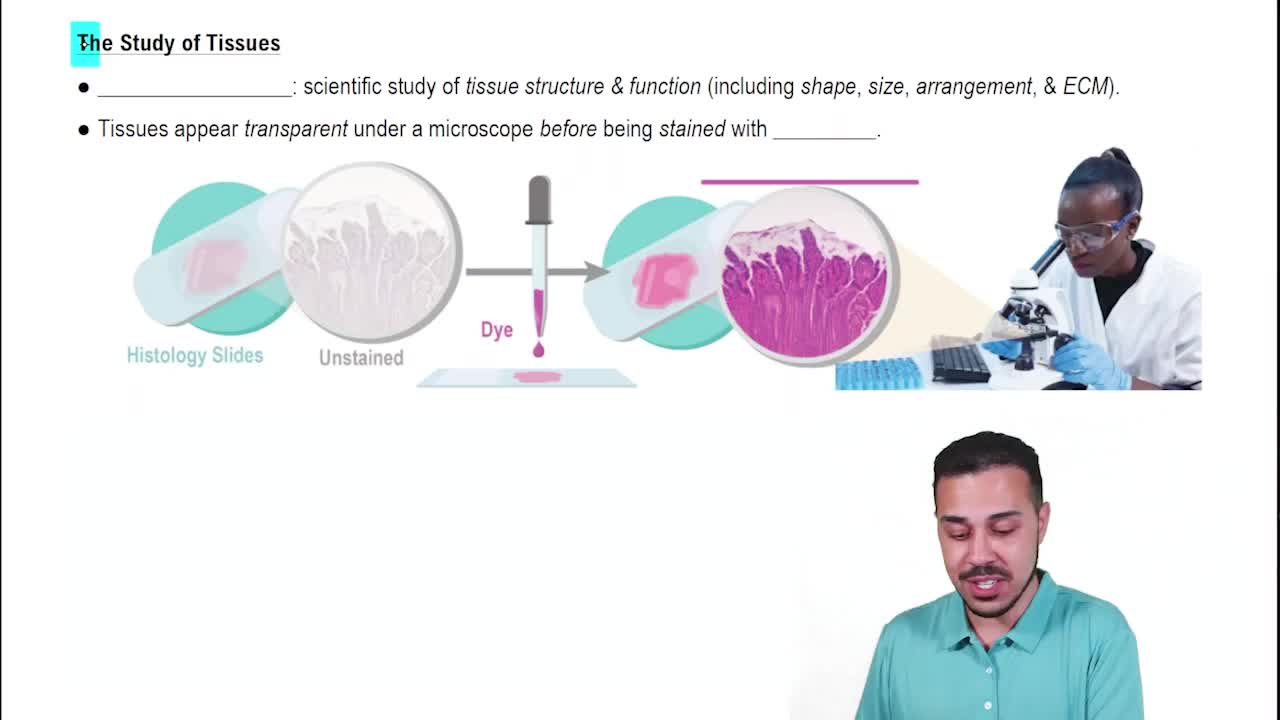
Cytology is the study of cells, their structure, function, and chemistry.
Histology is the study of tissues, their structure, and function.
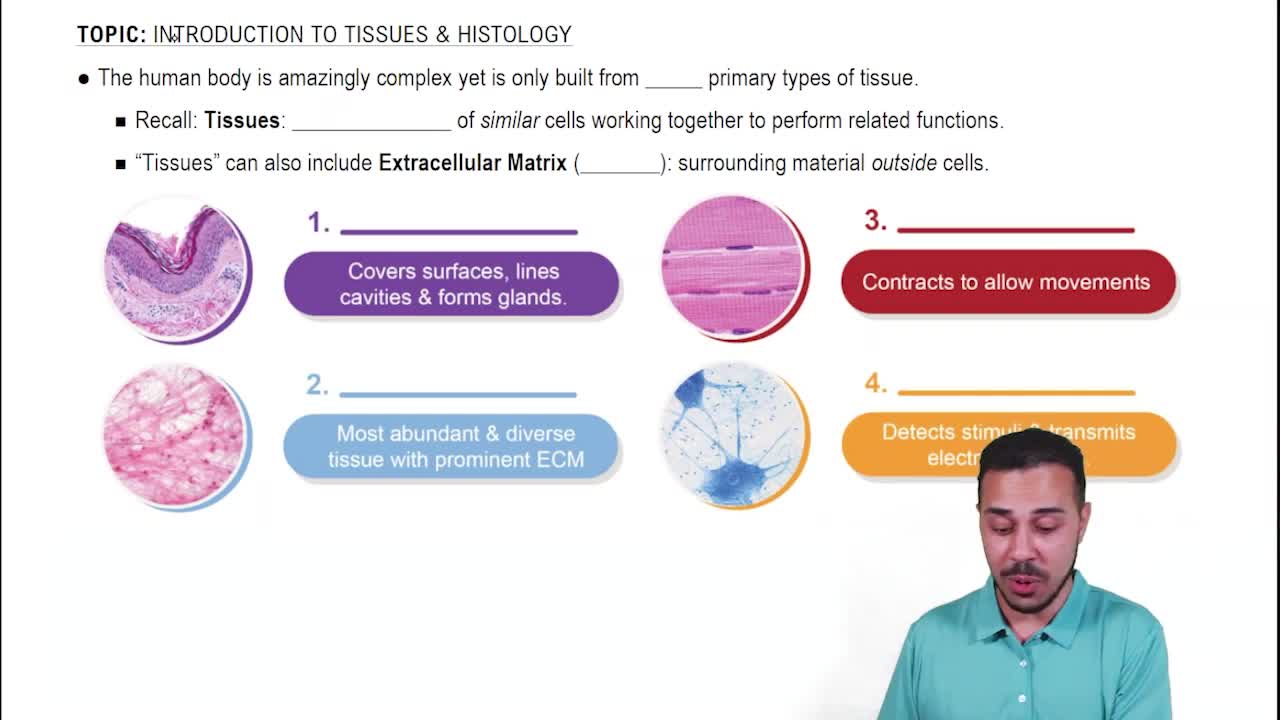
Tissue is a group of similar cells that perform a common function.
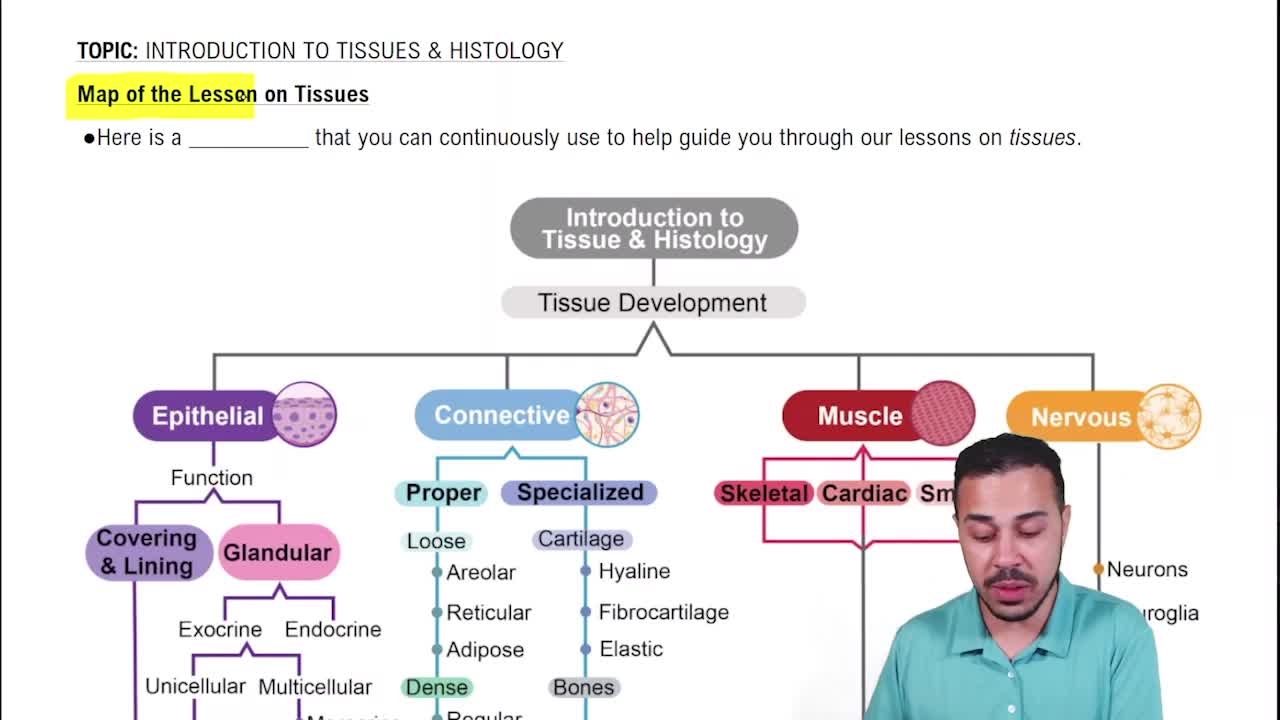
- Epithelial
- Connective
- Muscle
- Nervous
- Cells are closely packed
- Polarity with apical and basal surfaces
- Avascular but innervated
- High regeneration capacity
- Simple squamous
- Simple cuboidal
- Simple columnar
- Stratified squamous
- Transitional
- Squamous (flat)
- Cuboidal (cube-shaped)
- Columnar (tall, column-shaped)
By the number of cell layers (simple or stratified) and the shape of the cells (squamous, cuboidal, or columnar).
Structure: Single layer of flat cells.
Location: Lining of blood vessels, alveoli.
Function: Allows diffusion and filtration.
Structure: Single layer of cube-shaped cells.
Location: Kidney tubules, glands.
Function: Secretion and absorption.
Structure: Single layer of tall cells.
Location: Nonciliated in digestive tract; ciliated in respiratory tract.
Function: Absorption and secretion; cilia move mucus.
Structure: Multiple layers of flat cells.
Location: Skin, mouth, esophagus.
Function: Protection against abrasion.
Structure: Multiple layers of cube-shaped cells.
Location: Sweat glands, mammary glands.
Function: Protection and secretion.
Structure: Multiple layers with tall cells on surface.
Location: Male urethra, large ducts.
Function: Protection and secretion.
Structure: Multiple layers, cells change shape.
Location: Urinary bladder.
Function: Allows stretching.
Structure: Single layer with nuclei at different levels.
Location: Respiratory tract.
Function: Secretion and movement of mucus.
Exocrine glands secrete products onto body surfaces or cavities via ducts.
Endocrine glands secrete hormones directly into the bloodstream.
- Connective tissue proper
- Cartilage
- Bone
- Blood
- Skeletal muscle
- Cardiac muscle
- Smooth muscle