Skip to main content
Anatomy & Physiology
나의 코스
배우기
시험 준비
AI 튜터
학습 가이드
교과서적 해결책
플래시카드
탐험해 보세요
앱을 사용해 보세요
나의 코스
배우기
시험 준비
AI 튜터
학습 가이드
교과서적 해결책
플래시카드
탐험해 보세요
앱을 사용해 보세요
뒤로
Anatomy & Physiology: Tissue Types and Functions
카드를 뒤집기 위해 탭할 수 있습니다.
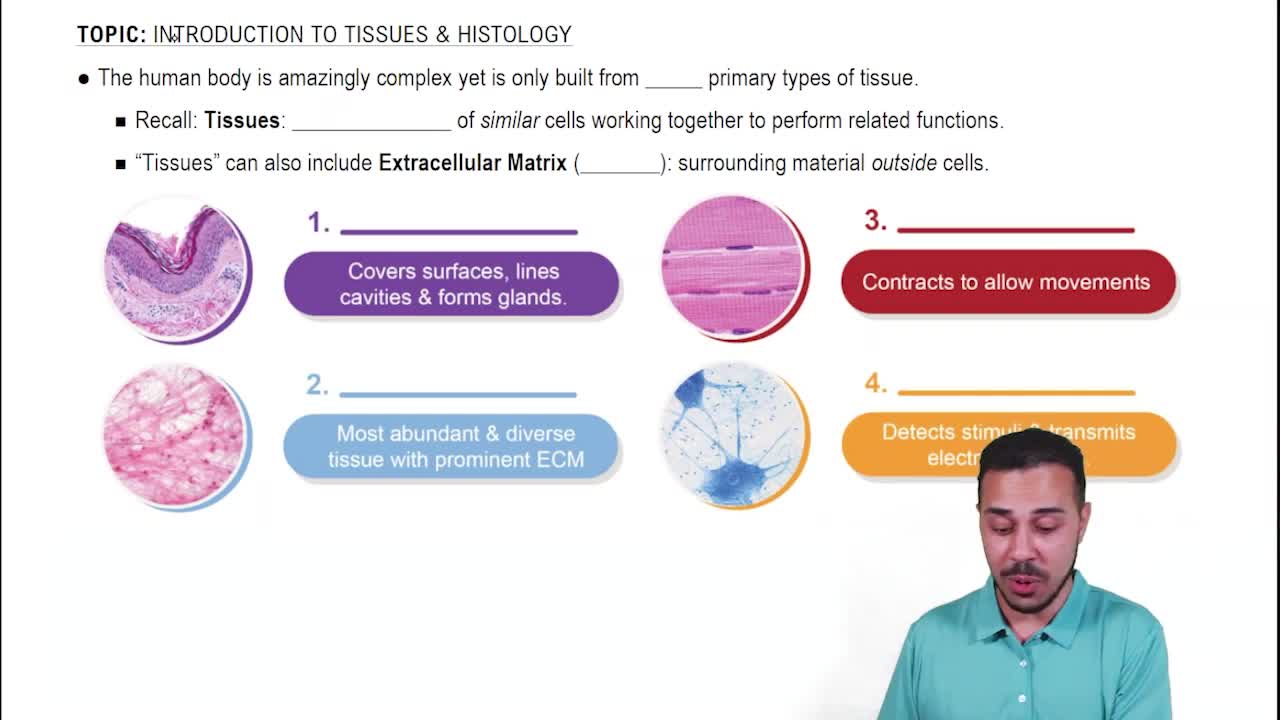
What are tissues in the human body?
카드를 뒤집기 위해 탭할 수 있습니다.
👆
What are tissues in the human body?
Groups of cells with similar structure and function that form the basic building blocks of organs and the body.
진행 상황 추적
컨트롤 버튼이 '내비게이션' 모드로 변경되었습니다.
1/26
추천 영상
03:32
Map of the Lesson on Tissues
14721
views
678
rank
2
comments
02:52
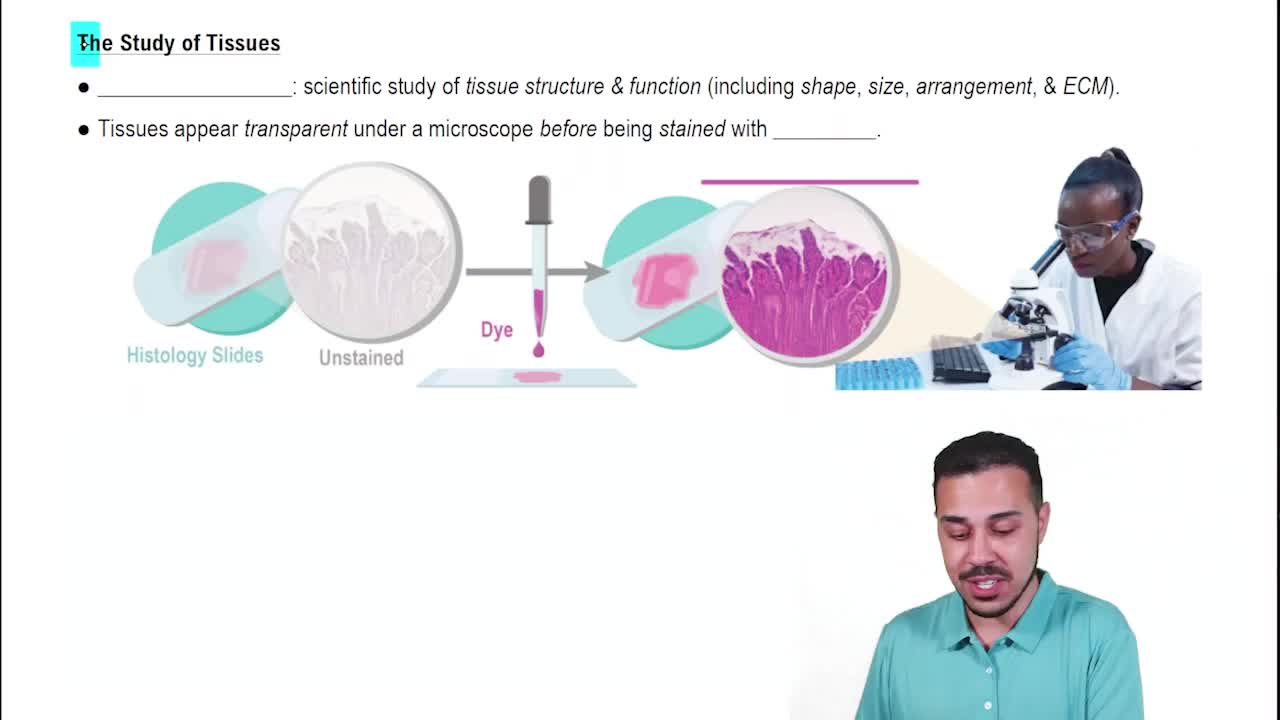
What is Histology?
14812
views
338
rank
04:14
Intro to Human Tissues
24099
views
877
rank
이 집합의 용어 (26)
하이드의 정의
What are tissues in the human body?
Groups of cells with similar structure and function that form the basic building blocks of organs and the body.
Name the four primary tissue types.
Epithelial, connective, muscle, and nervous tissues.
What is the main function of epithelial tissue?
To cover body surfaces, line cavities, and form glands.
How are epithelial tissues classified?
By the number of cell layers (simple or stratified) and the shape of cells at the apical surface (squamous, cuboidal, columnar).
Define simple epithelium.
A single layer of cells specialized for absorption, secretion, and filtration.
Define stratified epithelium.
Multiple layers of cells providing protection in areas of high abrasion.
What are the three common epithelial cell shapes?
Squamous (flat), cuboidal (cube-shaped), and columnar (tall and column-like).
How are glands formed from epithelial tissue?
By the invagination of epithelial sheets.
Difference between exocrine and endocrine glands?
Exocrine glands secrete into ducts; endocrine glands lose ducts and secrete hormones directly into the bloodstream.
Where is simple squamous epithelium found and its function?
In air sacs of lungs and lining of blood vessels; allows diffusion and filtration.
Function and location of simple cuboidal epithelium?
Secretion and absorption; found in kidney tubules and small glands.
Describe simple columnar epithelium.
Single layer of tall cells for absorption and secretion; may have cilia or goblet cells; located in digestive tract and uterine tubes.
What is pseudostratified columnar epithelium?
Appears stratified but is a single layer; often ciliated with goblet cells; found in trachea and upper respiratory tract.
Function and location of stratified squamous epithelium?
Protects against abrasion; found in skin, mouth, and esophagus.
What is transitional epithelium and where is it found?
Resembles both stratified squamous and cuboidal; stretches to accommodate urine; located in urinary bladder.
What is the general function of connective tissue?
Supports, binds, and protects other tissues and organs.
What composes the extracellular matrix in connective tissue?
Protein fibers (collagen, elastic, reticular) and ground substance.
Name major cell types in connective tissue.
Fibroblasts, macrophages, mast cells, adipocytes, and white blood cells.
List types of connective tissue.
Loose connective tissue, dense connective tissue, cartilage, bone, and blood.
What are the three types of muscle tissue?
Skeletal muscle, cardiac muscle, and smooth muscle.
Describe skeletal muscle tissue.
Long, multinucleate, striated cells; voluntary movement; attached to bones.
Describe cardiac muscle tissue.
Branching, striated, usually uninucleate cells with intercalated discs; involuntary; found in heart walls.
Describe smooth muscle tissue.
Spindle-shaped, non-striated cells; involuntary; located in walls of hollow organs.
What is the main function of nervous tissue?
Specialized for communication via electrical impulses.
What are the two main cell types in nervous tissue?
Neurons (transmit electrical signals) and supporting cells (neuroglia).
Where is nervous tissue located?
Brain, spinal cord, and nerves.
 뒤로뒤로
뒤로뒤로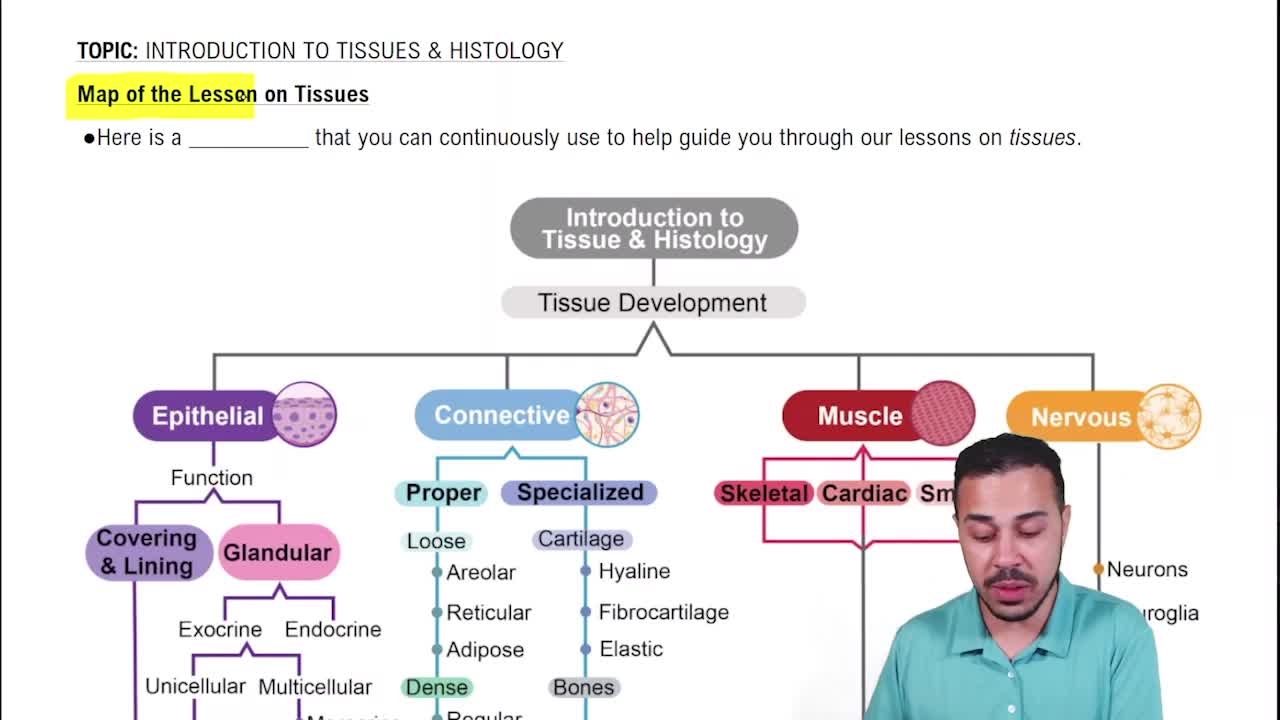
 03:32
03:32