What are the two main divisions of the human skeleton?
The skeleton is divided into the axial skeleton (80 bones) and the appendicular skeleton (126 bones).
What bones form the axial skeleton?
The axial skeleton consists of the skull, vertebral column, and bony thorax (ribs and sternum).
What bones form the appendicular skeleton?
The appendicular skeleton includes the pectoral girdle, upper limbs, pelvic girdle, and lower limbs.
What is the function of the cranium?
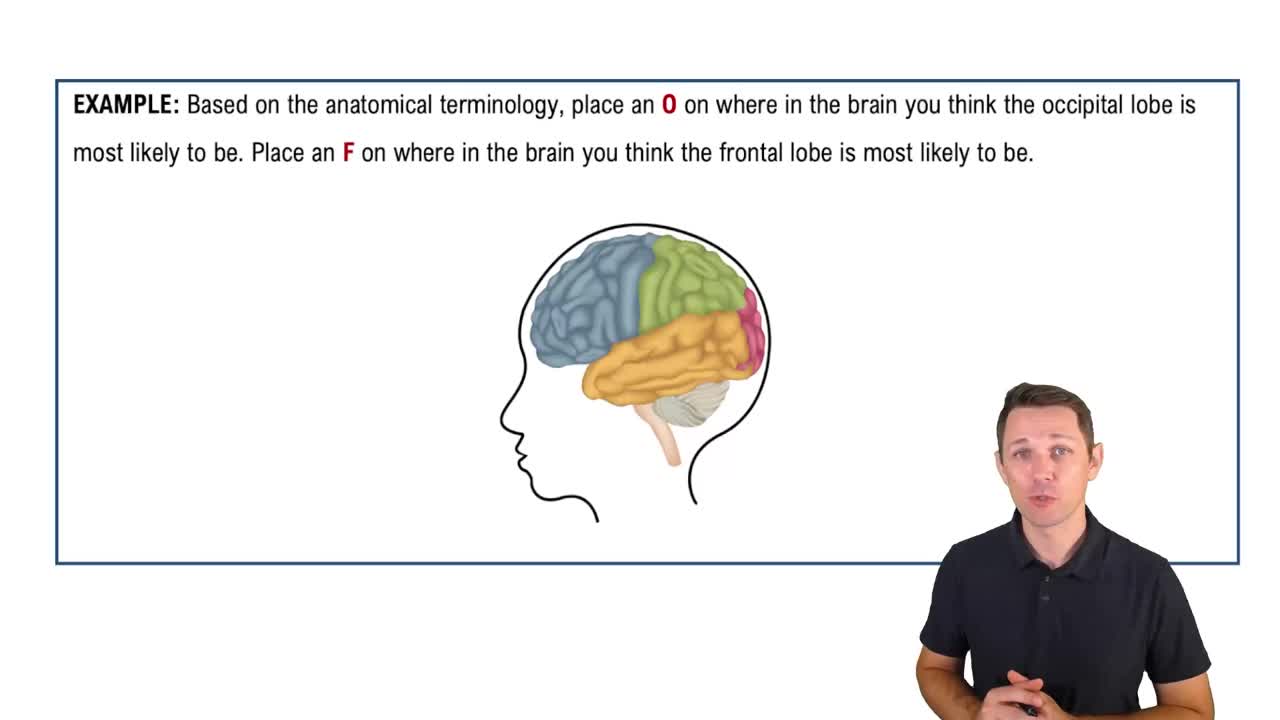
The cranium encloses the brain and provides attachment sites for head and neck muscles.
What are the two main groups of bones in the skull?
The skull is formed by cranial bones and facial bones.
Name the paired and unpaired cranial bones.
Paired: Temporal and Parietal bones. Unpaired: Frontal, Occipital, Sphenoid, and Ethmoid bones.
What is the function of facial bones?
Facial bones form the framework of the face, form cavities for sense organs, provide openings for air and food passage, hold teeth, and anchor facial muscles.
What are sutures in the skull?
Sutures are immovable joints between skull bones, including the coronal, sagittal, lambdoid, and squamous sutures.
What is the foramen magnum and where is it located?
The foramen magnum is a large opening in the occipital bone that allows passage of the spinal cord.
What are the paranasal sinuses and their functions?
Paranasal sinuses are air-filled cavities in the frontal, ethmoid, sphenoid, and maxillary bones. They lighten the skull, moisten air, and help form vocal sounds.
What is the hyoid bone and its unique feature?
The hyoid bone lies inferior to the mandible, does not articulate with any other bone, and serves as a movable base for the tongue.
How many vertebrae are in the adult vertebral column and what are its main functions?
The vertebral column has 26 bones in adults, supports the trunk's weight, protects the spinal cord, and provides muscle attachment sites.
What are intervertebral discs composed of and their function?
Intervertebral discs are made of fibrocartilage with a gelatinous nucleus pulposus and outer annulus fibrosis. They act as shock absorbers and allow spine flexibility.
Name the five regions of the vertebral column.
The five regions are cervical (7), thoracic (12), lumbar (5), sacrum (5 fused), and coccyx (3-5 fused).
What are the primary and secondary curvatures of the vertebral column?
Primary curvatures are thoracic and sacral (convex posteriorly). Secondary curvatures are cervical and lumbar (concave posteriorly).
What is the atlas (C1) vertebra and its function?
The atlas lacks a body and spinous process, supports the skull, and allows nodding 'yes' by enabling flexion and extension of the neck.
What is the axis (C2) vertebra and its function?
The axis has a body and dens (odontoid process) that acts as a pivot for rotation of the atlas and skull, enabling shaking the head 'no'.
What bones form the pectoral girdle?
The pectoral girdle consists of the clavicle and scapula, attaching the upper limbs to the trunk.
What bones form the pelvic girdle?
The pelvic girdle consists of paired coxal bones (ilium, ischium, pubis) that attach the lower limbs to the spine.
What are the three parts of the sternum?
The sternum is composed of the manubrium, body, and xiphoid process.
What are true ribs, false ribs, and floating ribs?
True ribs (1-7) attach directly to the sternum, false ribs (8-12) attach indirectly or not at all, and floating ribs (11-12) do not attach anteriorly.
What bones make up the upper limb?
The upper limb includes the humerus (arm), radius and ulna (forearm), and carpals, metacarpals, and phalanges (hand).
What bones make up the lower limb?
The lower limb includes the femur (thigh), patella (knee), tibia and fibula (leg), and tarsals, metatarsals, and phalanges (foot).
What are the three arches of the foot and their function?
The foot has medial and lateral longitudinal arches and a transverse arch, which provide support and leverage for walking.
 뒤로
 04:19