 뒤로
Basic Anatomy & Physiology: Biomolecules and Tissue Types
 03:08

이 집합의 용어 (19)
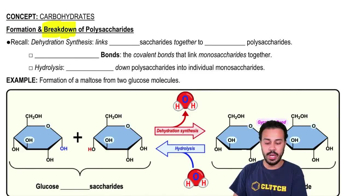
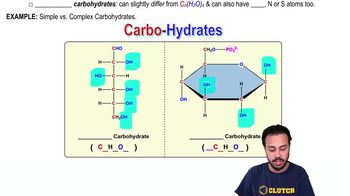
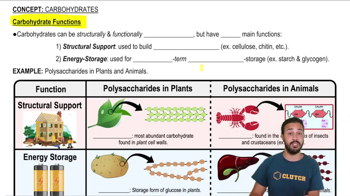
Carbohydrates are biomolecules that provide energy and structural support in cells.
Lipids store energy, make up cell membranes, and act as signaling molecules.
Proteins perform diverse functions including enzymatic activity, structural support, and transport.
Nucleic acids store and transmit genetic information in cells.
Epithelial tissue covers body surfaces and lines cavities, providing protection and absorption.
Connective tissue supports, connects, and binds other tissues and organs.
Muscle tissue enables movement through contraction.
Nervous tissue transmits electrical signals for communication and control.
Ionic bonds form when electrons are transferred between atoms, creating charged ions that attract.
Covalent bonds form when atoms share electrons to fill their outer shells.
Polar covalent bonds occur when electrons are shared unequally, causing partial charges.
Hydrogen bonds are weak attractions between a hydrogen atom and an electronegative atom, important in water and biomolecules.
Atom
The basic unit of an element makes up mater small
Molecule
Two or more atom or molecule with a net electrical charge
Ion
An atom or molecule with a net electrical charge
Polar
Has an uneven distribution of electrical charge
Non Polar
Has a more even distribution of electrical charge
Solute
A substance that is dissolved
Solvent
The substance that dissolves the solute