 뒤로
Basic Chemistry and Biochemistry for Anatomy & Physiology
 02:13

이 집합의 용어 (33)
Matter is anything that has mass and occupies space. It can be seen, smelled, or felt.
Solid (definite shape and volume), Liquid (changeable shape, definite volume), Gas (changeable shape and volume).
Energy is the capacity to do work or put matter into motion; it has no mass or volume.
Kinetic energy is energy in action; Potential energy is stored, inactive energy.
Chemical, Electrical, Mechanical, and Radiant (electromagnetic) energy.
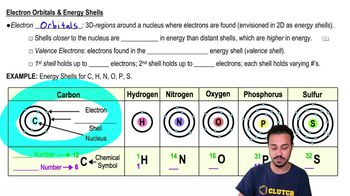
Elements are substances that cannot be broken down chemically; atoms are smallest units of elements with their properties.
Oxygen (65%), Carbon (18%), Hydrogen (10%), Nitrogen (3%).
Protons (+ charge), Neutrons (neutral), Electrons (- charge).
Atomic number = number of protons; Mass number = protons + neutrons in nucleus.
Atoms of the same element with the same number of protons but different numbers of neutrons.
Molecule: two or more atoms bonded; Compound: molecule with two or more different kinds of atoms.
Solutions (homogeneous), Colloids (heterogeneous, cloudy), Suspensions (heterogeneous, particles settle out).
Atoms tend to gain, lose, or share electrons to have 8 electrons in their valence shell for stability.
Formed by transfer of valence electrons creating charged ions (cations and anions) attracted to each other.
Formed by sharing valence electrons; types include nonpolar (equal sharing) and polar (unequal sharing) covalent bonds.
Weak attractions between electropositive hydrogen of one molecule and electronegative atom of another, important in water properties.
Synthesis: smaller molecules combine to form larger ones; Decomposition: larger molecules break down into smaller ones.
Exergonic release energy (catabolic); Endergonic absorb energy (anabolic).
Temperature, concentration/pressure, particle size, and catalysts (enzymes).
Water has high heat capacity, solvent properties, reactivity, and cushioning; it makes up 60-80% of cells.
Acids donate H+ ions; bases accept H+ ions and release OH- ions in solution.
Concentration of hydrogen ions [H+]; acidic (0-6.99), neutral (7), alkaline/basic (7.01-14).
Contain carbon, usually large, covalently bonded; include carbohydrates, lipids, proteins, nucleic acids.
Monosaccharides (single sugars), Disaccharides (two sugars), Polysaccharides (many sugars).
Fats/oils composed of glycerol and three fatty acids; function in energy storage, insulation, and protection.
Modified triglycerides with polar head (hydrophilic) and nonpolar tails (hydrophobic); key in cell membrane structure.
Polymers of amino acids linked by peptide bonds; structures: primary, secondary, tertiary, quaternary.
Fibrous: structural, stable, insoluble; Globular: functional, soluble, sensitive to environment.
Loss of 3D shape and function due to pH or temperature changes, mainly affects globular proteins.
Globular proteins that act as biological catalysts, lowering activation energy to speed up reactions.
DNA and RNA composed of nucleotides (nitrogen base, pentose sugar, phosphate group).
DNA: double-stranded, deoxyribose sugar, bases A,T,G,C, in nucleus; RNA: single-stranded, ribose sugar, bases A,U,G,C, mostly outside nucleus.
Adenosine triphosphate stores and provides immediate energy for cellular reactions.