 뒤로
Basic Chemistry and Biomolecules in Anatomy & Physiology
 02:13

이 집합의 용어 (20)
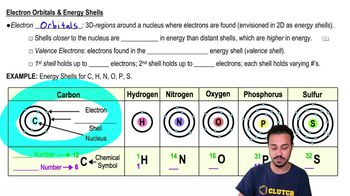
An atom is the smallest unit of matter that retains the properties of an element.
Isotopes are atoms of the same element with different numbers of neutrons.
Ionic bonding is the transfer of electrons between atoms, creating oppositely charged ions that attract each other.
A covalent bond is a chemical bond where atoms share one or more pairs of electrons.
Hydrogen bonds are weak attractions between a hydrogen atom in one molecule and an electronegative atom in another.
An enzyme is a protein that acts as a biological catalyst to speed up chemical reactions.
Activation energy is the energy required to start a chemical reaction, which enzymes lower to speed up the process.
Water is the universal solvent because it can dissolve many substances due to its polarity.
Water has a high specific heat, high heat of vaporization, and helps regulate temperature due to its thermal properties.
Cohesion is water molecules sticking to each other via hydrogen bonds; adhesion is water sticking to other surfaces.
Acids release H+ ions and have pH < 7; bases release OH- ions and have pH > 7.
The pH scale measures acidity or alkalinity, ranging from 0 (acidic) to 14 (basic), with 7 as neutral.
Carbon forms the backbone of biomolecules due to its ability to form four covalent bonds.
Functional groups are specific groups of atoms within molecules that determine chemical properties.
Monomers are small molecules that join to form polymers, which are large, complex molecules.
Carbohydrates are biomolecules made of carbon, hydrogen, and oxygen that provide energy and structural support.
Lipids are hydrophobic biomolecules used for energy storage, insulation, and making cell membranes.
Proteins are polymers of amino acids that perform structural, enzymatic, and regulatory functions.
Nucleic acids like DNA and RNA store and transmit genetic information.
A chemical reaction involves breaking and forming chemical bonds to create new substances.