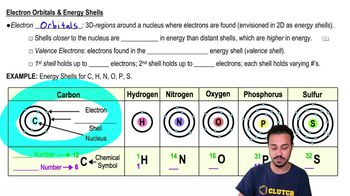
Carbon, oxygen, hydrogen, and nitrogen make up 96% of the body.
Define an element in basic chemistry.
Elements are substances that cannot be broken down into simpler substances by ordinary chemical methods.
What is an atom?
An atom is the smallest particle of an element with its properties and is the unique building block of each element.
Difference between a molecule and a compound?
A molecule is two or more atoms bonded together; a compound is a molecule with two or more different kinds of atoms bonded.
What are the three basic types of mixtures in the body?
Solutions, colloids, and suspensions are the three basic types of mixtures.
Define a solution in chemistry.
A solution is a homogeneous mixture with particles evenly distributed; it has a solvent and solute(s).
What is a colloid and its key property?
A colloid is a heterogeneous mixture with large particles that do not settle out, often appearing cloudy or milky.
What defines a suspension?
A suspension is a heterogeneous mixture with large visible solutes that settle out over time.
How do mixtures differ from compounds?
Mixtures have no chemical bonding, can be separated physically, and can be heterogeneous or homogeneous; compounds have chemical bonds and are homogeneous.
What happens during a synthesis chemical reaction?
Atoms or molecules combine to form a larger, more complex molecule.
Describe a decomposition reaction.
A molecule breaks down into smaller molecules or atoms; it is the reverse of synthesis.
What is an exchange (displacement) reaction?
A reaction where bonds are both made and broken, involving synthesis and decomposition.
What is the difference between exergonic and endergonic reactions?
 뒤로
 02:13