뒤로

Blood and Cardiovascular System - Anatomy & Physiology
컨트롤 버튼이 '내비게이션' 모드로 변경되었습니다.
1/50
  • Main components of the cardiovascular system

    Blood, heart, arteries, veins, capillaries

  • Three substances transported by the cardiovascular system

    Oxygen, nutrients, hormones

  • Two additional functions of the cardiovascular system besides transport

    Temperature regulation and pH balance

  • Two main components of blood

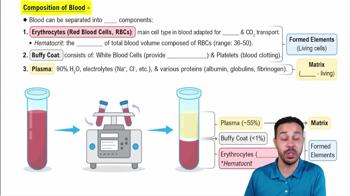
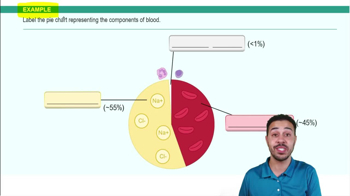
    Plasma and formed elements

  • Three types of formed elements in blood

    Erythrocytes, leukocytes, platelets

  • Percentage of blood that is plasma

    Approximately 55%

  • Percentage of plasma that is water

    Approximately 92%

  • Three major plasma proteins

    Albumin, globulins, fibrinogen

  • Normal pH range of blood

    7.35–7.45

  • Term describing low blood volume

    Hypovolemic

  • Main function of albumin

    Maintains osmotic pressure

  • Role of globulins

    Transport and immune function

  • Function of fibrinogen

    Blood clotting

  • Where most plasma proteins are produced

    Liver

  • Definition of serum

    Plasma without clotting proteins

  • Percentage of formed elements that are erythrocytes

    99.9%

  • Definition of hematocrit

    Percentage of RBCs in blood

  • Another name for hematocrit

    Packed cell volume (PCV)

  • Effect of high altitude on hematocrit

    Increases hematocrit

  • Number of RBCs in 1 microliter of male blood

    Approximately 5.4 million

  • Shape of a red blood cell (RBC)

    Biconcave disc

  • Do RBCs have a nucleus?

    No, they are anucleated

  • Lifespan of an RBC

    Approximately 120 days

  • Why are RBCs flexible?

    Because they lack a nucleus

  • Main function of RBCs

    Transport oxygen and carbon dioxide

  • Protein that carries oxygen in RBCs

    Hemoglobin

  • Number of subunits in hemoglobin

    Four

  • Metal ion that binds oxygen in hemoglobin

    Iron (Fe2+)

  • Color of oxygenated blood

    Bright red

  • Color of deoxygenated blood

    Dark red

  • What determines blood type?

    Surface antigens on RBCs

  • What are antibodies also called?

    Agglutinins

  • Definition of agglutination

    Clumping of blood cells

  • Blood type with both A and B antigens

    AB

  • Blood type with no antigens

    O

  • Meaning of Rh+

    Has Rh antigen

  • Meaning of Rh–

    Lacks Rh antigen

  • Universal donor blood type

    O negative

  • Universal recipient blood type

    AB positive

  • What happens during an incompatible transfusion?

    Agglutination and hemolysis

  • Two major classes of leukocytes

    Granulocytes and agranulocytes

  • Most abundant white blood cell (WBC)

    Neutrophils

  • WBC that fights parasites and allergies

    Eosinophils

  • WBC that releases histamine

    Basophils

  • WBC that becomes macrophages

    Monocytes

  • Platelets are derived from

    Megakaryocytes

  • Main function of platelets

    Blood clotting

  • Lifespan of platelets

    8–10 days

  • Hormone that stimulates RBC production

    Erythropoietin (EPO)

  • Condition resulting from low hemoglobin or hematocrit

    Anemia