Skip to main content
Anatomy & Physiology
나의 코스
배우기
시험 준비
AI 튜터
학습 가이드
교과서적 해결책
플래시카드
탐험해 보세요
앱을 사용해 보세요
나의 코스
배우기
시험 준비
AI 튜터
학습 가이드
교과서적 해결책
플래시카드
탐험해 보세요
앱을 사용해 보세요
뒤로
Blood and Hematology - Anatomy & Physiology
카드를 뒤집기 위해 탭할 수 있습니다.
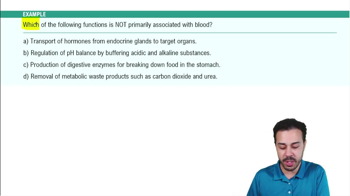
What are the three main functions of blood?
카드를 뒤집기 위해 탭할 수 있습니다.
👆
What are the three main functions of blood?
Transportation
of gases, nutrients, wastes;
regulation
of pH, temperature, and water content;
protection
through immune defense and clotting.
진행 상황 추적
컨트롤 버튼이 '내비게이션' 모드로 변경되었습니다.
1/20
추천 영상
VideoThumbView.guidedCourse
2:36
Introduction to Blood Example 1
11371
views
334
rank
VideoThumbView.guidedCourse
7:49
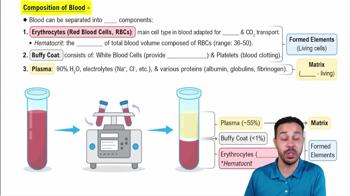
Composition of Blood
11916
views
337
rank
VideoThumbView.guidedCourse
1:55
Introduction to Blood Example 2
9388
views
225
rank
이 집합의 용어 (20)
하이드의 정의
What are the three main functions of blood?
Transportation
of gases, nutrients, wastes;
regulation
of pH, temperature, and water content;
protection
through immune defense and clotting.
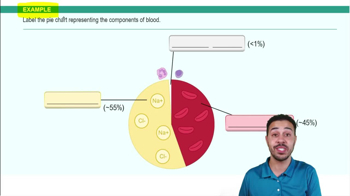
What is the typical composition of blood by volume?
About 44% red blood cells (RBCs), 1% white blood cells (WBCs) and platelets (buffy coat), and 55% plasma.
Describe the structure and function of red blood cells (erythrocytes).
Anucleate, biconcave discs that increase surface area for gas exchange; contain hemoglobin to bind oxygen; functional for ~120 days.
What is hemoglobin composed of and what is its role?
Hemoglobin has 4 polypeptide chains (globins), each with a heme group that binds one oxygen molecule; it transports oxygen in RBCs.
Where does hematopoiesis occur and what does it produce?
Occurs in red bone marrow; produces all blood formed elements including RBCs, WBCs, and platelets.
What hormone regulates erythropoiesis and what triggers its release?
Erythropoietin, released by kidneys in response to low blood oxygen (hypoxia), stimulates RBC production.
What are common causes and types of anemia?
Iron-deficiency anemia (low iron for Hb), pernicious anemia (vitamin B12 deficiency), and sickle cell anemia (abnormal Hb causing sickled RBCs).
What are the main types of white blood cells (WBCs)?
Granulocytes (neutrophils, eosinophils, basophils) and agranulocytes (monocytes, lymphocytes).
What is the function of neutrophils?
Phagocytic cells that combat bacterial infections and inflammation.
What role do eosinophils play in the immune system?
Combat parasitic worm infections and modulate allergic responses.
What is the function of basophils?
Release histamine and other chemicals during inflammatory and allergic reactions.
What are the two main types of lymphocytes and their functions?
B lymphocytes produce antibodies; T lymphocytes mediate cell-mediated immunity and directly destroy pathogens.
What are platelets and their role in hemostasis?
Anucleate cell fragments from megakaryocytes; they promote blood clotting by forming platelet plugs and releasing clotting factors.
Describe the three main steps of hemostasis.
(1) Vascular spasm - vasoconstriction; (2) Platelet plug formation - platelets adhere and aggregate; (3) Coagulation - fibrin clot formation.
What triggers the intrinsic and extrinsic pathways of the clotting cascade?
Intrinsic: activators within blood or damaged vessel; Extrinsic: tissue factor from damaged cells outside vessel.
What is the role of thrombin in clot formation?
Converts fibrinogen into fibrin strands that form the structural basis of a blood clot.
What is the significance of blood antigens and antibodies in blood typing?
Blood type is determined by antigens on RBCs and antibodies in plasma; incompatible antigen-antibody binding causes agglutination and hemolysis.
What blood type is the universal donor and why?
Type O blood; it has no antigens on RBCs, so it does not trigger immune reactions in recipients.
What is the Rh factor and its clinical importance?
Rh+ means RBCs have Rh antigen; Rh- means they do not. Rh incompatibility can cause hemolytic disease of the newborn.
How are worn-out RBCs recycled in the body?
Macrophages in the spleen digest RBCs; heme is broken down into iron (recycled) and bilirubin (excreted).
 뒤로뒤로
 2:36