Skip to main content
Anatomy & Physiology
나의 코스
배우기
시험 준비
AI 튜터
학습 가이드
교과서적 해결책
플래시카드
탐험해 보세요
앱을 사용해 보세요
나의 코스
배우기
시험 준비
AI 튜터
학습 가이드
교과서적 해결책
플래시카드
탐험해 보세요
앱을 사용해 보세요
뒤로
Body Cavities in Anatomy & Physiology
카드를 뒤집기 위해 탭할 수 있습니다.
What is a body cavity?
카드를 뒤집기 위해 탭할 수 있습니다.
👆
What is a body cavity?
A
body cavity
is a hollow space within the body that houses and protects internal organs.
진행 상황 추적
컨트롤 버튼이 '내비게이션' 모드로 변경되었습니다.
1/19
추천 영상
VideoThumbView.guidedCourse
3:20
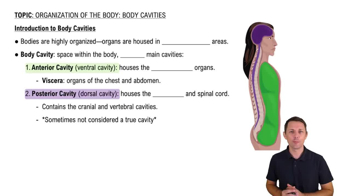
Introduction to Body Cavities
13260
views
292
rank
VideoThumbView.guidedCourse
1:40
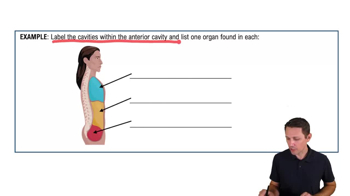
Organization of the Body: Body Cavities Example 2
7460
views
146
rank
VideoThumbView.guidedCourse
3:25
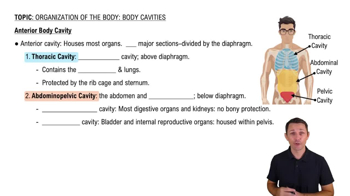
Anterior Body Cavity
8759
views
192
rank
이 집합의 용어 (19)
하이드의 정의
What is a body cavity?
A
body cavity
is a hollow space within the body that houses and protects internal organs.
Name the two main body cavities.
The two main body cavities are the
dorsal cavity
and the
ventral cavity
.
What does the dorsal cavity contain?
The dorsal cavity contains the
cranial cavity
(brain) and the
spinal cavity
(spinal cord).
What are the subdivisions of the ventral cavity?
The ventral cavity is subdivided into the
thoracic cavity
and the
abdominopelvic cavity
.
What organs are found in the thoracic cavity?
The thoracic cavity contains the
heart
and
lungs
.
What separates the thoracic cavity from the abdominopelvic cavity?
The
diaphragm
separates the thoracic cavity from the abdominopelvic cavity.
What organs are found in the abdominopelvic cavity?
The abdominopelvic cavity contains digestive organs, kidneys, bladder, and reproductive organs.
What is the function of serous membranes in body cavities?
Serous membranes
line body cavities
and secrete fluid to reduce friction between organs.
Name the serous membrane that lines the thoracic cavity.
The
pleura
lines the thoracic cavity and covers the lungs.
What is the pericardium?
The
pericardium
is the serous membrane that surrounds the heart.
What is the peritoneum?
The
peritoneum
is the serous membrane lining the abdominopelvic cavity and covering abdominal organs.
Define the cranial cavity.
The
cranial cavity
is the space within the skull that contains the brain.
Define the spinal cavity.
The
spinal cavity
is the space within the vertebral column that contains the spinal cord.
What is the mediastinum?
The
mediastinum
is the central compartment of the thoracic cavity containing the heart, trachea, and esophagus.
What is the difference between the dorsal and ventral cavities?
The dorsal cavity primarily protects the nervous system, while the ventral cavity houses organs involved in respiration, digestion, and reproduction.
Why are body cavities important?
Body cavities protect organs, allow organ movement, and provide space for growth and development.
What is the pelvic cavity?
The
pelvic cavity
is the lower part of the abdominopelvic cavity containing the bladder, reproductive organs, and rectum.
What is the abdominal cavity?
The
abdominal cavity
is the upper part of the abdominopelvic cavity containing digestive organs like the stomach and intestines.
How do body cavities contribute to homeostasis?
By protecting organs and allowing them to function properly, body cavities help maintain
internal stability
or homeostasis.
 뒤로뒤로
 3:20