Skip to main content
Anatomy & Physiology
나의 코스
배우기
시험 준비
AI 튜터
학습 가이드
교과서적 해결책
플래시카드
탐험해 보세요
앱을 사용해 보세요
나의 코스
배우기
시험 준비
AI 튜터
학습 가이드
교과서적 해결책
플래시카드
탐험해 보세요
앱을 사용해 보세요
뒤로
Bones and Skeletal Tissues - Anatomy & Physiology
카드를 뒤집기 위해 탭할 수 있습니다.
What are the three types of skeletal cartilage?
카드를 뒤집기 위해 탭할 수 있습니다.
👆
What are the three types of skeletal cartilage?
Hyaline
(most abundant, supports joints, ribs, nose),
Elastic
(flexible, external ear, epiglottis), and
Fibrocartilage
(thick collagen, high tensile strength, intervertebral discs, pubic symphysis).
진행 상황 추적
컨트롤 버튼이 '내비게이션' 모드로 변경되었습니다.
1/22
추천 영상
VideoThumbView.guidedCourse
1:07
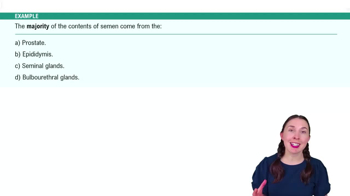
Anatomy of the Male Reproductive System Example 2
3908
views
65
rank
VideoThumbView.guidedCourse
3:19
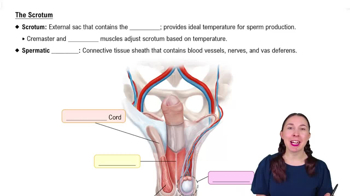
The Scrotum
5496
views
86
rank
VideoThumbView.guidedCourse
0:59
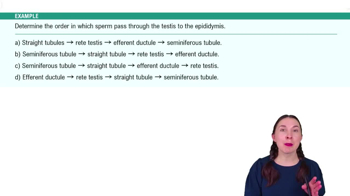
Anatomy of the Male Reproductive System Example 4
4228
views
53
rank
이 집합의 용어 (22)
하이드의 정의
What are the three types of skeletal cartilage?
Hyaline
(most abundant, supports joints, ribs, nose),
Elastic
(flexible, external ear, epiglottis), and
Fibrocartilage
(thick collagen, high tensile strength, intervertebral discs, pubic symphysis).
What is the perichondrium and its function?
A dense connective tissue sleeve around cartilage that resists expansion and supplies nutrients via blood vessels.
How does cartilage grow?
By
appositional growth
(new matrix on cartilage surface) and
interstitial growth
(new matrix within cartilage by chondrocyte division).
List the main functions of bone.
Support, protection, leverage for movement, mineral storage, blood cell formation, fat storage, and hormone production.
What are the two main divisions of the skeleton?
Axial skeleton
(skull, vertebral column, rib cage) and
appendicular skeleton
(limbs and girdles).
Classify bones by shape with examples.
Long (humerus), short (wrist bones), flat (sternum), irregular (vertebrae), sesamoid (patella).
What is the difference between compact and spongy bone?
Compact bone is dense and smooth; spongy bone has a honeycomb structure with trabeculae and spaces filled with marrow.
Describe the structure of a typical long bone.
Has a diaphysis (shaft with medullary cavity), epiphyses (ends with spongy bone), articular cartilage, periosteum, endosteum, and epiphyseal line.
What are the two membranes covering bones?
Periosteum
(outer double-layered membrane) and
endosteum
(delicate inner lining of bone surfaces).
Where is red bone marrow found and what is its function?
In trabecular cavities of spongy bone and flat bones; site of hematopoiesis (blood cell formation).
Name the five major cell types in bone tissue.
Osteoprogenitor cells, osteoblasts, osteocytes, bone-lining cells, and osteoclasts.
What is the role of osteoblasts?
Bone-forming cells that secrete unmineralized bone matrix called osteoid.
What do osteocytes do?
Mature bone cells that maintain bone matrix and act as stress sensors.
What is the function of osteoclasts?
Large multinucleate cells that resorb (break down) bone by secreting acids and enzymes.
What is an osteon?
The structural unit of compact bone, consisting of concentric lamellae around a central canal.
What are canaliculi and their function?
Hairlike canals connecting lacunae, allowing osteocytes to communicate and exchange nutrients and wastes.
What are the organic and inorganic components of bone?
Organic: cells and osteoid (collagen and proteins) for tensile strength. Inorganic: hydroxyapatites (calcium phosphate crystals) for hardness.
What are the two types of ossification?
Endochondral ossification
(bone replaces cartilage) and
intramembranous ossification
(bone forms directly in fibrous membrane).
How do long bones grow after birth?
Lengthwise by interstitial growth at the epiphyseal plate and thickness by appositional growth.
What controls bone remodeling?
Hormonal control (parathyroid hormone) for calcium balance and mechanical stress to strengthen bone where needed.
What are the classifications of bone fractures?
By position (displaced/nondisplaced), completeness (complete/incomplete), and skin penetration (open/closed).
Name common bone disorders related to remodeling imbalance.
Osteomalacia (soft bones), rickets (childhood osteomalacia), osteoporosis (bone mass loss), and Paget's disease (excessive disorganized remodeling).
 뒤로
 1:07