 뒤로
Cell Transport and Division in Anatomy & Physiology
 01:52

이 집합의 용어 (18)
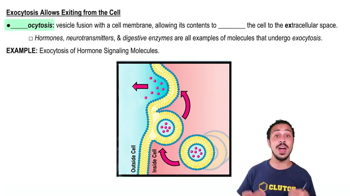
Movement of large substances using membrane-bound sacs called vesicles.
A vesicle releases its contents outside the cell.
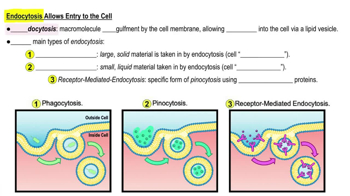
The cell brings substances inside by surrounding them with its membrane.
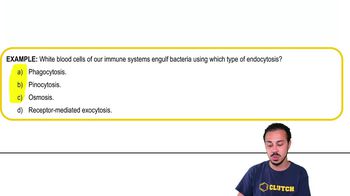
Cell eating; taking in large particles.
Cell drinking; taking in fluid and dissolved substances.
The cell takes in specific substances that bind to membrane receptors.
An organelle that breaks down fatty acids and harmful substances.
Protein fibers that support the cell and help it keep its shape and move.
A structure that helps with cell division.
Three bases on mRNA that code for an amino acid or stop signal.
Three bases on tRNA that match a codon on mRNA.
The stage when a cell grows, does its normal work, and copies its DNA.
The process of dividing the nucleus into two identical nuclei.
Chromosomes become visible and the nucleus begins to break down.
Chromosomes line up in the middle of the cell.
Chromosomes are pulled apart to opposite sides of the cell.
Two new nuclei form around the separated chromosomes.
The cell's cytoplasm divides, forming two cells.