 뒤로
chapter 2
 02:13

이 집합의 용어 (25)
Matter is anything that occupies space and has mass; it exists as solid, liquid, or gas.
An element is a pure substance that cannot be created or broken down by ordinary chemical means.
Oxygen (O), Carbon (C), Hydrogen (H), and Nitrogen (N) make up roughly 96% of body mass.
Atomic Number: Number of protons in an atom's nucleus.
Mass Number: Sum of protons and neutrons in the nucleus.
An isotope is a form of an element with the same number of protons but a different number of neutrons.
Protons: +1 charge, in nucleus.
Neutrons: neutral, in nucleus.
Electrons: -1 charge, orbit in shells.
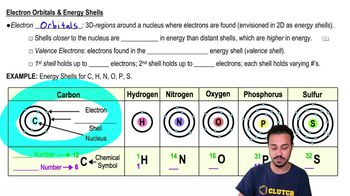
Valence Shell is the outermost electron shell.
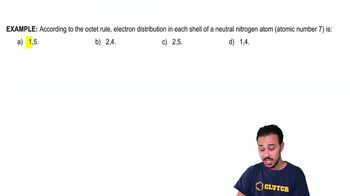
Octet Rule: atoms gain, lose, or share electrons to have 8 valence electrons for stability.
Cation: positively charged ion (lost electrons).
Anion: negatively charged ion (gained electrons).
An ionic bond is formed when one atom transfers electrons to another, creating ions of opposite charge that attract.
A nonpolar covalent bond shares electrons equally between atoms (e.g., CH\(4\), O\(2\)).
A polar covalent bond shares electrons unequally, creating partial positive and negative poles (e.g., H\(2\)O).
A hydrogen bond is a weak attraction between a slightly positive hydrogen atom and a nearby electronegative atom.
Kinetic energy is energy of motion.
Potential energy is stored energy due to position or structure, like chemical bonds.
A synthesis reaction joins molecules to form a larger molecule, absorbing energy (A + B → AB).
A decomposition reaction breaks a molecule into smaller parts, releasing energy (AB → A + B).
Activation energy is the energy needed to start a reaction.
Enzymes lower activation energy to speed reactions.
Hydrophilic: water-loving, polar or ionic substances that dissolve in water.
Hydrophobic: water-fearing, nonpolar molecules that do not dissolve in water.
Water absorbs and releases large amounts of heat with little temperature change, protecting the body from rapid thermal shifts.
An acid releases hydrogen ions (H\(+\)) in solution; it acts as a proton donor (pH < 7).
A base accepts hydrogen ions or releases hydroxyl ions (OH\(-\)) in solution (pH > 7).
A buffer resists pH changes by neutralizing excess H\(+\) or OH\(-\) ions (e.g., bicarbonate system in blood).
Dehydration synthesis joins monomers by removing water.
Hydrolysis breaks polymers into monomers by adding water.
The hydroxyl group (−OH) is polar and found in carbohydrates, proteins, nucleic acids, and lipids; involved in dehydration and hydrolysis.
The carboxyl group (−COOH) acts as an acid by releasing H\(+\); found in amino acids and fatty acids.
The amino group (−NH\(2\)) acts as a base by accepting H\(+\); fundamental in amino acids.