 뒤로
Chemical Reactions in Anatomy & Physiology
 01:56

이 집합의 용어 (20)
A reaction where smaller particles bond together to form larger, more complex molecules, such as amino acids forming proteins.
A reaction where bonds in larger molecules are broken down into smaller, less complex molecules, like glycogen breaking down into glucose.
Reactions where bonds are both made and broken, involving synthesis and decomposition, such as ATP transferring a phosphate to glucose.
Enzymes act as biological catalysts that lower activation energy and speed up reactions without being consumed.
Enzymes reduce the activation energy required, allowing reactions to proceed faster and more efficiently.
A temporary structure formed when a substrate binds to the active site of an enzyme during a reaction.
Two molecules are joined together with the removal of water as a product.
Water is split and used to break bonds in larger molecules, forming smaller products.
The minimum energy required for reactants to start a chemical reaction.
Increasing temperature raises kinetic energy, causing molecules to collide more frequently and with greater force, speeding up reactions.
Higher reactant concentration increases the frequency of collisions, thus increasing the reaction rate.
Irreversible reactions proceed only from reactants to products, while reversible reactions can proceed in both directions.
The state where the rate of product formation equals the rate of reactant formation in a reversible reaction.
ATP transfers phosphate groups to other molecules, facilitating energy transfer in cells.
Water participates in hydrolysis and dehydration synthesis reactions and acts as a solvent and medium for transport.
Hydrophilic substances attract water, while hydrophobic substances repel water.
Catalysts increase the rate of chemical reactions without being permanently changed or consumed.
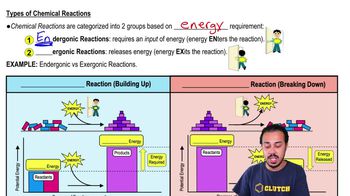
If reactants have less potential energy than products, energy is added; if more, energy is released.
Solutions are uniform mixtures, colloids have dispersed particles that do not settle, and suspensions have particles that separate unless stirred.
Enzymes bind only specific substrates at their active sites, ensuring precise biochemical reactions.