 뒤로
Connective Tissue Basics - Anatomy & Physiology
 06:37

이 집합의 용어 (20)
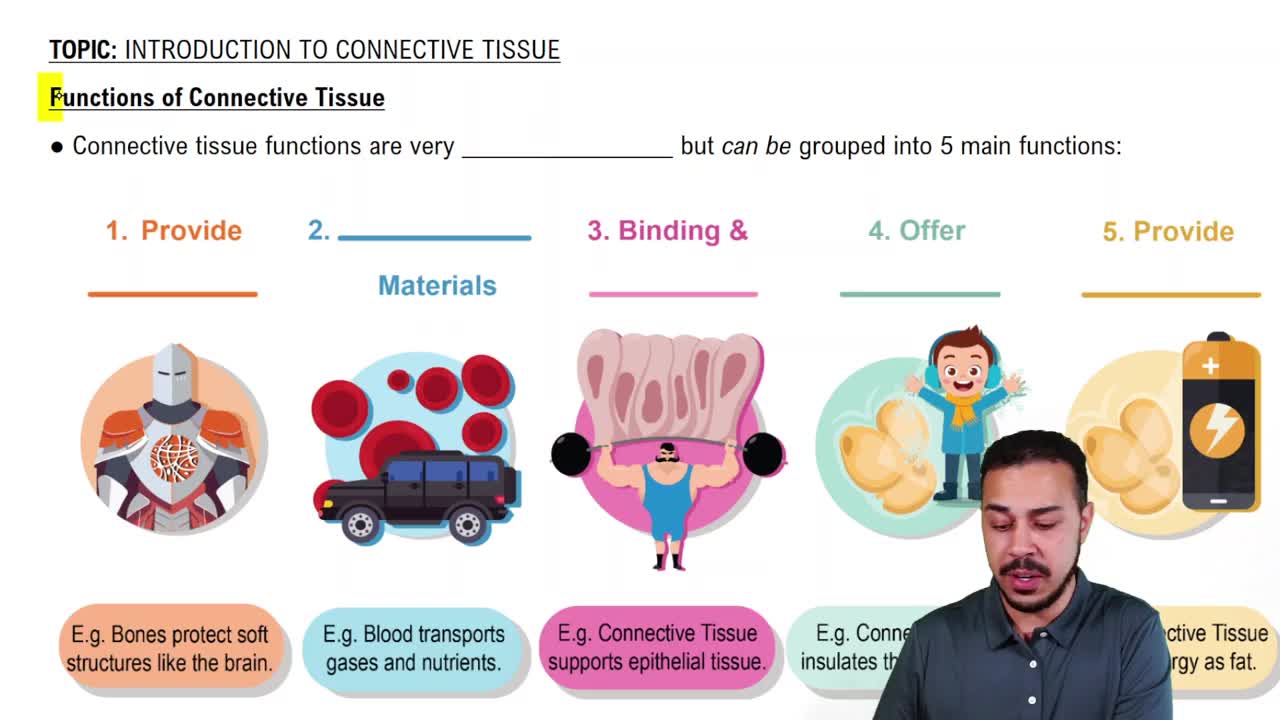
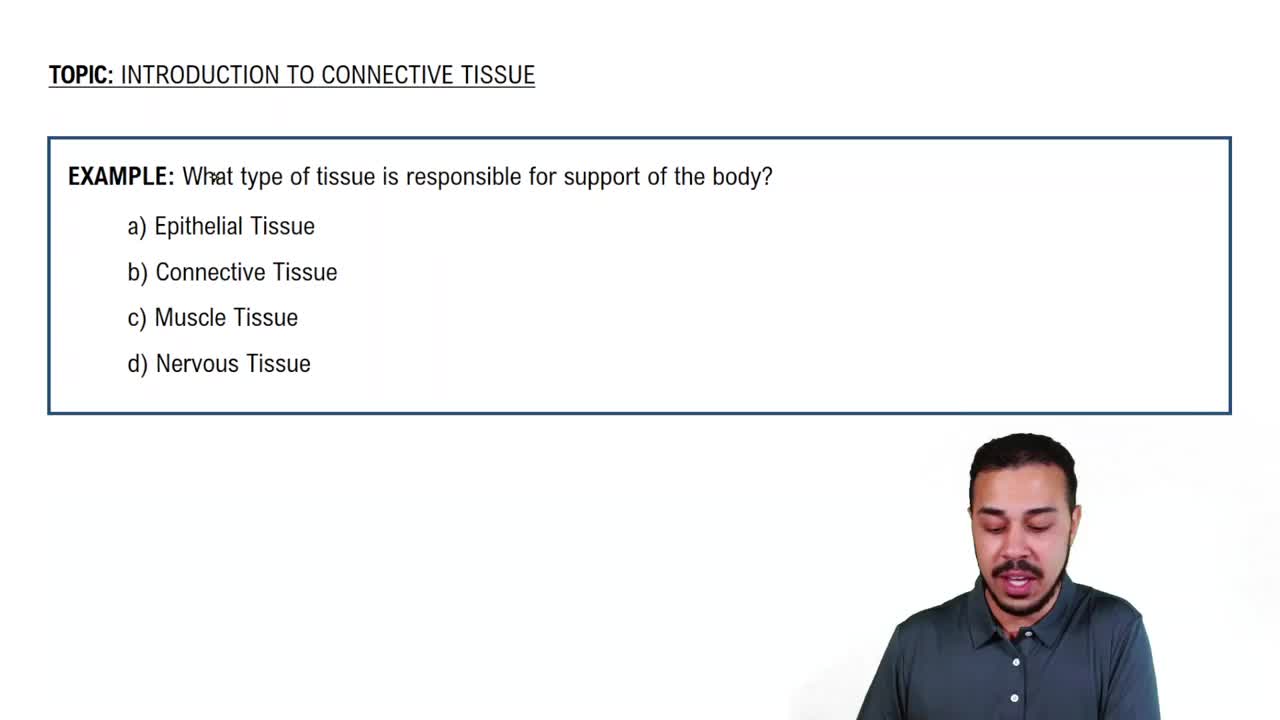
Connective tissue supports, connects, or separates different types of tissues and organs in the body.
Cells, fibers (collagen, elastic, reticular), and ground substance make up connective tissue.
Collagen fibers provide strength, elastic fibers provide flexibility, and reticular fibers form supportive networks.
Collagen fibers provide tensile strength and resist stretching.
Ground substance is the amorphous, gel-like material surrounding cells and fibers, facilitating nutrient and waste exchange.
Loose connective tissue, dense connective tissue, cartilage, bone, and blood.
Loose connective tissue has loosely arranged fibers and abundant ground substance, providing cushioning and support.
Dense connective tissue has densely packed collagen fibers, providing strong connections like tendons and ligaments.
Fibroblasts, macrophages, mast cells, and adipocytes are common connective tissue cells.
Fibroblasts synthesize fibers and ground substance in connective tissue.
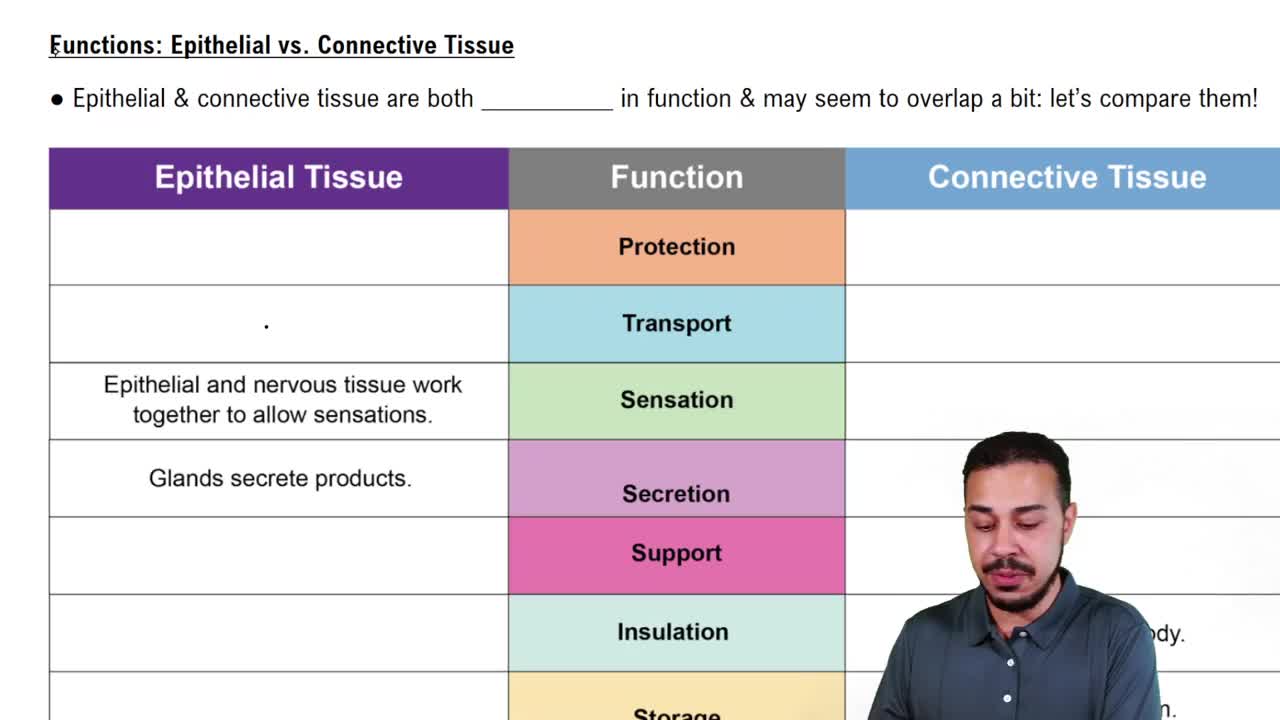
Connective tissue has abundant extracellular matrix and fewer cells, while epithelial tissue has tightly packed cells with minimal matrix.
Elastic fibers allow tissues to stretch and recoil.
Reticular fibers form supportive networks in soft organs like the spleen and lymph nodes.
The extracellular matrix consists of fibers and ground substance surrounding connective tissue cells.
To provide structural support, protection, and transport of nutrients and waste.
Adipose tissue stores fat and provides insulation and cushioning.
Tendons connect muscles to bones and are made of dense connective tissue.
Ligaments connect bones to bones and are composed of dense connective tissue.
Cartilage has a firm, flexible matrix and lacks blood vessels.
Mast cells release histamine and mediate inflammatory responses.