 뒤로
Connective Tissues in Anatomy & Physiology
 06:37

이 집합의 용어 (20)
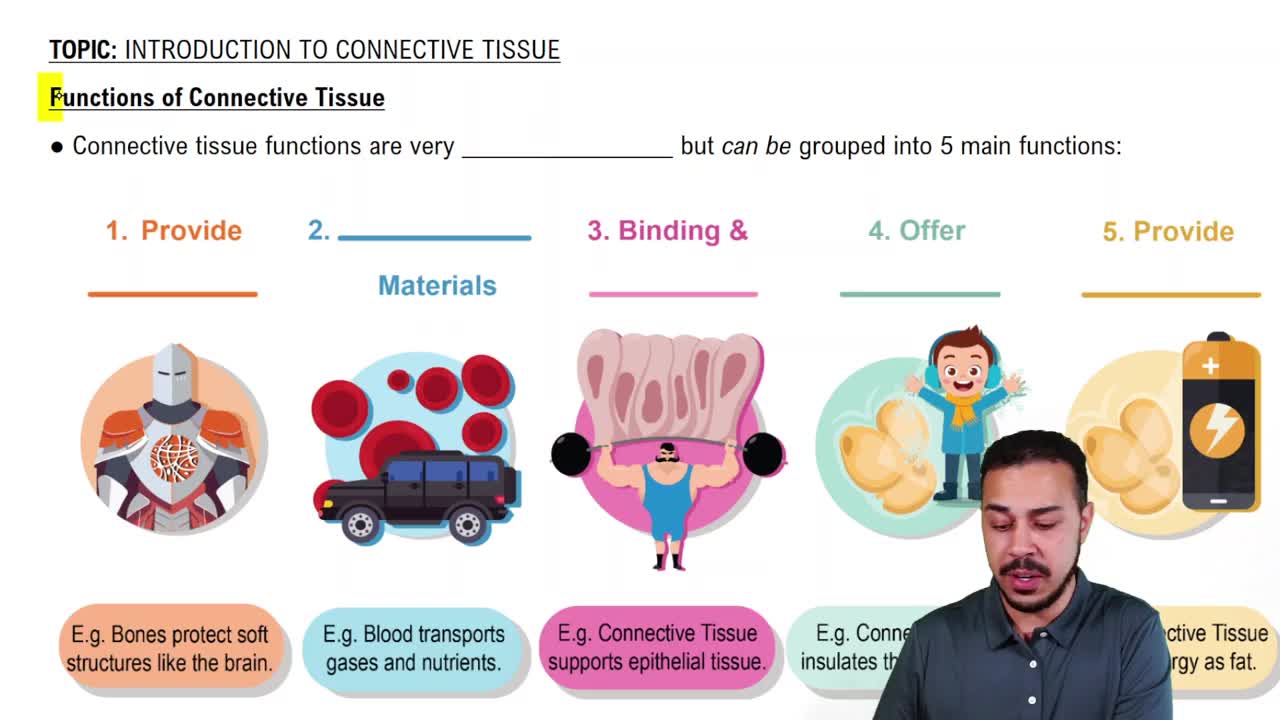
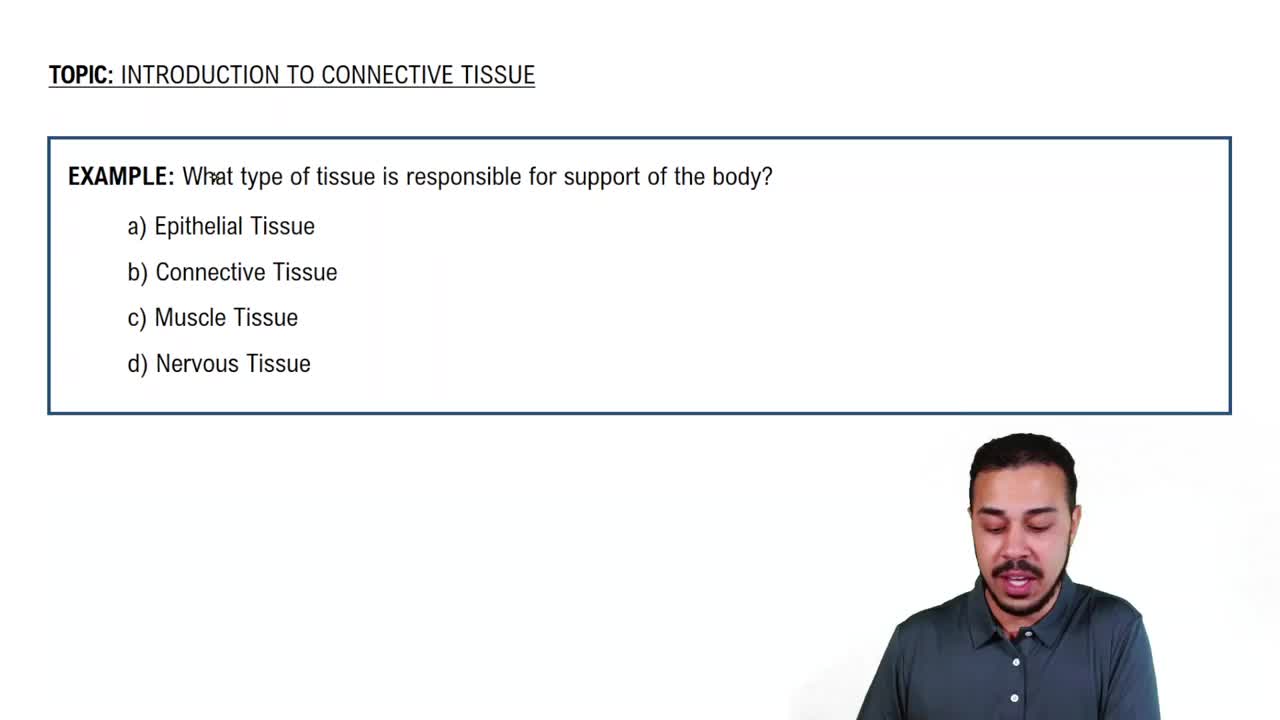
Support, protection, binding of other tissues, storage of energy, and transport of substances.
Cells, fibers, and ground substance (extracellular matrix).
Loose connective tissue, dense connective tissue, cartilage, bone, and blood.
Loose connective tissue with a gel-like matrix; binds skin to muscles and cushions organs.
Found under skin and around organs; stores fat for energy and insulation.
Parallel collagen fibers; provides strong tensile strength in tendons and ligaments.
In dermis of skin and organ capsules; fibers run in multiple directions for strength in various directions.
Firm, flexible matrix with chondrocytes; provides support and cushioning in joints and structures.
Hyaline, elastic, and fibrocartilage.
Ends of long bones, nose, trachea; provides smooth surfaces for joint movement.
Provides flexibility and maintains shape; found in ear and epiglottis.
Dense collagen fibers; provides strong support and shock absorption in intervertebral discs and knee menisci.
Hard, calcified matrix with osteocytes; provides structural support and protection.
Fluid matrix (plasma) with cells; transports oxygen, nutrients, and wastes.
Collagen (strength), elastic (stretch), and reticular (support network).
Fibroblasts synthesize collagen and other fibers.
Gel-like material surrounding cells and fibers; allows diffusion of nutrients and waste.
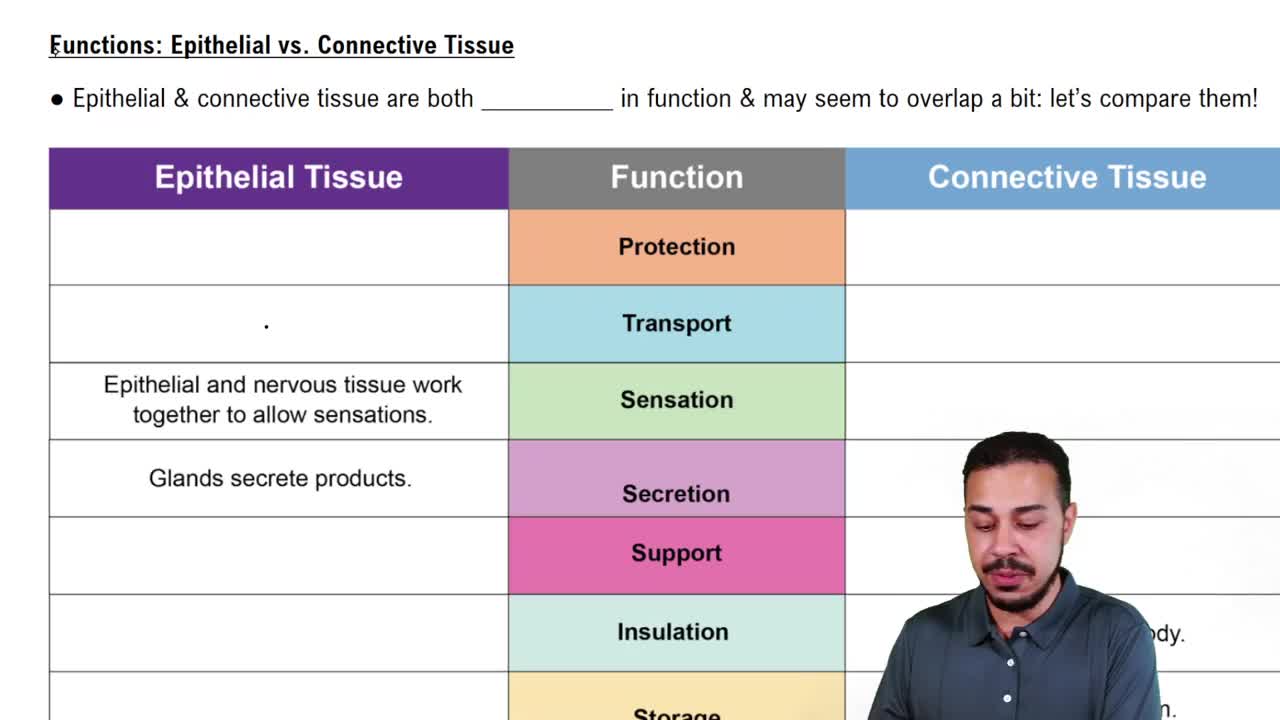
Connective tissue has more extracellular matrix and fewer cells; epithelial tissue is cell-dense with little matrix.
Adipose tissue.
Dense regular connective tissue.